
Julianus declares Severus a public enemy because …
Years: 193 - 193
May
Julianus declares Severus a public enemy because he is the nearest of the three rival claimants and, therefore, the most dangerous foe.
Deputies are sent from the Senate to persuade the soldiers to abandon him; a new general is nominated to supersede him, and a centurion dispatched to take his life.
The Praetorian Guard, long strangers to active military operations, are marched into the Campus Martius, regularly drilled, and trained in the construction of fortifications and field works.
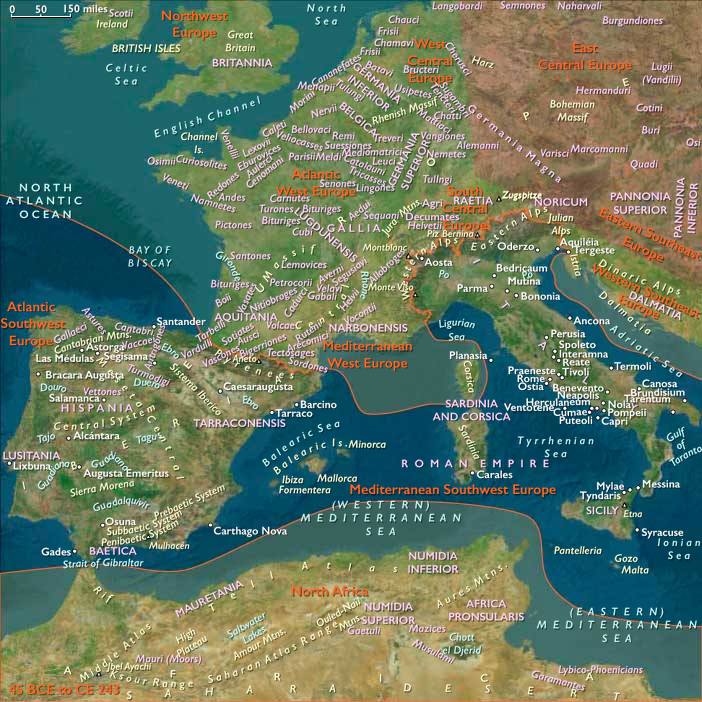
Severus, however, having secured the support of Albinus by—deceitfully—declaring him Caesar, which implies some claim to succession, progresses towards the city, makes himself master of the fleet at Ravenna, defeats Tullius Crispinus, the Praetorian Prefect, who had been sent to halt his progress, and gains over to his cause the ambassadors sent to seduce his troops.The Praetorian Guard, lacking discipline and sunk in debauchery and sloth, are incapable of offering any effectual resistance.
Matters being desperate, Julianus now attempts negotiation and offers to share the empire with his rival, but Severus ignores these overtures and presses forward, all Italy declaring for him as he advances.
At last the Praetorians, having received assurances that they will suffer no punishment—provided they surrender the actual murderers of Pertinax—seize the ringleaders of the conspiracy and report what they have done to Silius Messala, the consul, by whom the Senate is summoned and informed of the proceedings.
The Senate passes a motion proclaiming Severus emperor, awarding divine honors to Pertinax, and sentencing Julianus to death.
Julianus is deserted by all except one of the prefects and his son-in-law, Repentinus.
Locations
People
Groups
Topics
- Classical antiquity
- Portraits, Classical
- Roman art
- Roman Age Optimum
- Roman Civil War of 193-97
- Year of the Five Emperors, or Roman Civil War of 193
Commodoties
Subjects
- Commerce
- Watercraft
- Sculpture
- Environment
- Labor and Service
- Conflict
- Mayhem
- Faith
- Government
- Technology
Regions
Subregions
Years: 193 - 193
May
Locations
People
Groups
Topics
- Classical antiquity
- Portraits, Classical
- Roman art
- Roman Age Optimum
- Roman Civil War of 193-97
- Year of the Five Emperors, or Roman Civil War of 193
Commodoties
Subjects
- Commerce
- Watercraft
- Sculpture
- Environment
- Labor and Service
- Conflict
- Mayhem
- Faith
- Government
- Technology
Regions
Subregions