
Julian's Campaign in Alsace and the Decision …
Years: 356 - 356
Julian's Campaign in Alsace and the Decision to Recover Cologne (356 CE)
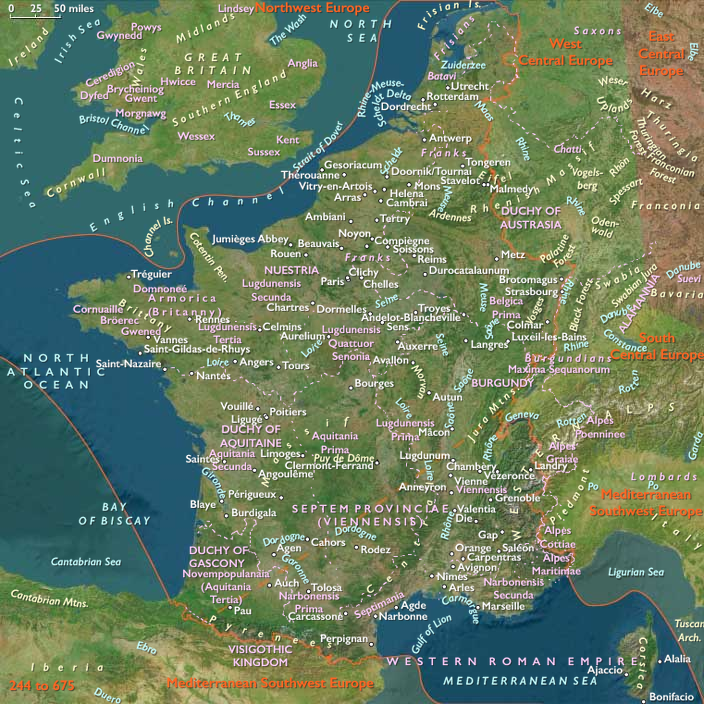
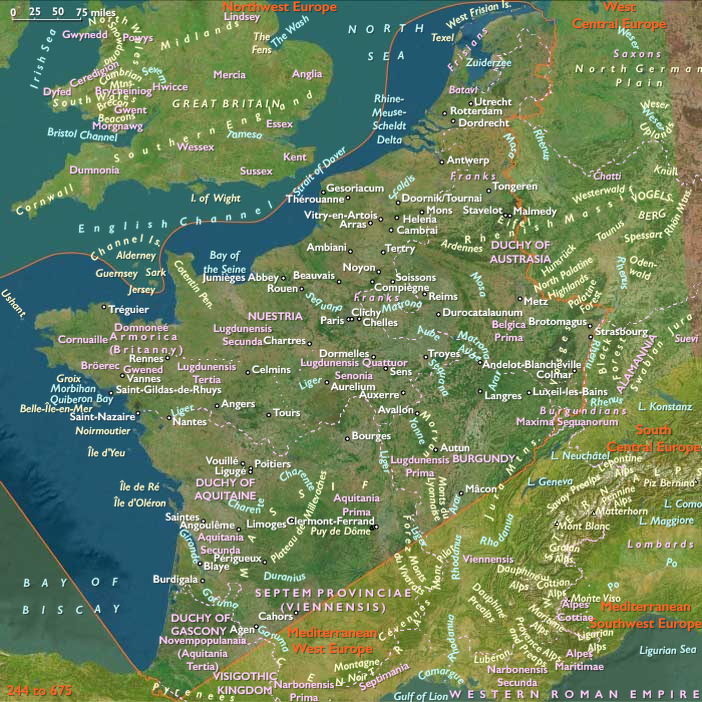
After his near-disaster at Decem Pagi (Dieuze), Julian continued his campaign, advancing toward Brotomagus (modern Brumath, Alsace). Along the way, his army routed another Germanic war band in open battle, further demonstrating his ability to regain control of northeastern Gaul. However, after assessing the strategic situation in Alsace, Julian realized that his forces were insufficient to fully defeat the Alamanni on their own.
Rather than risking a decisive battle against numerically superior Alamanni forces, Julian made a calculated decision: he shifted his focus from offensive operations in Alsace to the recovery of Cologne, a crucial Roman stronghold on the Rhine, which had fallen to the Franks earlier that year.
1. Julian’s Assessment of the Situation in Alsace
- While he had won victories against smaller raiding bands, the main Alamanni forces remained intact.
- His army was still relatively small, and he lacked the reinforcements needed to secure the region permanently.
- Securing Cologne, a key Roman city and military base, was a more achievable objective and would allow him to better stabilize northern Gaul.
2. The Strategic Importance of Cologne
- Cologne (Colonia Agrippina) was Rome’s largest and most important city on the Rhine, serving as a military and administrative center for Germania Inferior.
- Its fall to the Franks earlier in 356 had dealt a serious blow to Roman prestige and left the Rhine frontier dangerously exposed.
- Retaking the city would restore Roman control over the region and demonstrate that Julian could defend Roman territory.
3. Julian’s Decision: A Tactical Shift
- Recognizing that Alsace could not be held without reinforcements, Julian pivoted to recovering Cologne, a more vital and achievable goal.
- His strategy reflected his pragmatic approach to warfare, balancing offensive action with defensive priorities.
- By focusing on Cologne, he aimed to consolidate control over northern Gaul before reengaging the Alamanni in a larger campaign.
4. The Path to the Battle of Argentorate (357 CE)
- Julian’s decision to secure Cologne first would strengthen his position for the following year’s campaign.
- In 357 CE, he would return to Alsace and achieve a major victory at the Battle of Argentorate (Strasbourg), decisively defeating the Alamanni king Chnodomar.
- This campaign was part of a broader strategy to systematically reclaim Roman control over the Rhine frontier.
Conclusion: A Calculated Strategic Move
Julian’s choice to prioritize the recovery of Cologne over engaging the Alamanni in Alsace was a wise tactical decision that demonstrated his military prudence and strategic foresight. Rather than overextending his forces, he secured a key stronghold first, setting the stage for his later victories that would restore Roman dominance in Gaul.
Locations
People
Groups
- Franks
- Germania Superior (Roman province)
- Germans
- Alamanni (Germanic tribal alliance)
- Gaul, Diocese of
- Roman Empire: Constantinian dynasty (Constantinople)
- Gaul, Praetorian prefecture of
Topics
- Roman Age Optimum
- Late Antiquity
- Migration Period
- Durocortorum, Battle of
- Brumath, Battle of
- Senonae, Siege of
- Autun, Siege of
Subjects
- Writing
- Performing Arts
- Environment
- Mayhem
- Faith
- Government
- Movements
- Theology
- Philosophy and logic
- History
- Christology
Regions
Subregions
Related Events
Showing 1 events out of 1 total
Years: 356 - 356
Locations
People
Groups
- Franks
- Germania Superior (Roman province)
- Germans
- Alamanni (Germanic tribal alliance)
- Gaul, Diocese of
- Roman Empire: Constantinian dynasty (Constantinople)
- Gaul, Praetorian prefecture of
Topics
- Roman Age Optimum
- Late Antiquity
- Migration Period
- Durocortorum, Battle of
- Brumath, Battle of
- Senonae, Siege of
- Autun, Siege of
Subjects
- Writing
- Performing Arts
- Environment
- Mayhem
- Faith
- Government
- Movements
- Theology
- Philosophy and logic
- History
- Christology
Regions
Subregions