
Judicael of Domnonée Submits to Dagobert I …
Years: 635 - 635
Judicael of Domnonée Submits to Dagobert I but Insults Him (635–636 CE)
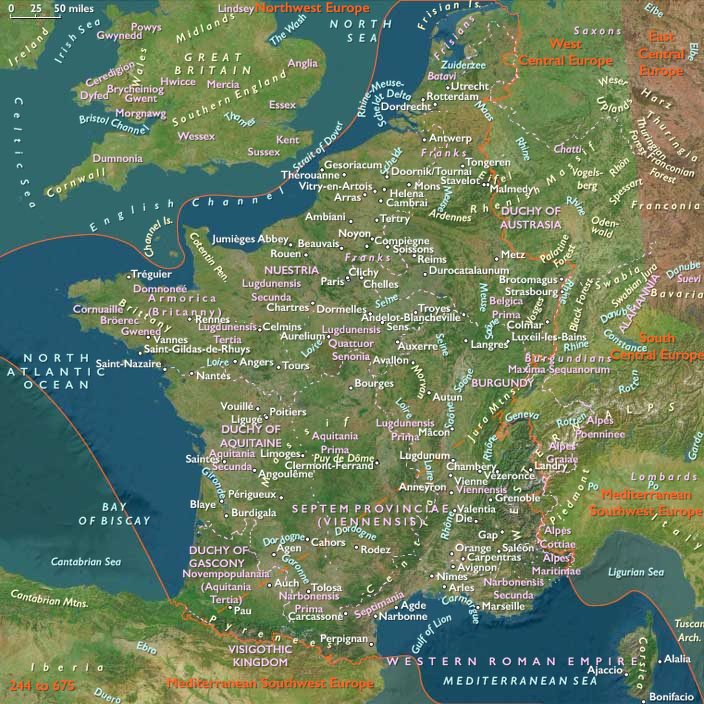
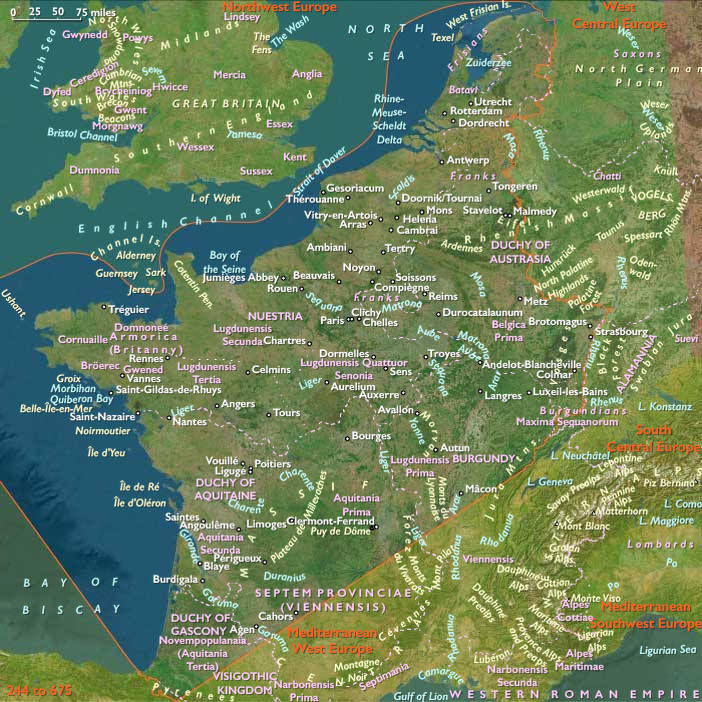
Around 635–636 CE, Judicael, High King of Domnonée in northern Brittany, travels to King Dagobert I's palace in Clichy to pledge allegiance to the Frankish crown. Under threat of invasion, he submits to Frankish lordship and arrives bearing gifts, yet insults Dagobert by refusing to dine at the royal table, highlighting the tense relationship between the Franks and the Bretons.
1. Domnonée: A Breton Kingdom with British Roots
- Domnonée was founded in the fourth century by Romano-British migrants from Dumnonia (modern Devon and Cornwall), who fled Anglo-Saxon incursions.
- By the early seventh century, Domnonée had become a strong Breton kingdom, resisting Frankish expansion into Brittany.
- Judicael, as its high king, sought to preserve Breton autonomy despite increasing Frankish pressure.
2. The Meeting at Clichy: A Forced Submission
- Facing the threat of a Frankish invasion, Judicael reluctantly agrees to meet Dagobert I at his palace in Clichy, northwest of Paris.
- He arrives with diplomatic gifts, signifying his formal submission to Frankish overlordship.
- This meeting demonstrates Frankish dominance over Brittany, at least nominally, reinforcing the kingdom’s tributary status.
3. The Insult: Judicael Refuses to Dine with Dagobert
- Despite his submission, Judicael offends Dagobert by refusing to eat at the royal table, an act seen as a direct insult to the Frankish king.
- This gesture of defiance may have been an attempt to assert Breton independence, signaling that while he acknowledged Frankish supremacy, he would not fully integrate into the Frankish court culture.
- Dagobert, though angered, does not immediately retaliate, likely calculating that military intervention in Brittany would be costly and ineffective.
4. The Aftermath and Breton Autonomy
- Though Judicael pledges fealty to Dagobert, his actions suggest that Brittany remains largely autonomous, despite Frankish claims of overlordship.
- The Bretons continue to resist full Frankish integration, maintaining their distinct cultural and political identity well into the medieval period.
- Later, Brittany will again challenge Frankish rule, with the struggle for control over the peninsula persisting into the Carolingian era.
Conclusion: A Diplomatic Victory with Lingering Tensions
Judicael’s visit to Clichy (635–636 CE) represents a temporary submission of Domnonée to Frankish rule, but his refusal to dine with Dagobert I signals continued Breton resistance to foreign domination. This episode exemplifies the complex relationship between the Franks and the Bretons, where military threats secured political pledges, but cultural and regional autonomy remained intact.
Locations
People
Groups
Topics
Subjects
Regions
Subregions
Related Events
Showing 10 events out of 56659 total
Years: 635 - 635
Locations
People
Groups
Topics
Subjects
Regions
Subregions