
Joseph Parrocel was born in Brignoles, into …
Years: 1691 - 1691
Joseph Parrocel was born in Brignoles, into an artistic family that produced fourteen painters over six generations.
His grandfather Georges Parrocel (1540 to about 1614) (no surviving works) and his father Barthélemy Parrocel (1595–1660) were both painters.
One badly restored painting of Bathélemy survives in the church of Saint-Sauveur in Brignoles, France.
His brothers Jean Barthélemy Parrocel (1631–1653) (no surviving works) and Louis Parrocel (1634–1694) also became painters.
Joseph was only thirteen years old when his father died in 1660.
His elder brother Louis, who was already established as a painter in the Languedoc, had taken him under his care and given him a training as painter.
Three years later, he had run away from his brother's house to Marseilles, where his talent as a painter had soon become noticed and he obtained a commission for a number of paintings with scenes of the life of Saint Anthony of Padua for the church Saint-Martin.
He only executed two of them; it is also possible that he painted them during his second stay in the Provence.
He left for Paris and stayed there for four years, perfecting his skills, and had then returned to Provence and continued his journey to Italy, where he stays for eight years.
In Rome, he became the pupil of Jacques Courtois, a famous painter of battle scenes who was also known as "le Bourguignon" or "il Borgognone".
He also studied the works of Salvator Rosa, an unorthodox proto-Romantic painter.
Parrocel worked with him in his workshop and was thoroughly influenced by him.
Parrocel then started a journey through Italy and finally arrived in Venice.
He was planning to settle in this town but had left Italy in disgust after eight brigands attempted to murder him on the Rialto Bridge.
Settling in Paris in 1675, he had earned himself a reputation.
Accepted as an elected member at the Académie Royale de Peinture et de Sculpture on February 29, 1676, he had become an academician on November 14, 1676 with his admission piece "Siege of Maastricht".

Joseph Parrocel: Battle of Leuze (ca. 1691)
Locations
People
Groups
Topics
Subjects
Regions
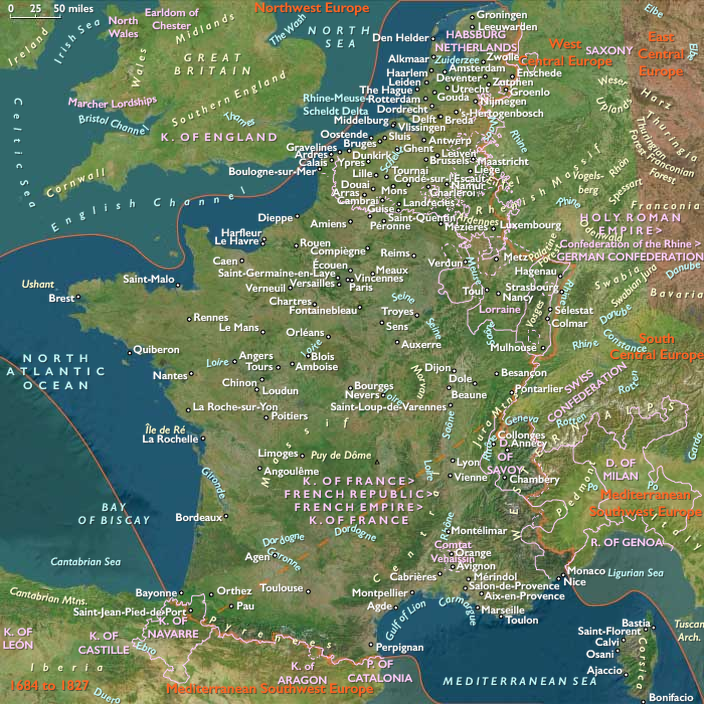
Subregions
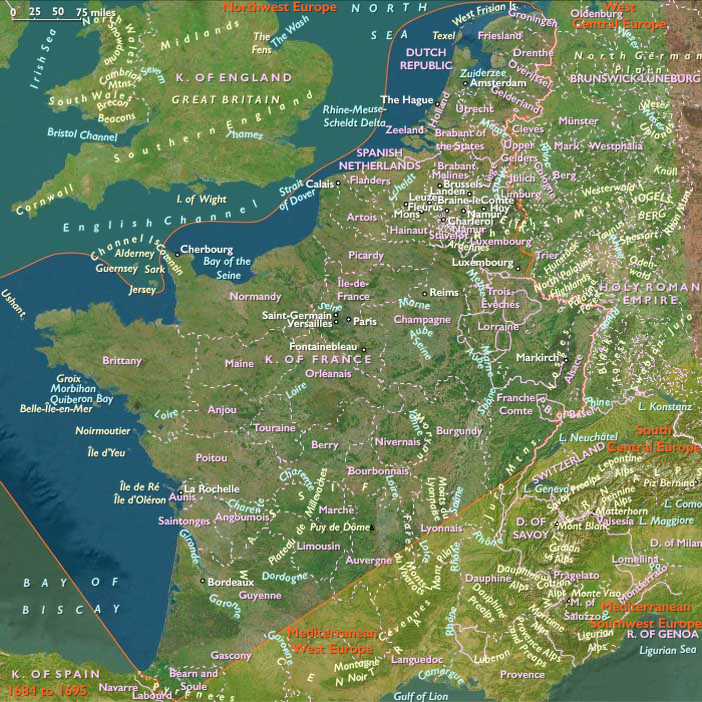
Years: 1691 - 1691
Joseph Parrocel: Battle of Leuze (ca. 1691)
Locations
People
Groups
Topics
Subjects
Regions
Subregions