
Joseph Marie Charles, called Jacquard, was born …
Years: 1805 - 1805
April
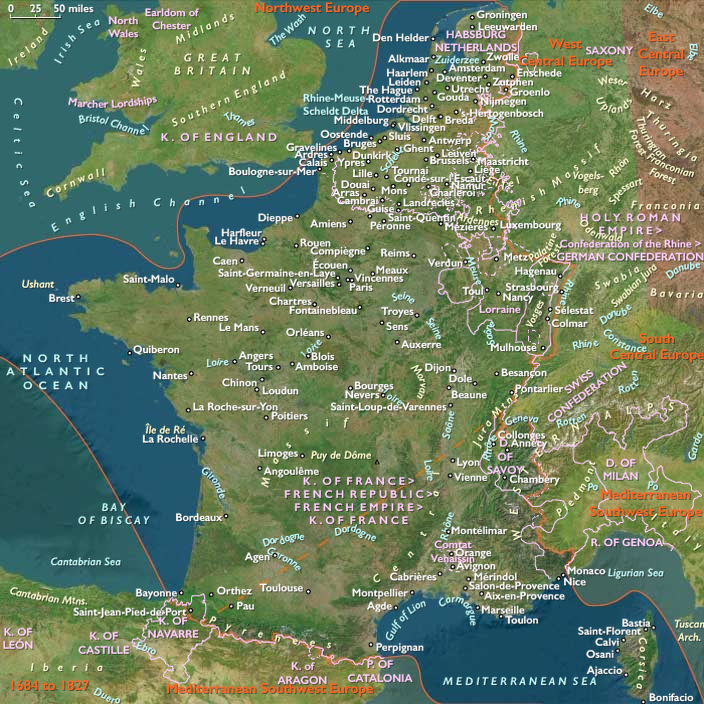
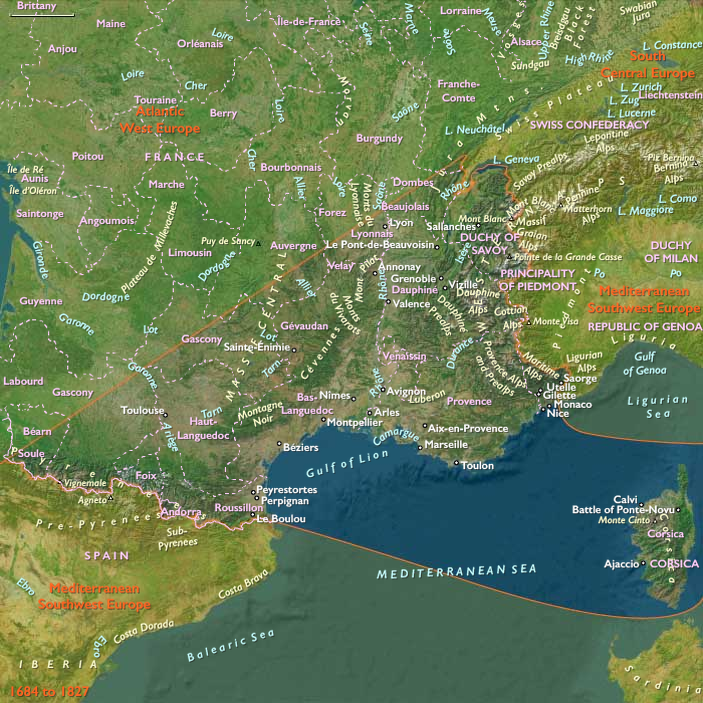
Joseph Marie Charles, called Jacquard, was born in Lyon, France on July 7, 1752, as one of nine children of Jean Charles dit Jacquard, a master weaver of Lyon, and his wife, Antoinette Rive.
However, only Joseph and his sister Clémence (born November 7, 1747) survive to adulthood.
Jacquard’s surname is not technically “Jacquard”; it is Charles.
In his grandfather’s generation, several branches of the Charles family had lived in Lyon’s Couzon-au-Mont d’Or suburb (on Lyon’s north side, along the Saône River).
To distinguish the various branches, they had been given nicknames; Joseph’s branch was dubbed the “Jacquard” Charles.
Thus, Joseph’s grandfather was Barthélemy Charles dit [called] Jacquard.
Although his father was a man of property, Joseph had received no formal schooling and remained illiterate until he was thirteen.
He was finally taught by his brother-in-law, Jean-Marie Barret, who runs a printing and bookselling business.
Barret also had introduced Joseph to learned societies and scholars.
His mother died in 1762, and when his father died in 1772, Joseph had inherited his father’s house, looms and workshop as well as a vineyard and quarry in Couzon-au-Mont d’Or.
Joseph then dabbled in real estate.
In 1778, he had listed his occupations as master weaver and silk merchant.
Jacquard’s occupation at this time is problematic because by 1780 most silk weavers did not work independently; instead, they worked for wages from silk merchants, and Jacquard was not registered as a silk merchant in Lyon.
On July 26, 1778, Joseph had married Claudine Boichon, a middle-class widow from Lyon who owned property and had a substantial dowry.
However, Joseph had soon fallen deeply into debt and was brought to court.
To settle his debts, he had been obliged to sell his inheritance and to appropriate his wife’s dowry.
Fortunately, his wife retained a house in Oullins (on Lyon’s south side, along the Rhone River), where the couple resided.
By 1800, Joseph had begun to dabble in inventing: a treadle loom in 1800, a loom to weave fishing nets in 1803, and starting in 1804, the “Jacquard” loom, which is meant to weave patterned silk automatically.
However, none of his inventions operate well and thus are unsuccessful.
In order to stimulate the French textile industry, which is competing with Britain’s industrialized textile industry, Napoleon Bonaparte places large orders for Lyon’s silk, starting in 1802.
In 1801, Jacquard had exhibited his invention at the industrial exhibition in Paris; and in 1803 he had been summoned to Paris and attached to the Conservatoire des Arts et Metiers.
On display there was a loom by Jacques de Vaucanson.
In 1804, at the urging of Lyon silk merchant Gabriel Detilleu, Jacquard studied Vaucanson’s loom, and by 1805 Jacquard has eliminated the paper strip from Vaucanson’s mechanism and returned to using Falcon’s chain of punched cards, thus introducing automation to the silk industry.
The potential of Jacquard’s loom is immediately recognized.
On April 12, 1805, emperor Napoleon and empress Josephine visit Lyon, and during their tour, they view Jacquard’s new loom.
Three days later, the emperor grants the patent for Jacquard’s loom to the city of Lyon.
In return, Jacquard receives a lifelong pension of three thousand francs; furthermore, he will receive a royalty of fifty francs for each loom that is bought and used during the period from 1805 through 1811.
Locations
People
Groups
Commodoties
Subjects
Regions
Subregions
Related Events
Showing 10 events out of 22216 total
Years: 1805 - 1805
April
Locations
People
Groups
Commodoties
Subjects
Regions
Subregions