
Joseph ibn Naghrela, son of Samuel ibn …
Years: 1066 - 1066
Joseph ibn Naghrela, son of Samuel ibn Naghrela, had served as vizier to Badis, ruler of the Spanish Berbers, having succeeded to his father's position of vizier of Granada before he turned twenty-one.
Joseph had attempted to ease the conflict between Arabs and Berbers and thus to prevent excesses against the local Arabs.
Many Muslims, envious of his position and unhappy with Joseph's excesses, accuse Joseph of using his office to benefit Jewish friends.
His enemies include Abu Ishak, Berber advisor to the prince, who accuses him of trying to cede the city to a neighboring prince.
In 1066, Badis orders Joseph killed and crucified.
The 1906 Jewish Encyclopedia claims that "More than 1,500 Jewish families, numbering 4,000 persons, fell in one day."
However, the 1971 edition does not give precise casualty figures.
Joseph's wife flees to Lucena with her son Azariah, where she is supported by the community.
Azariah will die in early youth.
According to historian Bernard Lewis, the massacre is "usually ascribed to a reaction among the Muslim population against a powerful and ostentatious Jewish vizier."
Lewis writes: Particularly instructive in this respect is an ancient anti-Semitic poem of Abu Ishaq, written in Granada in 1066.
This poem, which is said to be instrumental in provoking the anti-Jewish outbreak of that year, contains these specific lines: Do not consider it a breach of faith to kill them, the breach of faith would be to let them carry on.
They have violated our covenant with them, so how can you be held guilty against the violators?
How can they have any pact when we are obscure and they are prominent?
Now we are humble, beside them, as if we were wrong and they were right!
Lewis continues: "Diatribes such as Abu Ishaq's and massacres such as that in Granada in 1066 are of rare occurrence in Islamic history."
The episode has been characterized as a pogrom.
Walter Laqueur writes, "Jews could not as a rule attain public office (as usual there were exceptions), and there were occasional pogroms, such as in Granada in 1066."
Spivakovsky questions the death rate, suspecting it to be an example of "the usual hyperbole in numerical estimates, with which history abounds".
Locations
People
Groups
- Arab people
- Berber people (also called Amazigh people or Imazighen, "free men", singular Amazigh)
- Jews
- Granada, (Zirid) Muslim statelet, or taifa, of
Topics
Commodoties
Subjects
Regions
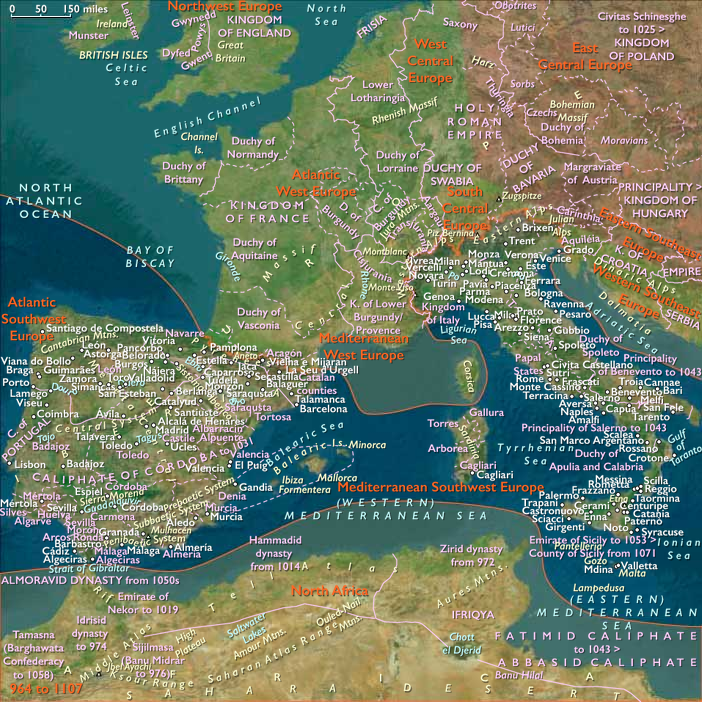
Subregions
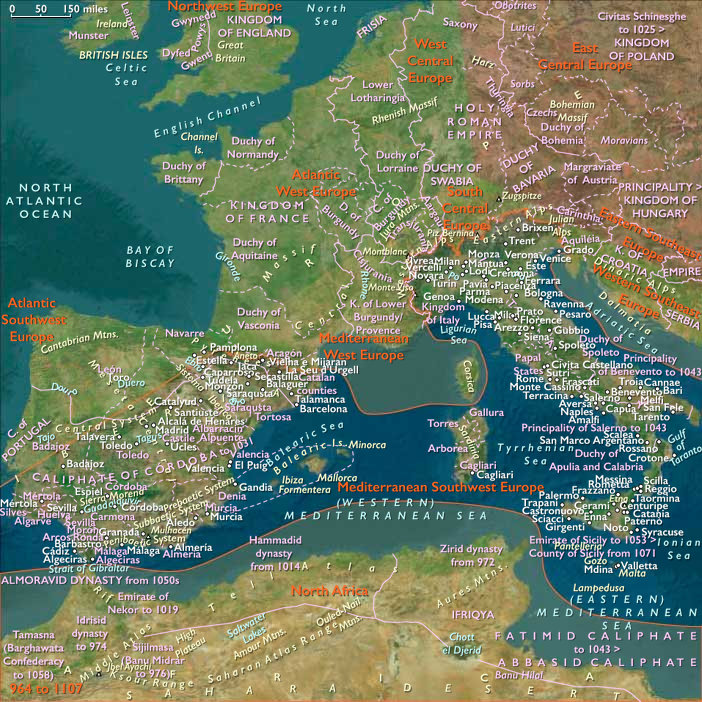
Related Events
Showing 10 events out of 50908 total
Years: 1066 - 1066
Locations
People
Groups
- Arab people
- Berber people (also called Amazigh people or Imazighen, "free men", singular Amazigh)
- Jews
- Granada, (Zirid) Muslim statelet, or taifa, of
Topics
Commodoties
Subjects
Regions
Subregions