
John I of Portugal (r. 1385–1433) and …
Years: 1415 - 1415
John I of Portugal (r. 1385–1433) and the Beginnings of Portugal’s Maritime Expansion
Following his victory in the 1383–1385 Crisis, John I of Portugal ruled in peace and prosperity from 1390 onward, after the death of John I of Castile, whose marriage to Beatriz of Portugal had failed to produce an heir. Under his reign, Portugal strengthened its monarchy, economy, and overseas ambitions, setting the stage for the Age of Discovery.
Political and Economic Consolidation
- John I was ably advised by:
- João das Regras, his chancellor, who solidified the legal foundation of his rule.
- Nuno Álvares Pereira, his military commander, who ensured security at home.
- He weakened the power of the higher aristocracy, favoring the lesser nobility and merchants, strengthening royal authority.
- Portugal remained peaceful and stable, unlike other European states embroiled in the Hundred Years' War (1337–1453).
- With no external threats, John focused on maritime expansion, seeing it as Portugal’s path to wealth and influence.
The 1415 Conquest of Ceuta: The First Step in Expansion
Motivations for the Attack on North Africa
-
Continuing the Christian Crusade Against Islam
- Portugal’s military class sought to continue the Reconquista beyond Iberia.
- Capturing Muslim-controlled Ceuta, a strategic city in North Africa, was seen as a holy war against Islam.
-
Seeking Military Glory and Wealth
- The nobility and knights hoped for battlefield fame and riches.
- Ceuta was a major trade hub, believed to control West African gold, spices, and slaves.
-
Economic Expansion and Trade Control
- The capture of Ceuta would allow Portugal to control navigation along the African coast.
- Portugal wanted direct access to West African gold and the Asian spice trade, bypassing Muslim and Venetian intermediaries.
The Siege and Capture of Ceuta (1415)
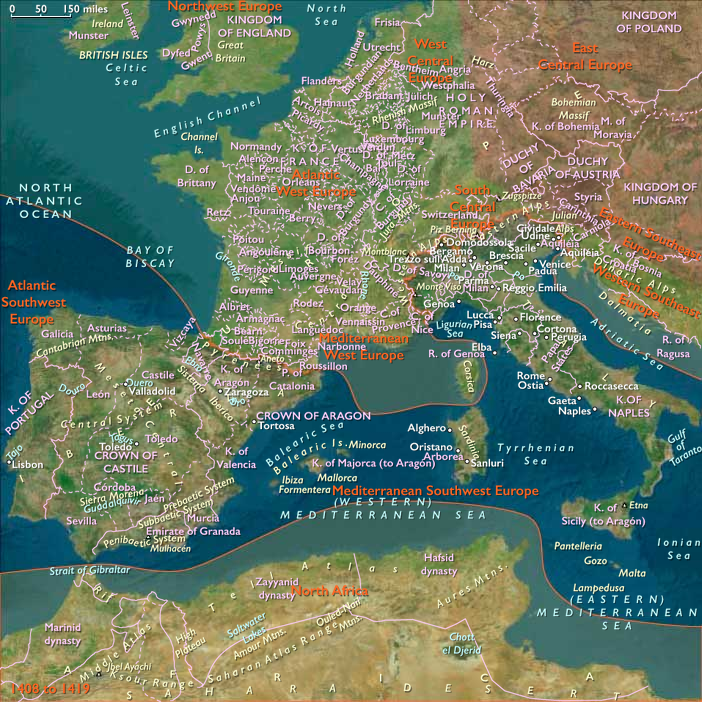
- John I personally led the expedition, accompanied by his sons, including Prince Henry the Navigator.
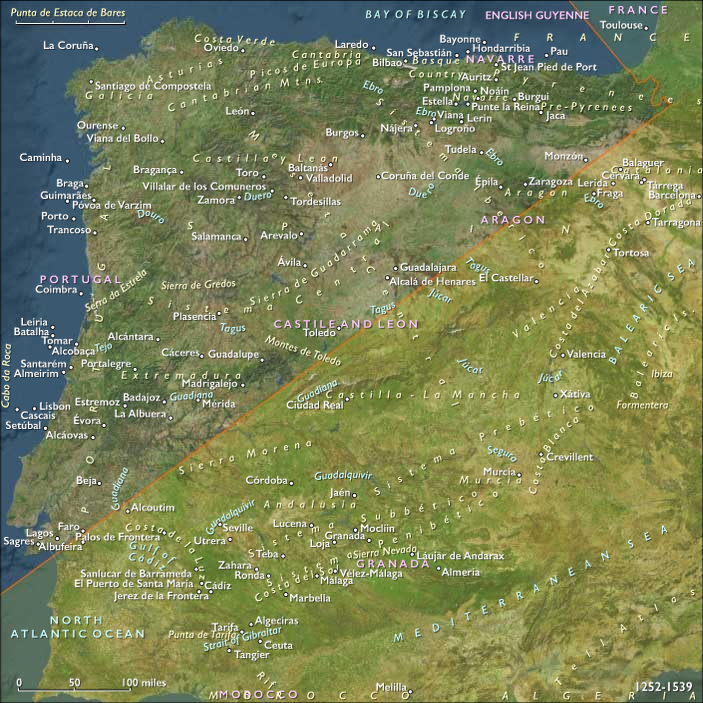
- The Portuguese fleet transported thousands of troops, launching a successful siege and capturing Ceuta on August 21, 1415.
- Though a strategic victory, Ceuta did not yield the expected riches, as the overland trade routes shifted elsewhere.
Prince Henry the Navigator and the Birth of the Age of Discovery
Despite Ceuta’s disappointing economic returns, Prince Henry the Navigator became a strong advocate for continued exploration.
-
Henry’s Goals:
- To map the African coast beyond Cape Bojador, a mystical and feared limit of the known world.
- To find Prester John, the legendary Christian king of the East, rumored to be an ally against Islam.
- To reach Asia by sea, tapping into spice and gold trade routes.
-
The Establishment of a Portuguese Naval Tradition:
- Henry invested in shipbuilding and navigation, refining the caravel, a ship suited for deep-sea voyages.
- He sponsored expeditions down the West African coast, laying the foundation for Portuguese expansion.
Legacy: The Start of the Age of Exploration
- The conquest of Ceuta (1415) was the first step in Portugal’s maritime empire.
- Portuguese explorers, supported by Prince Henry, would:
- Sail beyond Cape Bojador (1434).
- Establish trading posts along the African coast.
- Eventually reach India (1498) and Brazil (1500).
John I’s policies of centralization, economic growth, and military expansion created the conditions for Portugal to become the first European global empire, shaping world history for centuries to come.
Locations
People
Groups
Topics
Commodoties
Subjects
Regions
Subregions
Related Events
Showing 10 events out of 42338 total
Years: 1415 - 1415
Locations
People
Groups
Topics
Commodoties
Subjects
Regions
Subregions