
John of Gaunt’s Claim to the Castilian …
Years: 1386 - 1386
John of Gaunt’s Claim to the Castilian Throne and His 1386 Campaign in Spain
John of Gaunt, Duke of Lancaster, had long pursued a claim to the throne of Castile and León through his marriage to Infanta Constance of Castile, daughter of Peter I of Castile ("Peter the Cruel").
John of Gaunt’s Castilian Kingship in Exile (1372–1386)
- Upon his marriage to Constance of Castile in 1371, John of Gaunt formally assumed the title of "King of Castile and León" on January 29, 1372.
- He insisted on being addressed as "my lord of Spain" and impaled his personal arms with those of Castile and León.
- From 1372 onward, he established a small Castilian court-in-exile, gathering refugee Castilian nobles and knights.
- He set up a Castilian chancery, which produced documents styled after those of Peter I, signed with the Spanish royal formula "Yo El Rey" (I, the King).
- Despite his ambitions, his attempts to invade Castile repeatedly failed due to financial constraints, conflicting English wars with France and Scotland, and lack of diplomatic support.
The 1386 Invasion: John of Gaunt’s Final Attempt to Take Castile
With Portugal and England forming a full alliance in 1386 under the Treaty of Windsor, John of Gaunt finally launched his long-delayed military campaign to seize Castile.
- July 9, 1386 – He sailed from England at the head of a huge Anglo-Portuguese fleet, carrying:
- An army of about 5,000 English troops, including longbowmen and knights.
- His "royal" household, reinforcing his claim as King of Castile.
- His wife, Constance, and daughters, including Philippa of Lancaster, who would later marry John I of Portugal.
- En route to Iberia, his forces relieved the besieged English stronghold of Brest, expelling French troops.
- July 29, 1386 – He landed at Corunna in northern Spain, officially beginning his military campaign to claim the Castilian throne.
The Campaign and Its Failure
- John of Gaunt advanced into Galicia, but his campaign soon stalled due to:
- Harsh conditions and lack of local support.
- Disease and supply shortages that weakened his forces.
- The superior Castilian-French alliance, which effectively countered his military efforts.
- By 1387, his campaign faltered, leading to negotiations with Castile.
- In 1388, under the Treaty of Bayonne, John of Gaunt abandoned his claim to the Castilian throne in exchange for a large financial settlement and the marriage of his daughter, Catherine of Lancaster, to Henry III of Castile, helping to unite the rival Castilian dynasties.
Aftermath and Legacy
- Though his invasion failed, John of Gaunt’s campaign:
- Strengthened the Anglo-Portuguese alliance, reinforcing Portugal’s independence from Castile.
- Ensured that his Lancastrian lineage remained tied to Iberian politics through marriage alliances.
- Redirected England’s focus back to France, where the Hundred Years’ War continued.
John of Gaunt’s long-standing ambition to rule Castile ended in disappointment, but his marriage diplomacy would leave a lasting impact on Iberian and English royal politics for generations.
Locations
People
Groups
- England, (Plantagenet, Angevin) Kingdom of
- Castile, Crown of
- France, (Valois) Kingdom of
- Portugal, Avizan (Joannine) Kingdom of
Topics
Commodoties
Subjects
Regions
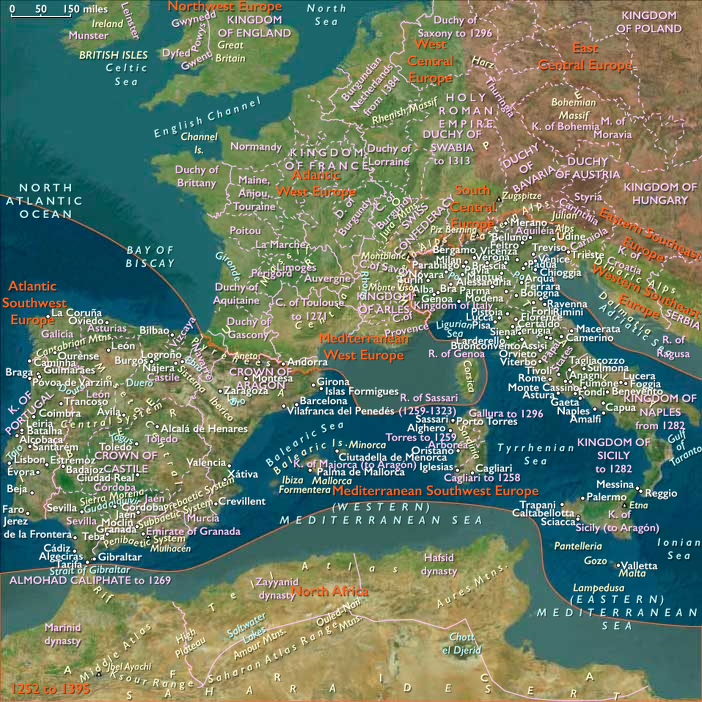
Subregions
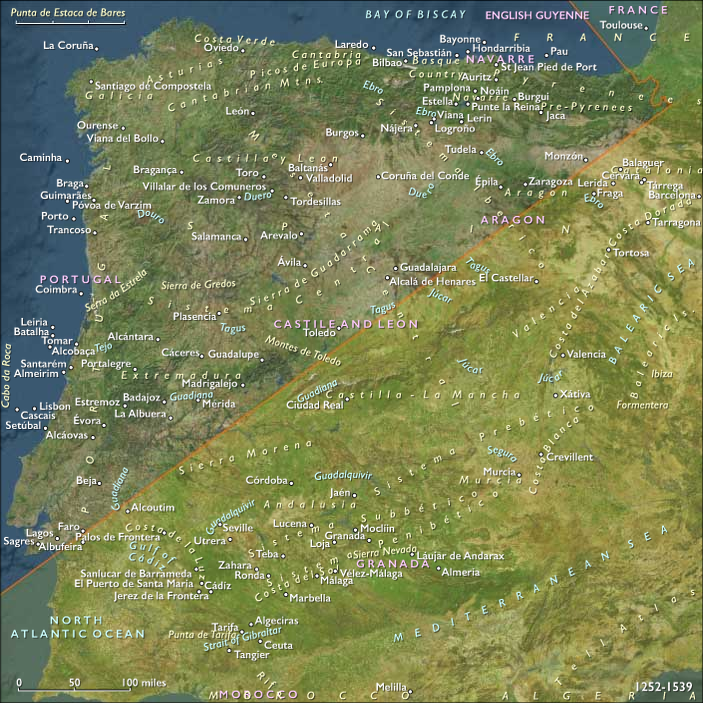
Related Events
Showing 10 events out of 43564 total
Years: 1386 - 1386
Locations
People
Groups
- England, (Plantagenet, Angevin) Kingdom of
- Castile, Crown of
- France, (Valois) Kingdom of
- Portugal, Avizan (Joannine) Kingdom of
Topics
Commodoties
Subjects
Regions
Subregions