
John I Tzimisces had taken most of …
Years: 976 - 976
June
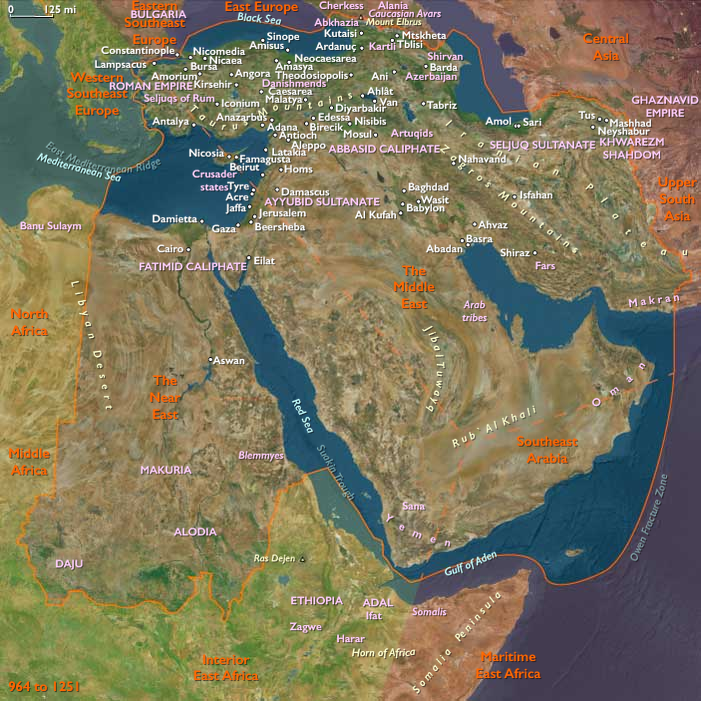
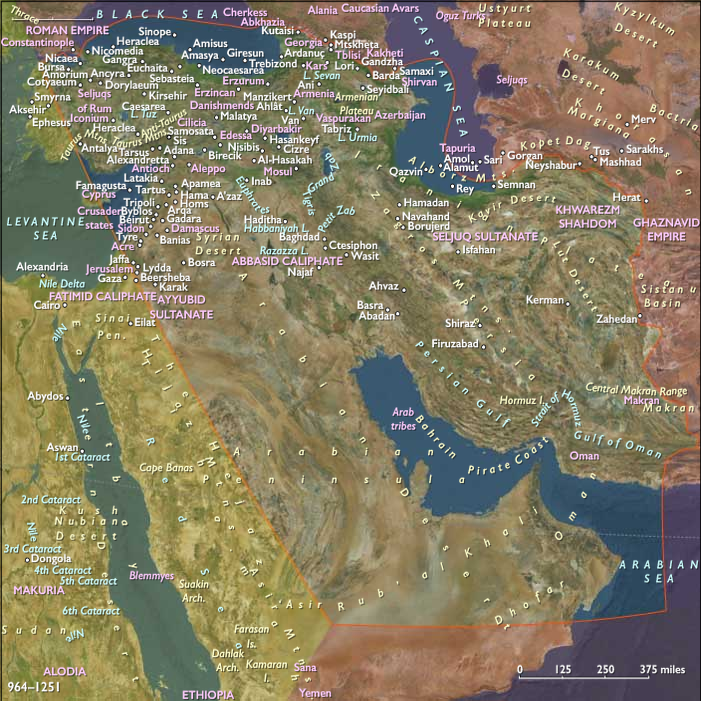
John I Tzimisces had taken most of Palestine from the Fatimid caliphate, but before he is able to recapture Jerusalem for the Empire, he dies, probably of typhoid, on January 10, 976.
At the news of the emperor's death, Constantinople’s forces cease hostilities and withdraw, bringing to an abrupt close the war with the Fatimids.
The eunuch Basil the Chamberlain has taken control of the throne for John’s two grandnephews and co-emperors Basil II and Constantine VIII.
An immediate challenge to the chamberlain’s authority and that of eighteen-year-old Basil II has come from two generals who covet the position of senior emperor.
Both related to emperors, they belong to powerful landed families and command outside support from Georgia and from the ‘Abbasid Caliph in Baghdad, who most of the Islamic world still acknowledge as the supreme spiritual authority, despite temporal power having long since devolved to independent hereditary Muslim rulers from India to Spain.
The powerful imperial general Bardas Skleros, a brother-in-law of the late Emperor, had been demoted from eastern commander to governor of Mesopotamia.
His troops and the Arabs of Melitene proclaim him emperor in summer 976 and seize considerable imperial territory in Asia Minor and Syria.
Locations
People
Groups
- Arab people
- Berber people (also called Amazigh people or Imazighen, "free men", singular Amazigh)
- Greeks, Medieval (Byzantines)
- Roman Empire, Eastern: Macedonian dynasty
- Abbasid Caliphate (Baghdad)
Topics
Commodoties
Subjects
Regions
Subregions
Years: 976 - 976
June
Locations
People
Groups
- Arab people
- Berber people (also called Amazigh people or Imazighen, "free men", singular Amazigh)
- Greeks, Medieval (Byzantines)
- Roman Empire, Eastern: Macedonian dynasty
- Abbasid Caliphate (Baghdad)
Topics
Commodoties
Subjects
Regions
Subregions