
Atlantic Southwest Europe: Consolidation and Exploration (1408–1419) …
Years: 1408 - 1419
Atlantic Southwest Europe: Consolidation and Exploration (1408–1419)
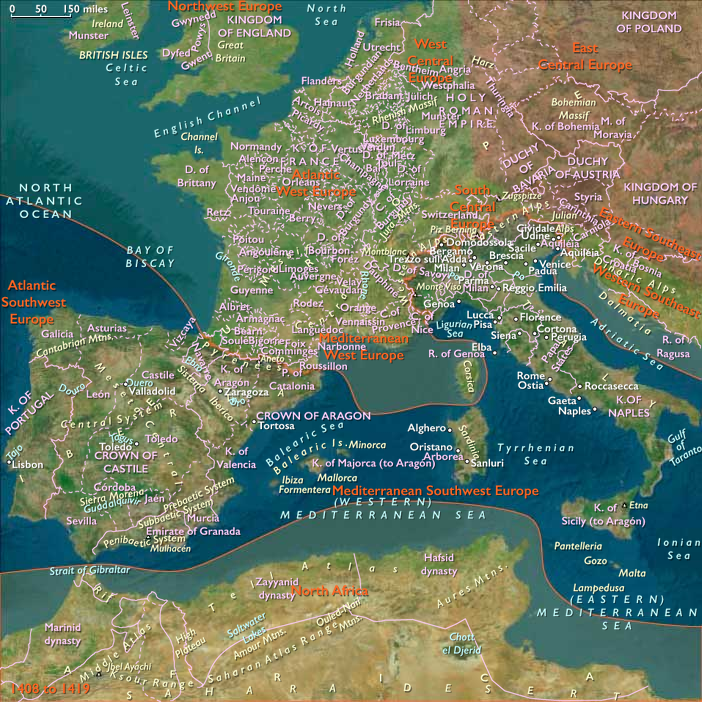
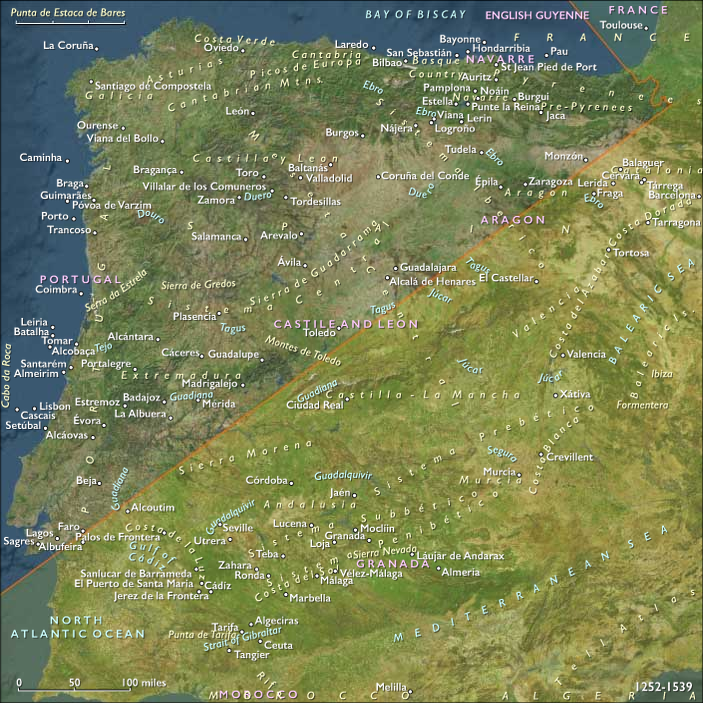
From 1408 to 1419, Atlantic Southwest Europe experienced continued political stabilization, increased regional autonomy, intensified maritime exploration, and cultural maturation. These developments were particularly significant in northern Portugal, Galicia, Asturias, northern Castile and León, northern Navarre, northern Rioja, and the Basque Country. This era marked critical advances toward Iberian expansion, notably Portuguese maritime ambitions, which laid the groundwork for the forthcoming Age of Discovery.
Political and Military Developments
-
Portugal:
- Under King João I (1385–1433), Portugal strengthened its internal governance. João focused on centralizing royal authority, enhancing noble loyalty, and solidifying the newly founded Aviz dynasty.
- Portuguese military efforts consolidated control over strategic coastal and inland areas, stabilizing northern regions and ensuring political unity.
-
Northern Castile and León:
- Under the regency of Queen Catherine of Lancaster and Ferdinand of Antequera (1406–1416), local power structures emerged, empowering regional nobility, particularly within Basque and northern Riojan territories.
- Ferdinand's eventual election as King of Aragon (1412) realigned regional alliances and further complicated political dynamics in northern Castile.
-
Navarre:
- King Charles III continued his diplomatic neutrality, ensuring Navarre’s stability amid competing Castilian and French interests. His policy safeguarded local autonomy and encouraged economic development, fostering a peaceful and prosperous period.
Economic and Maritime Expansion
-
Portuguese Maritime Exploration:
- Prince Henry "the Navigator" intensified his exploration along the Atlantic coast of Africa, with notable discoveries including Madeira (1418–19) and subsequent colonization. These expeditions significantly enhanced Portugal’s position as a leader in maritime exploration.
-
Trade and Economic Development:
- Maritime commerce thrived, especially in Lisbon and Porto, driven by increased trade in sugar, spices, and textiles, reinforcing Portugal's growing prominence as a commercial power.
- Northern Spanish coastal towns—particularly Bilbao and Santander—benefited from intensified maritime trade, strengthening regional economic autonomy.
Cultural and Social Developments
-
Rise of Portuguese Humanism:
- João I’s court cultivated humanist ideals, promoting the intellectual pursuits of his children, especially Prince Duarte and Prince Henry, laying foundations for a distinctive Portuguese Renaissance.
-
Basque and Northern Iberian Identity:
- Basque territories, Rioja, and northern Navarre maintained distinct identities, reinforced through local fueros and traditions. Their cultural autonomy contributed to a sustained sense of regional distinctiveness, despite broader Castilian influences.
-
Pilgrimage and Cultural Exchange:
- The Camino de Santiago pilgrimage route remained influential, fostering cultural exchange, artistic growth, and economic benefits across Galicia, Asturias, León, and northern Castilian towns.
Significance and Legacy
The era of 1408–1419 reinforced the political stabilization initiated previously, accelerated maritime expansion that would shape global history, and cultivated a rich cultural and social milieu. Portugal emerged clearly as a maritime pioneer, while the Basque, Navarrese, and northern Spanish territories reinforced their autonomy, laying important foundations for future political, economic, and cultural developments across Atlantic Southwest Europe.
People
- Charles III of Navarre
- Edward, King of Portugal
- Ferdinand I of Aragon
- Henry the Navigator
- John I of Portugal
Groups
- Galicia, Kingdom of
- Navarre, Kingdom of
- Basque people
- Castile, Crown of
- Portugal, Avizan (Joannine) Kingdom of
- Asturias, Principality of
- Portuguese Empire
Topics
Commodoties
Subjects
Regions
Subregions
Related Events
Showing 10 events out of 42493 total
Years: 1408 - 1419
People
- Charles III of Navarre
- Edward, King of Portugal
- Ferdinand I of Aragon
- Henry the Navigator
- John I of Portugal
Groups
- Galicia, Kingdom of
- Navarre, Kingdom of
- Basque people
- Castile, Crown of
- Portugal, Avizan (Joannine) Kingdom of
- Asturias, Principality of
- Portuguese Empire
Topics
Commodoties
Subjects
Regions
Subregions