
Joanna of Castile: A Brilliantly Educated Infanta …
Years: 1496 - 1496
August
Joanna of Castile: A Brilliantly Educated Infanta and Future Queen (1496)
Joanna of Castile (1479–1555), born in Toledo, was the third child and second daughter of Isabella I of Castile and Ferdinand II of Aragon. As a member of the House of Trastámara, she was not initially expected to inherit the thrones of Castile and Aragon, but fate would later make her one of the most powerful women in Europe.
A Rigorous Royal Education
Queen Isabella I ensured that Joanna and her sisters—Isabella, Maria, and Catherine—received an exceptional education, preparing them for diplomatic marriages and leadership roles.
Academic Studies
- Canon and civil law, genealogy and heraldry, grammar, history, mathematics, and philosophy.
- Exposure to classical literature, reading:
- Christian poets Juvencus and Prudentius.
- Church Fathers Saint Ambrose, Saint Augustine, Saint Gregory, and Saint Jerome.
- Roman statesman Seneca.
Language Mastery
- She excelled in Iberian Romance languages, including:
- Castilian, Leonese, Galician-Portuguese, and Catalan.
- Fluent in French and Latin, enabling her to communicate with European courts.
Courtly and Artistic Training
- Skilled in dancing, music, etiquette, drawing, and embroidery.
- Accomplished in clavichord, guitar, and monochord performance.
- Learned equestrian skills, hawking, and hunting, preparing her for courtly and diplomatic life.
Signs of Religious Skepticism (1495)
- By 1495, Joanna showed early signs of skepticism toward Catholic practices, which deeply alarmed her mother, Queen Isabella.
- Her lack of devotion and questioning of Christian rites was considered dangerous in an era of strict religious orthodoxy.
- Queen Isabella ordered that this be kept secret, fearing political repercussions and damage to Joanna’s marriage prospects.
A Dynastic Marriage: Betrothal to Philip the Handsome (1496)
-
At age 16, in 1496, Joanna was betrothed to Philip the Handsome, the 18-year-old son of Holy Roman Emperor Maximilian I and Mary of Burgundy.
-
This marriage was a key diplomatic alliance, strengthening ties between Spain and the Habsburg Empire, ensuring:
- Stronger ties between Spain and the Holy Roman Empire.
- Habsburg influence in the Iberian Peninsula.
- A united front against France, a rival to both Spain and the Habsburgs.
-
Joanna entered a proxy marriage at the Palacio de los Vivero in Valladolid, the same palace where her parents, Isabella and Ferdinand, had secretly wed in 1469.
A Future Beyond Expectation
- Although not originally expected to rule, Joanna would eventually inherit both Castile and Aragon, becoming Queen of Spain (1504) and titular Queen of Aragon (1516).
- Her marriage to Philip the Handsome would make her the matriarch of the powerful Habsburg dynasty, and mother of Emperor Charles V.
- Her life would take a dramatic and tragic turn, as she became known to history as "Joanna the Mad" (Juana la Loca) due to political intrigues and mental health controversies.
At 16, however, she was still a brilliant, educated, and politically significant infanta, about to embark on a marriage that would reshape the balance of European power for generations.
Locations
People
- Catherine of Aragon
- Ferdinand II of Aragon
- Isabella I of Castile
- Isabella, Queen consort of Portugal and the Algarves
- Joanna of Castile
- Maria of Aragon
- Maximilian I of
- Philip I of Castile
Groups
Topics
Subjects
Regions
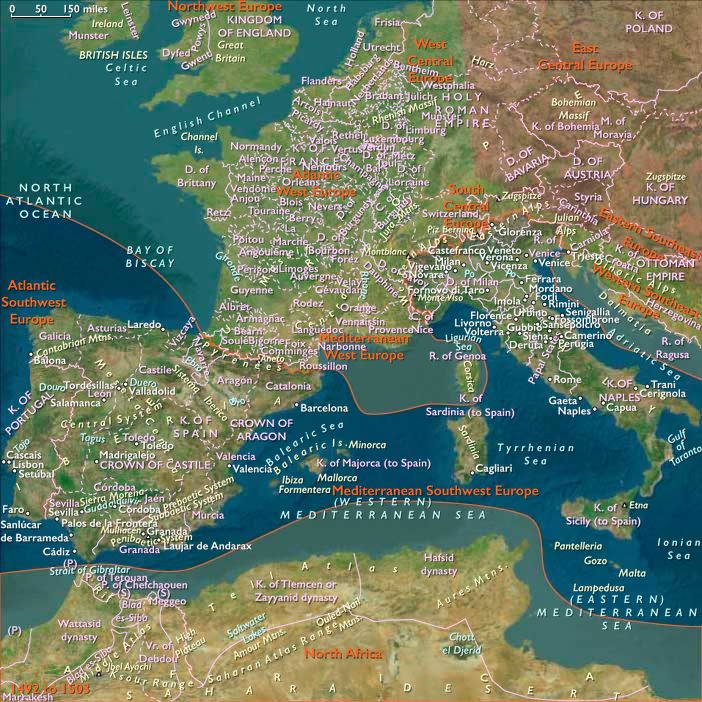
Subregions
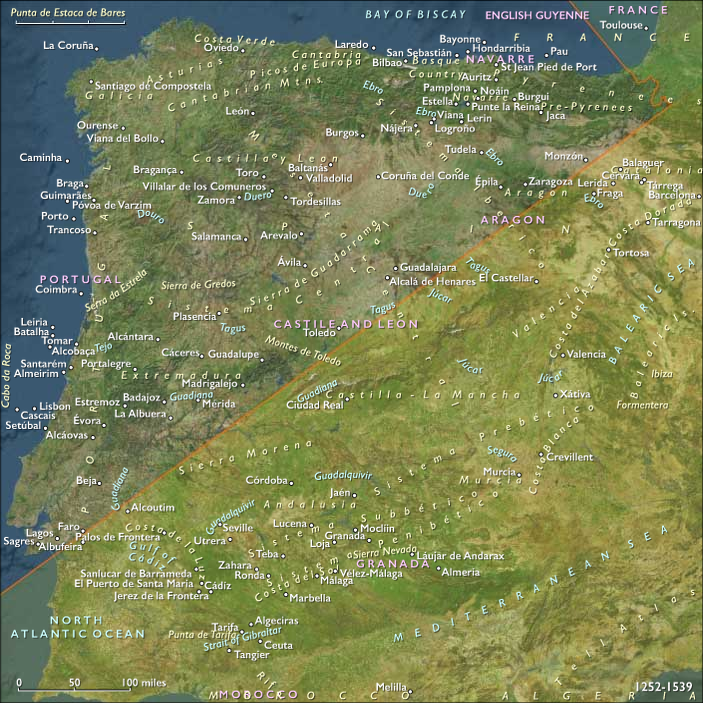
Related Events
Showing 10 events out of 40163 total
Years: 1496 - 1496
August
Locations
People
- Catherine of Aragon
- Ferdinand II of Aragon
- Isabella I of Castile
- Isabella, Queen consort of Portugal and the Algarves
- Joanna of Castile
- Maria of Aragon
- Maximilian I of
- Philip I of Castile
Groups
Topics
Subjects
Regions
Subregions