
Jewish scholars begin an intensive study of …
Years: 405BCE - 394BCE
Jewish scholars begin an intensive study of the biblical laws from about 400, applying them to new situations and supplementing them with traditions of popular observance and with precedents established by prominent leaders.
This material, long transmitted by word of mouth and known as the Oral Torah, defines the meaning of biblical laws.
Ezra, a priest and “a scribe skilled in the law” has in Babylon compiled the Torah (Law, or the regulations of the first five books of the Old Testament).
He represents the position of stricter Babylonian Jews who have been upset by reports of laxity in Judah and desire to see matters corrected.
Ezra sets out in the spring of 397 BCE, the seventh year of the reign of Artaxerxes II, at the head of a sizable caravan, apparently with official status as a commissioner of the Persian government.
His title, “scribe of the law of the God of heaven,” is best understood as “royal secretary for Jewish religious affairs,” or the like.
The Persians are tolerant of native cults but, in order to avert internal strife and to prevent religion from becoming a mask for rebellion, insist that these be regulated under responsible authority.
The delegated authority over the Jews of the satrapy (administrative area) “beyond the river” (Avar-nahara) or west of the Euphrates River, is entrusted to Ezra; for a Jew to disobey the Law he brings is to disobey “the law of the king.” According to one view of the Biblical Book of Ezra, the purposes of scribe Ezra's mission to Jerusalem from the Persian court are apparently to introduce stricter observance of the Law and to dissolve marriages with foreigners.
Other scholars date Ezra’s arrival at 428 or 397 BCE.
Ezra, with the Book of Nehemiah, were originally one work in the Hebrew canon, and scholars disagree on whether the two books were written by the same hand.
Ezra is written to fit a schematic pattern in which the God of Israel inspires a king of Persia to commission a leader from the Jewish community to carry out a mission; three successive leaders carry out three such missions, the first rebuilding the Temple, the second purifying the Jewish community, and the third sealing of the holy city itself behind a wall. (This last mission, that of Nehemiah, is not part of the Book of Ezra.)
The theological program of the book explains the many problems its chronological structure presents.
It probably appeared in its earliest version around 400 BCE, and continued to be revised and edited for several centuries after before being accepted as scriptural around the time of Christ.
Locations
Groups
Topics
Subjects
Regions

Subregions
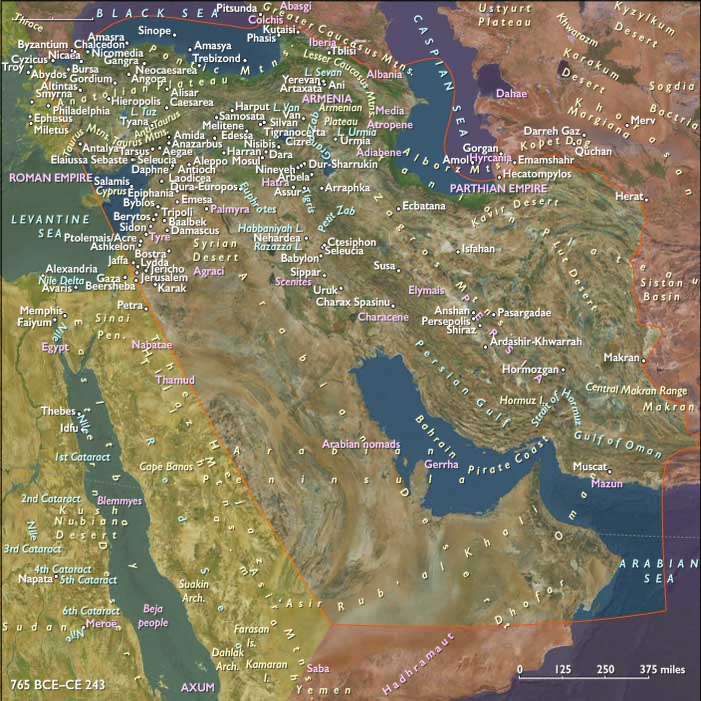
Years: 405BCE - 394BCE
Locations
Groups
Topics
Subjects
Regions
Subregions