
Jelena Gruba had first became Queen of …
Years: 1395 - 1395
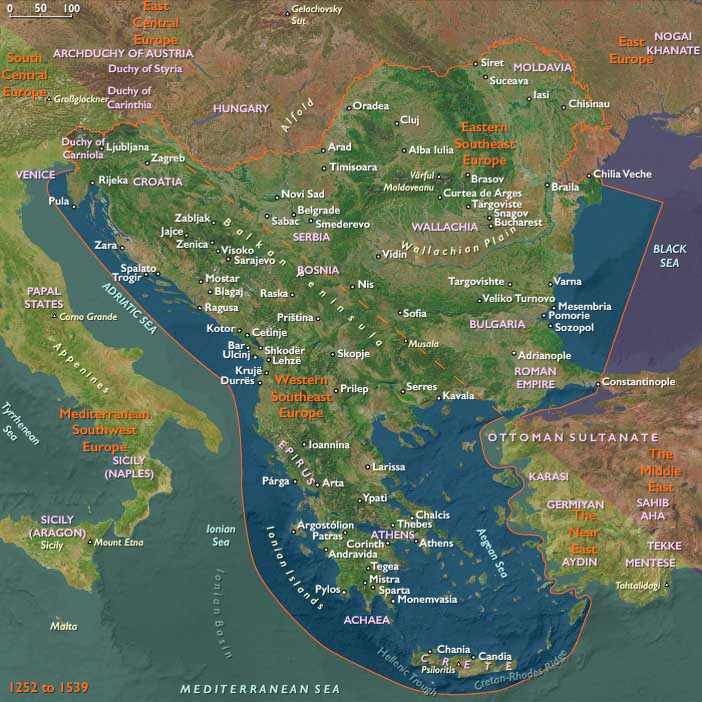
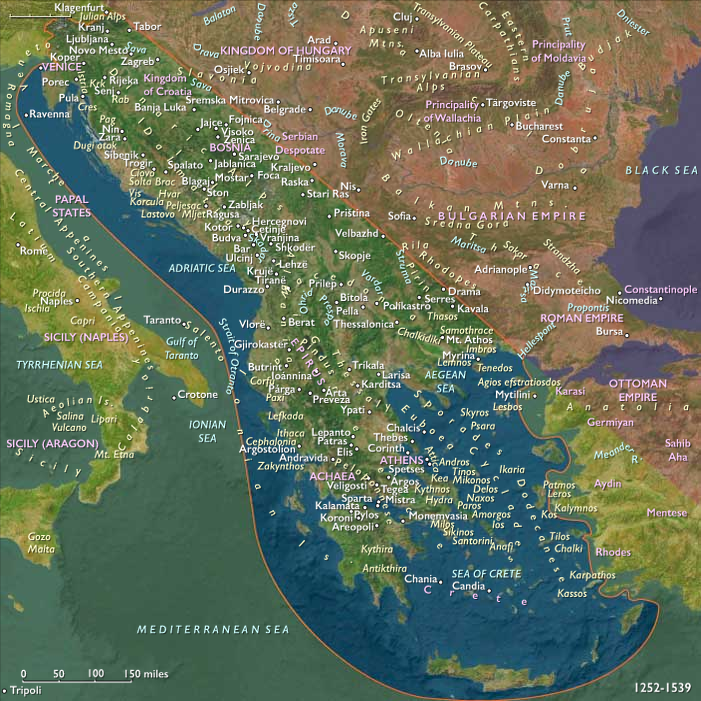
Jelena Gruba had first became Queen of Bosnia as consort to King Stephen Dabiša, who had ascended in 1391, on the death of his relative, King Stephen Tvrtko I of Bosnia.
While Dabiša is a Roman Catholic, it is not certain which religion Jelena practiced.
Their only surviving child is a daughter named Stana, mentioned in a charter by which Stephen Dabiša gave her an area in Zachlumia to govern.
The charter, issued on April 26, 1395, also says that the area is to be inherited by Juraj Radivojević, husband of Stana's daughter Vladava and thus grandson-in-law of King Dabiša and Queen Jelena.
Vladava and her husband had already had at least two children by the time the charter was issued, making the King and Queen great-grandparents.
Assuming that each of the three women—Jelena, Stana, and Vladava—married at the age of fifteen and became mothers by the age of sixteen, the Queen must be more than fifty years old when she succeeds her husband.
When Stephen Dabiša dies in September 1395, Jelena ceases to be queen consort.
Her husband had designated King Sigismund of Hungary, the husband of his cousin, Queen Mary, as his successor.
Mary, however, has predeceased Dabiša, dying in May the same year.
The Bosnian nobility refuse to recognize Sigismund as king, as his right had rested in his status as Mary's husband.
Instead, the nobility installs Jelena as the successor to her husband.
Thus, during her reign Bosnian nobility will grow in power independently from the crown.
Among these are Sandalj Hranić, Hrvoje Vukčić and Pavle Radenović who all rule their own demesnes independently from the Queen.
The Queen's demesne is a small territory in central Bosnia, while she loses direct control over the territories of Usora in the valley of the river of Sava.
On the other hand, Jelena's reign will see successful trade with the Republic of Ragusa.
Locations
People
Groups
Subjects
Regions
Subregions
Related Events
Showing 10 events out of 43421 total
Years: 1395 - 1395
Locations
People
Groups
Subjects
Regions
Subregions