
Jean II d'Estrées, born in a noble …
Years: 1678 - 1678
May
Jean II d'Estrées, born in a noble family from Picardie, is the nephew of Gabrielle d'Estrées, who had been the lover of King Henry IV of France.
Like his father François Annibal d'Estrées, also Marshal of France, Jean had pursued a military career from a very young age, becoming a colonel at twenty-three, a maréchal de camp at twenty-five and a lieutenant general at thirty-three.
He had fought in the Battle of Lens (1648) under the grand Condé, afterwards fightiuing under Turenne in Lorraine in 1652 - 1653, then in Flanders.
He was made prisoner at Valenciennes in 1656 and had been loyal to the Royal family during the Fronde.
Joining the new French Navy in 1668 on the demand of his friend Colbert, his patron in this service is the Duke de Beaufort.
He rises through the ranks very fast, thanks to the influence of his family name (he will become Marshal of France in 1681.)
Such advancement is unjustified, as d'Estrées has no naval experience and furthermore possesses a detestable character that alienates his subordinates.
His first campaign was in the Caribbean, to which he has returned four more times, becoming the French naval specialist in the region.
During the Franco-Dutch War, he has been put in command of the French fleet that is to fight alongside the English fleet against the Dutch.
He had participated on board the Saint Philippe in the Battle of Solebay in 1672 and the next year on the la Reine, in the Battle of Schooneveld and the Battle of Texel.
None of these battles were victories and d'Estrées had been faulted for his hesitant attitude.
He had in 1676 and 1677 succeeded in conquering Gorée, Cayenne and Tobago, destroying the Dutch fleet based there, but these successes were soon to be overshadowed by the disaster of the Las Aves Archipelago.
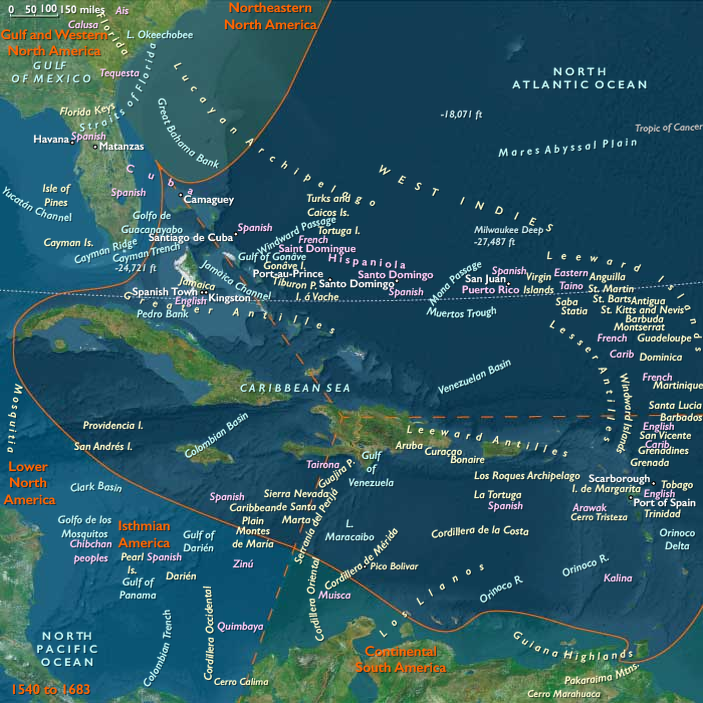
Admiral d'Estrées and his fleet of seventeen vessels, including several hired buccaneers, is in May 1678 dispatched on a mission to conquer the Dutch-occupied islands of Bonaire and Curacao.
When d'Estrées' fleet passes the Los Roques Archipelago on the way to Bonaire, a small fleet of Dutch boats, seeking to defend themselves from the French attack, sets sail from Curacao destined for Las Aves.
Once assembled on the archipelago, the Dutch maneuver their ships into the heart of Las Aves' lagoon.
As night falls, lanterns are lit.
Simulating the lights of a town, the Dutch sailors hope to persuade the French that they had reached Bonaire, and in so doing, attract the French galleons onto the reef.
The Admiral heads his flagship, the seventy-gun le Terrible, straight for the trap and directly towards the coral reef, against the advice of his subordinates, who suspect the danger.
By the time the breakers are spotted, it is too late: le Terrible cannot avoid the reef.
D’Estrées fires guns to warn off the rest of the fleet, but the crews of the other ships, believing he is under attack by the Dutch, rush to his aid.
One by one, the rest of the vessels in the fleet strike the reef and sink, causing five hundred sailors to drown.
This error of navigation is unique in maritime history, but the nephew of Gabrielle d'Estrées is untouchable.
Louis XIV and Seignelay will continue to give him their confidence.
Locations
People
Groups
- Netherlands, United Provinces of the (Dutch Republic)
- France, (Bourbon) Kingdom of
- Dutch West Indies
Topics
- Colonization of the Americas, Spanish
- Colonization of the Americas, French
- Colonization of the Americas, English
- Colonization of the Americas, Dutch
- Piracy, Golden Age of
- Franco-Dutch War
Commodoties
- Fish and game
- Weapons
- Hides and feathers
- Gem materials
- Strategic metals
- Slaves
- Sweeteners
- Land
- Tobacco
Subjects
Regions
Subregions
Related Events
Showing 10 events out of 30409 total
Years: 1678 - 1678
May
Locations
People
Groups
- Netherlands, United Provinces of the (Dutch Republic)
- France, (Bourbon) Kingdom of
- Dutch West Indies
Topics
- Colonization of the Americas, Spanish
- Colonization of the Americas, French
- Colonization of the Americas, English
- Colonization of the Americas, Dutch
- Piracy, Golden Age of
- Franco-Dutch War
Commodoties
- Fish and game
- Weapons
- Hides and feathers
- Gem materials
- Strategic metals
- Slaves
- Sweeteners
- Land
- Tobacco
Subjects
Regions
Subregions