
Jayavarman VII had been the last of …
Years: 1262 - 1262
Jayavarman VII had been the last of the great kings of Angkor, the largest pre-industrial urban center in the world, not only because of the successful war against the Cham, but also because he did not rule with the tyranny of his immediate predecessors, because he unified the Khmer empire, and above all because of the building projects carried out under his rule, including the new capital now called Angkor Thom (literally: "Great City").
The empire's official religions included Hinduism and Mahayana Buddhism, until Theravada Buddhism prevailed after its introduction from Sri Lanka in the thirteenth century.
The history of the Khmer kingdom, or Kambuja, after Jayavarman VII is very unclear.
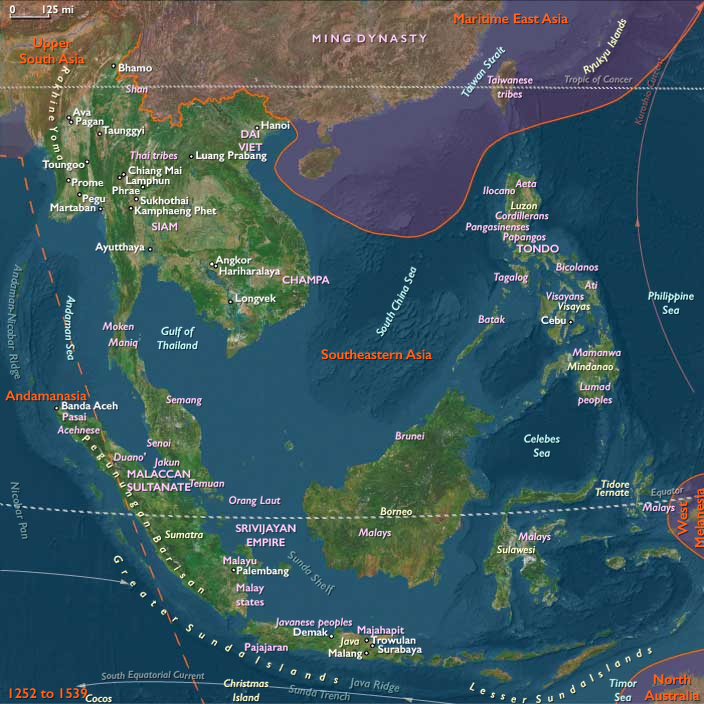
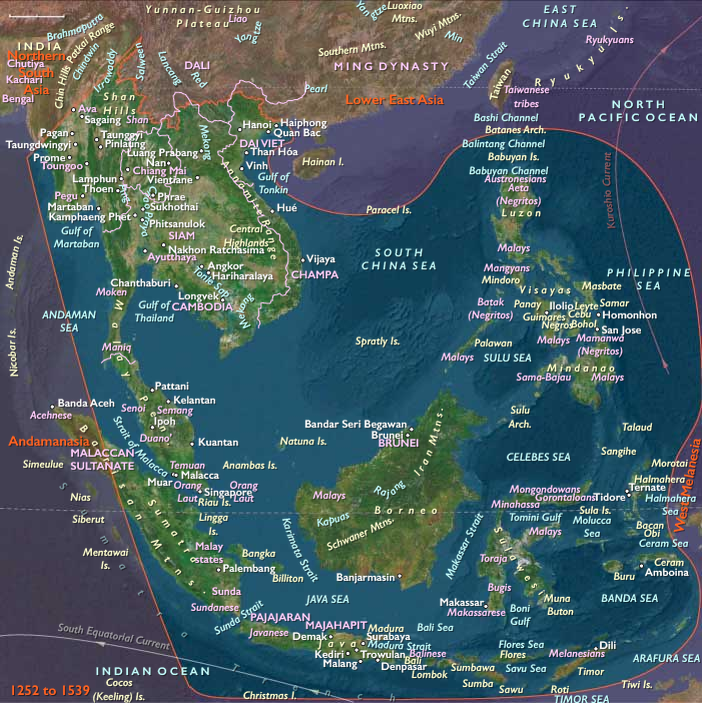
The Khmer had withdrawn in the year 1220 from many of the provinces previously conquered from Champa.
Before the death of Indravarman II, one of Jayavarman’s successors, in 1243, his Thai subjects in the West had rebelled, establishing the first Thai kingdom at Sukhothai and pushing back the Khmer.
In the following two hundred years, the Thais will become the chief rivals of Kambuja.
During the dark thirteenth century also, most of the Buddha statues in the empire (archaeologists estimate the number at over ten thousand of which few traces remain) will be destroyed and Buddhist temples converted to Hindu temples.
The empire's legacy will greatly influence the cultures not only of its successor Cambodia but the cultures of Thailand and Laos as well.
Locations
Groups
- Hinduism
- Tai peoples, or Thais
- Buddhists, Theravada
- Khmer Empire (Angkor)
- Champa, Kingdom of
- Sukhothai (Siam), Thai state of
Topics
Subjects
Regions
Subregions
Years: 1262 - 1262
Locations
Groups
- Hinduism
- Tai peoples, or Thais
- Buddhists, Theravada
- Khmer Empire (Angkor)
- Champa, Kingdom of
- Sukhothai (Siam), Thai state of
Topics
Subjects
Regions
Subregions