
Japan’s effective rulers for more than a …
Years: 1324 - 1335
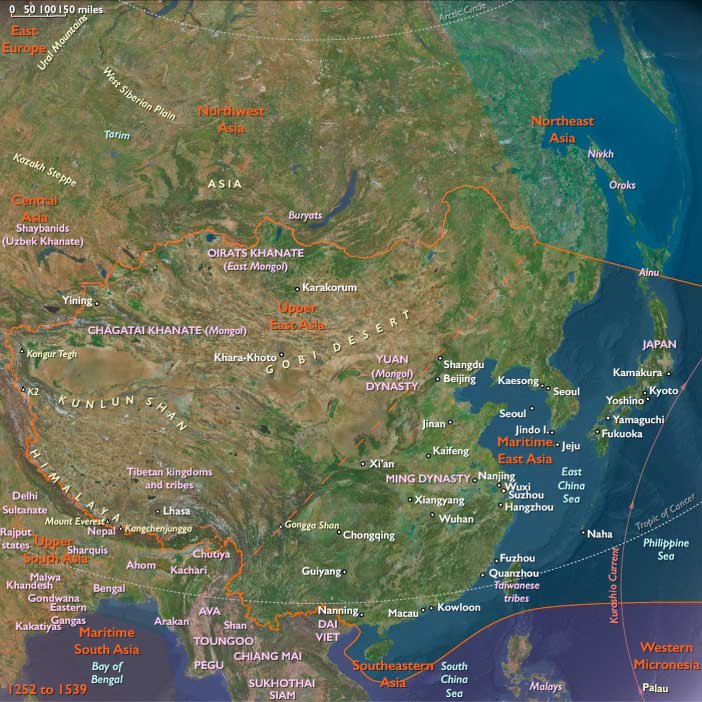
Japan’s effective rulers for more than a century have been Hojos, through conspiracy and assassination, while they uphold the military virtues on which the shogunate had been founded.
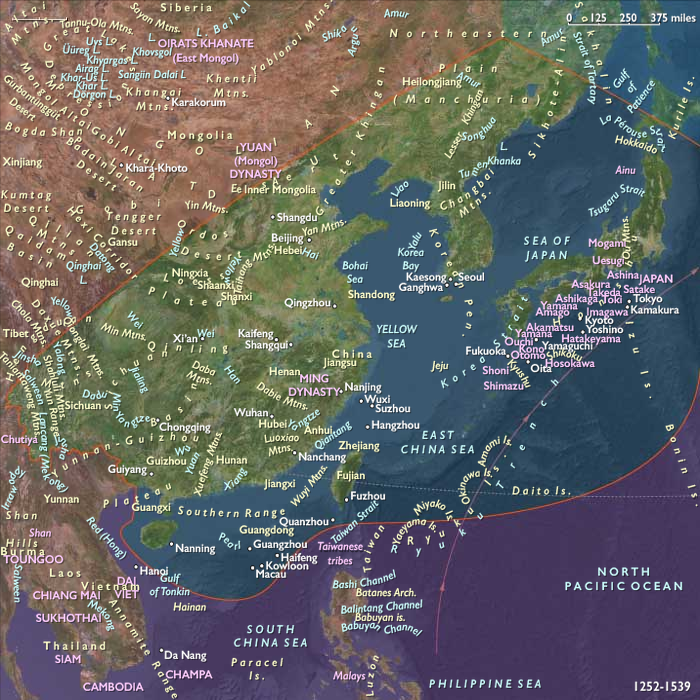
Although no Hojo ever takes the title of shogun, they continue to rule as shikken (regent) from the Bakufu at Kamakura and direct the emperor, installed in Kyoto, in his appointments of puppet shoguns.
By now, however, even the Minamotos, the Hojos’s primary supporters, have become disaffected and distrustful of the Hojo dictatorship.
Agents of the shogunate discover, in 1331, that the Japanese emperor, Go-daigo II, is planning to destroy Kamakura.
The emperor, vainly attempting to resist the troops sent against him, is taken prisoner in 1332 and exiled to the island of Oki.
Escaping in 1333, he returns the mainland and raises his standard, to which warriors flock from all over Japan.
Several of the Bakufu’s most powerful officers desert to the emperor’s side, including the Minamoto general Ashikaga Takauji, who, upon being ordered to lead the Bakufu army against the imperial forces, turns himself and his troops over to the emperor.
Ashikaga and another former Bakufu general then burn Kamakura to the ground, thereby destroying the Kamakura Shogunate and, in 1334, inaugurating the era known as the Kemmu Restoration.
Locations
People
Groups
Topics
Commodoties
Subjects
Regions
Subregions
Years: 1324 - 1335
Locations
People
Groups
Topics
Commodoties
Subjects
Regions
Subregions