
Japan’s Edo Shogunate, in the interest of …
Years: 1636 - 1647
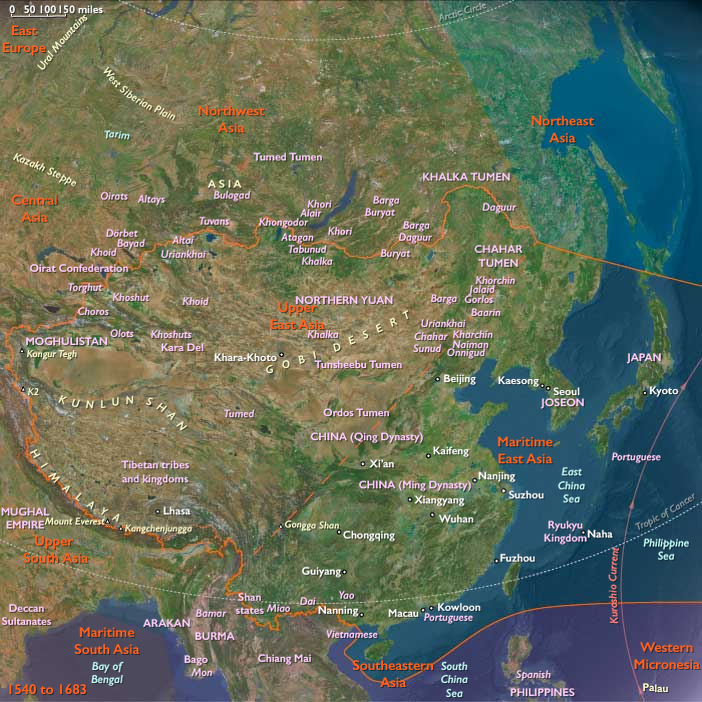
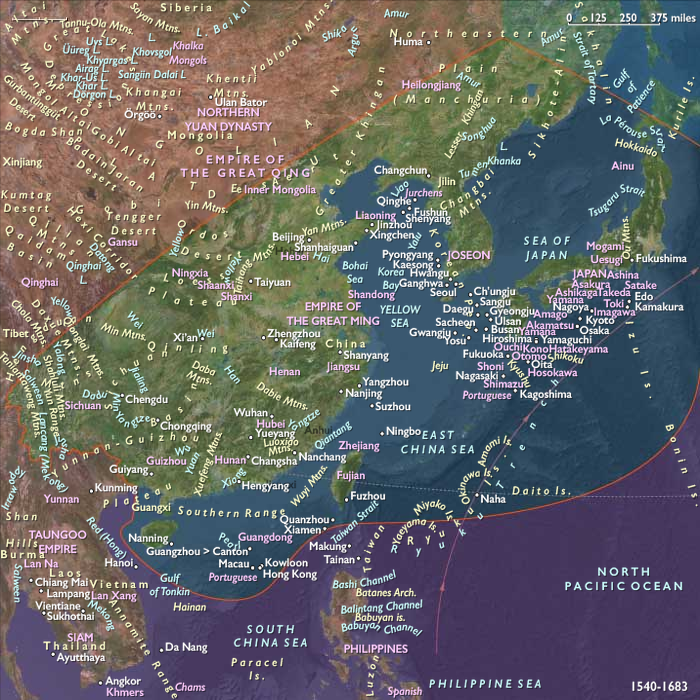
Japan’s Edo Shogunate, in the interest of regulating and weakening the daimyo, has decreed that each daimyo must spend alternate years in the capital and in their country mansions.
Because of this rule, Japan’s transportation and lodging systems evolved enormously; further, the decree promoted cultural exchange between Edo and the provinces.
The shogunate, staffed by the Bushi, or Samurai, class of warriors turned bureaucrats, promulgated a rigid class system, Shi-no-ko-sho.
The merchant class, Sho, though socially inferior to the warrior (Shi), farmer (No) and artisan (Ko) classes, became wealthy and enjoyed the richest life of the four upper classes.
The shogunate also established two lower classes: the Eta, assigned such “unclean” occupations as butcher or tanner; and the Hinin, “inhuman” or criminal class, from which one could potentially re-ascend to one’s original class.
Thousands of heavily taxed farmers in Japan’s Amakasu province on Japan’s western shore rebel against their daimyo in 1637 and capture the castle of Shimabara.
The daimyo turn for help to the shogunate, whose army arrives to slaughter the rebellious, and mostly Christian, peasant families to the last child.
The Japanese government under Tokugawa Iemetsu, the third shogun, prohibits Christianity and erects an isolation policy called sakoku, expels from Japan all foreign traders—except the Chinese and the Dutch, who may only call in Nagasaki’s Dejima port.
Japan, now effectively closed to outside influences; will remain so for more than two centuries.
Locations
People
Groups
Regions
Subregions
Related Events
Showing 10 events out of 32410 total
Years: 1636 - 1647
Locations
People
Groups
Regions
Subregions