
Economic development during the Tokugawa period includes …
Years: 1636 - 1647
Economic development during the Tokugawa period includes urbanization, more shipping of commodities, a significant expansion of domestic and, initially, foreign commerce, and a diffusion of trade and handicraft industries.
Edo has a population of more than one million and Osaka and Kyoto each have more than four hundred thousand inhabitants by the mid-eighteenth century.
Many other castle towns grow as well.
Osaka and Kyoto become busy trading and handicraft production centers while Edo is the center for the supply of food and essential urban consumer goods.
The construction trades flourish along with banking facilities and merchant associations.
Increasingly, han authorities oversee the rising agricultural production and the spread of rural handicrafts.
Locations
People
Groups
Subjects
Regions
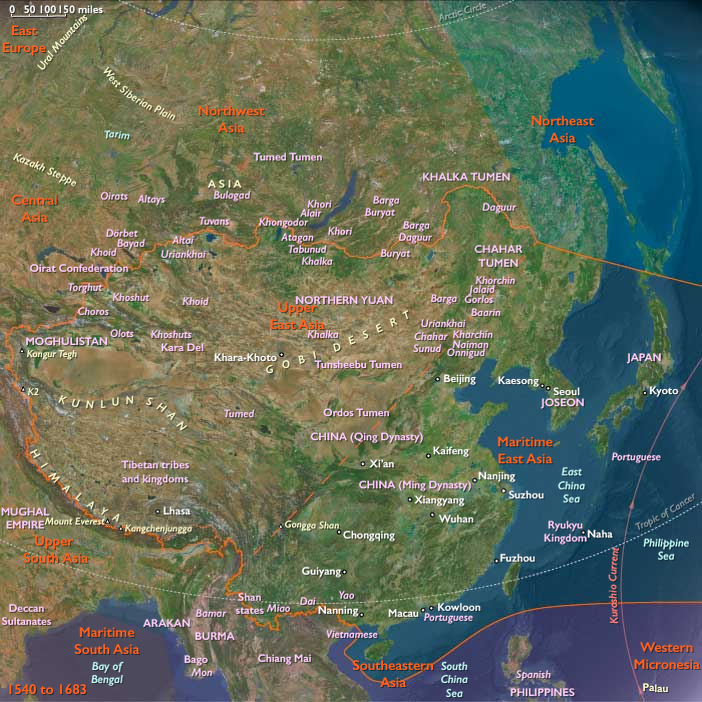
Subregions
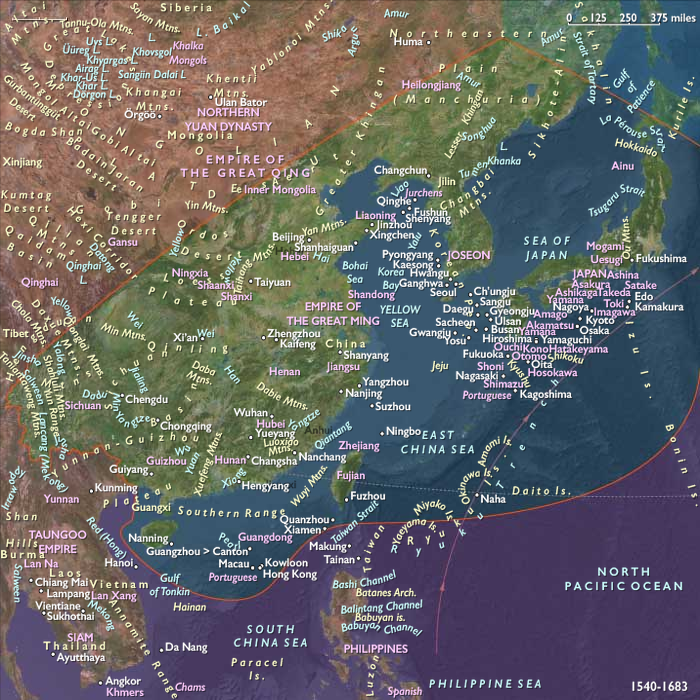
Years: 1636 - 1647
Locations
People
Groups
Subjects
Regions
Subregions