
Jan Sobieski, after graduating from the Nowodworski …
Years: 1666 - 1666
Jan Sobieski, after graduating from the Nowodworski College in Kraków, had then graduated from the philosophical faculty of the Jagiellonian University.
After finishing his studies, together with his brother Marek, John had left for western Europe, where he had spent more than two years traveling.
During that time he had met such major political figures as Louis II de Bourbon, Charles II of England and William II, Prince of Orange, and learned French, German and Italian, in addition to Latin.
This will prove to be vital during his later military career.
Both brothers returned to Poland in 1648 and volunteered for the army during the Khmelnytsky Uprising.
Jan had founded his own banner of cavalry and commanded it in the rank of Rotamaster.
The brothers had been separated after the Battle of Zboriv, and Marek had died in Tatar captivity the following year.
Jan, promoted to the rank of pułkownik, had fought with distinction in the Battle of Berestechko.
A promising commander, Jan had been sent by King John II Casimir to Istanbul in the Ottoman Empire as an envoy, where Sobieski had learnt the Tatar language and studied Turkish military traditions and tactics.
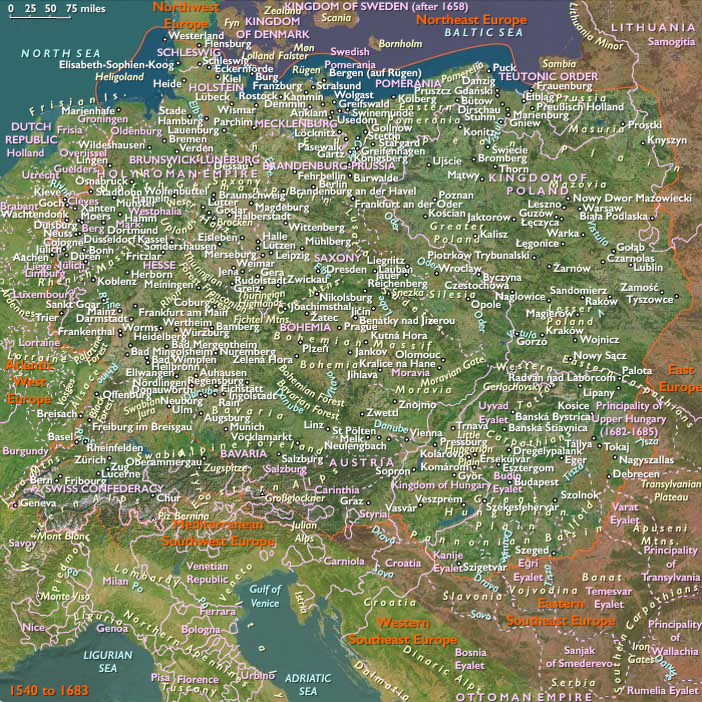
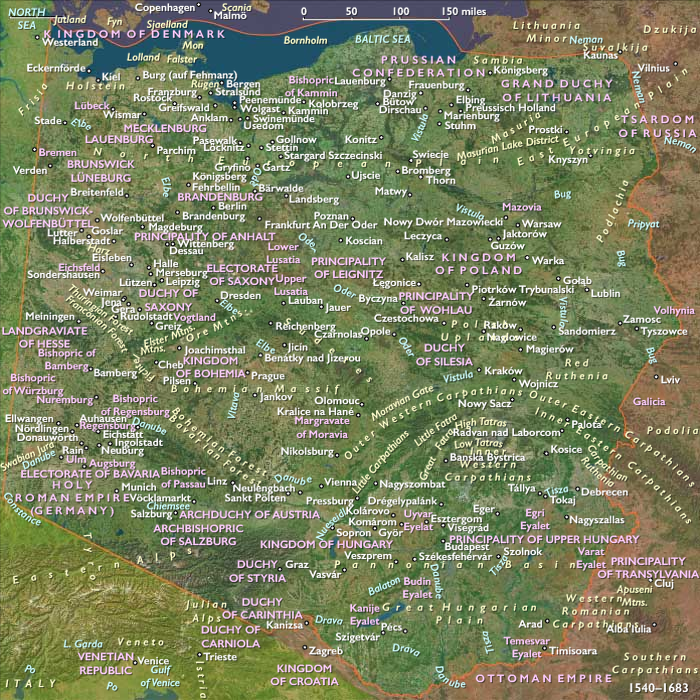
After the start of the Swedish invasion of Poland known as "The Deluge", Sobieski had been among the Greater Polish regiments led by Krzysztof Opaliński, Palatine of Poznań which capitulated at Ujście, and sworn allegiance to King Charles X Gustav of Sweden.
However, in less than a year he had returned with his unit to the Polish side, and after April 1656, he again fought for the Polish king.
During the three-day long battle of Warsaw of 1656, Sobieski's command of a two thousand man-strong regiment of Tatar cavalry earned him promotion to the title of Lord Standard-Bearer of the Crown.
He had married Marie Casimire Louise de la Grange d'Arquien in 1665 and had been promoted to the rank of Grand Marshal of the Crown, and the following year, to the rank of Field Hetman of the Crown.
A strong supporter of the French faction, Sobieski remains loyal to the King during the infamous Lubomirski Rebellion, which further helps his military career, though Lubomirski’s rebels defeat royal forces led by Sobieski at Mątwy in 1666.
Locations
People
Groups
Topics
Commodoties
Subjects
Regions
Subregions
Years: 1666 - 1666
Locations
People
Groups
Topics
Commodoties
Subjects
Regions
Subregions