
King James V of Scotland …
Years: 1536 - 1536
March
King James V of Scotland firmly aligned himself with the pro-French, Catholic faction, resisting English influence during a critical phase of diplomatic realignments in Europe. His commitment to France was deeply rooted in the historic Auld Alliance, which bound Scotland and France against their mutual adversary, England.
Diplomatic Maneuvering and the Treaty of Rouen (1517)
As early as August 1517, under the terms of the Treaty of Rouen, France had pledged a royal bride for the Scottish king if the traditional Franco-Scottish alliance was upheld. However, fulfilling this promise proved complicated. The daughters of Francis I were either committed elsewhere or suffering from poor health, leaving the marriage issue unresolved.
James’s Marriage Negotiations Elsewhere (1529–1533)
Impatient and perhaps aiming to remind Francis of his obligations, James's diplomats, beginning in the summer of 1529, explored other potential marital alliances, notably with Catherine de' Medici, Duchess of Urbino (who later married the future French king Henry II), and Mary of Austria, Queen of Hungary and sister of Emperor Charles V.
Yet, these explorations also proved inconclusive. By February 1533, two French ambassadors, Guillaume du Bellay, sieur de Langes, and Etienne de Laigue, sieur de Beauvais, freshly returned from Scotland, informed the Venetian ambassador in London that James had shifted interest toward Christina of Denmark—again without reaching an agreement.
The Final Marriage Agreement: Mary of Bourbon (1536)
Ultimately, after prolonged diplomatic uncertainty and Francis I’s refusal due to concerns over his daughter Madeleine’s fragile health, an agreement was finalized on March 6, 1536, for James V to marry Mary of Bourbon, daughter of the Duke of Vendôme, a prominent branch of French nobility. Although Mary was not a princess of royal blood, Francis ensured she would receive a dowry equivalent to that of a French princess, reaffirming Scotland’s elevated standing in French diplomacy.
The marriage arrangement reinforced the diplomatic bonds underpinning the Auld Alliance, reflecting Scotland’s ongoing strategic commitment to France, while underscoring the intricate diplomatic landscape of European alliances during this period.
Locations
People
- Catherine de' Medici
- Christina of Denmark
- Corneille de Lyon
- Francis I of France
- Guillaume du Bellay
- Henry II, king of Navarre
- Ippolito II d'Este
- James V, King of Scots
- Madeleine of Valois
- Mary of Hungary
Groups
- Christians, Roman Catholic
- France, (Valois) Kingdom of
- Scotland, Kingdom of
- England, (Tudor) Kingdom of
- Protestantism
Topics
Subjects
Regions
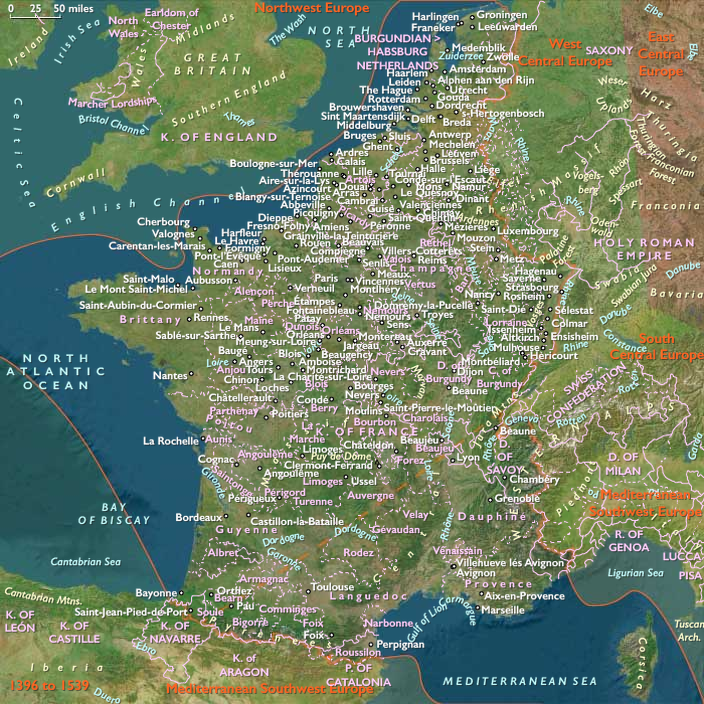
Subregions
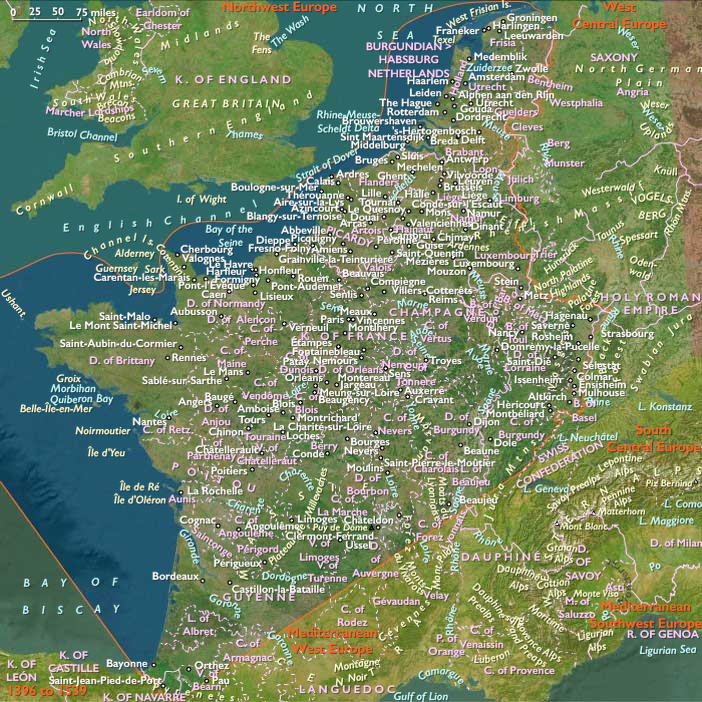
Years: 1536 - 1536
March
Locations
People
- Catherine de' Medici
- Christina of Denmark
- Corneille de Lyon
- Francis I of France
- Guillaume du Bellay
- Henry II, king of Navarre
- Ippolito II d'Este
- James V, King of Scots
- Madeleine of Valois
- Mary of Hungary
Groups
- Christians, Roman Catholic
- France, (Valois) Kingdom of
- Scotland, Kingdom of
- England, (Tudor) Kingdom of
- Protestantism
Topics
Subjects
Regions
Subregions