
Jalal ad-Din’s Muslim forces block their Mongol …
Years: 1221 - 1221
March
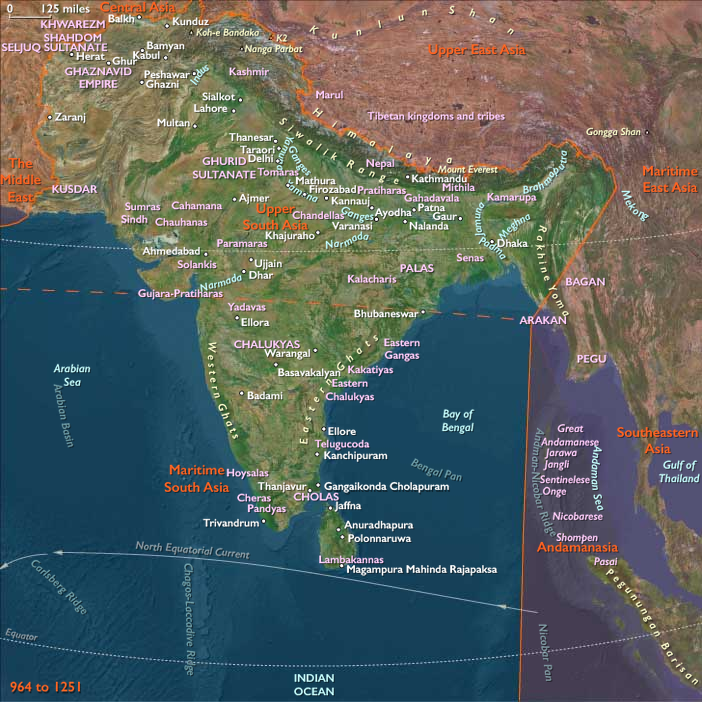
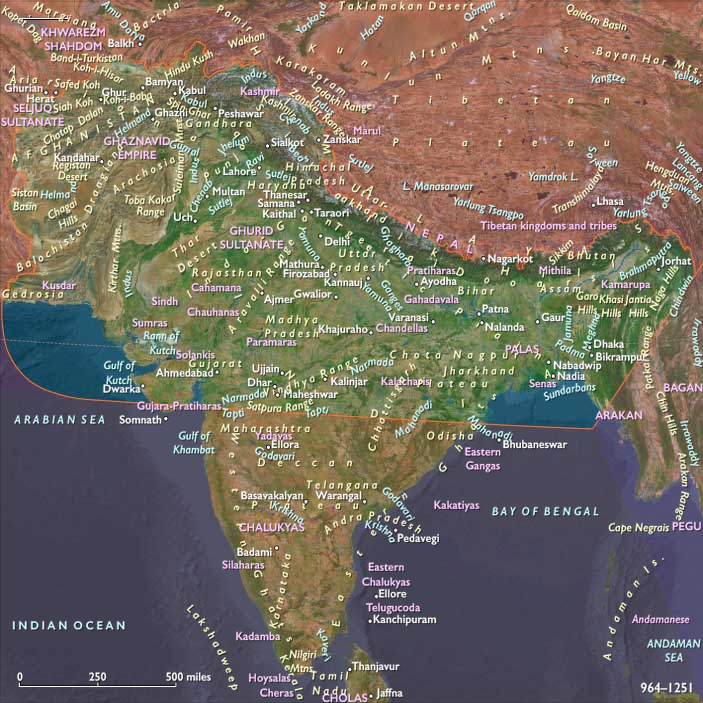
Jalal ad-Din’s Muslim forces block their Mongol pursuers near the Afghan city of Bamian in a pass between the Koh-i-Baba mountains and the Hindu Kush.
Genghis Khan lays siege to the city.
Angered at the death of a grandson at the hands of the defenders, he captures Bamian after incurring heavy losses, razes it, and slaughters all the inhabitants.
(Afterward, even the Mongols refer to Bamian as “the city of sorrow.”) Jalal’s forces continue their flight into India, the Mongols at their heels, adhering to Genghis Khan’s dictum that he leave no potential attacker alive.
It is commonly believed after the local Afghan population was wiped out, Genghis repopulated the area with some of his Mongol troops and their enslaved women, in order to guard the region while he continued his campaign.
These settlers would become the ancestors of the Hazara people—with the word “Hazara” most likely derived from the Persian word “yek hezar” (“one thousand”), for the Mongol military unit of one thousand soldiers.
Locations
People
Groups
- Persian people
- Abbasid Caliphate (Baghdad)
- Kipchaks
- Mongols
- Hazara people
- Mongol Empire
- Delhi, Sultanate of (Mamluk or Ghulam Dynasty)
- Khwarezm dynasty
Topics
- Genghis Khan, Conquests of
- Mongol Conquests
- Mongol invasion of Khwarezmia and Eastern Iran
- Mongol Invasion of Central Asia
- Mongol Invasion of India
- Parwan, Battle of
- Bamian, 1221 siege of
Commodoties
Subjects
Regions
Subregions
Related Events
Showing 10 events out of 19 total
Years: 1221 - 1221
March
Locations
People
Groups
- Persian people
- Abbasid Caliphate (Baghdad)
- Kipchaks
- Mongols
- Hazara people
- Mongol Empire
- Delhi, Sultanate of (Mamluk or Ghulam Dynasty)
- Khwarezm dynasty
Topics
- Genghis Khan, Conquests of
- Mongol Conquests
- Mongol invasion of Khwarezmia and Eastern Iran
- Mongol Invasion of Central Asia
- Mongol Invasion of India
- Parwan, Battle of
- Bamian, 1221 siege of
Commodoties
Subjects
Regions
Subregions