
Jalāl ad-Dīn Muhammad Balkhī, who will later …
Years: 1248 - 1248
Jalāl ad-Dīn Muhammad Balkhī, who will later be popularly known in the English-speaking world simply as Rumi, was born to native Persian speaking parents, probably in the village of Wakhsh, a small town located at the river Wakhsh in Persia (in what is now Tajikistan).
Wakhsh belonged to the larger province of Balkh (parts of now modern Afghanistan and Tajikistan), and in the year Rumi was born, his father, Baha ud-Din Walad, a theologian, jurist and a mystic, was a government-appointed scholar there.
When the Mongols invaded Central Asia sometime between 1215 and 1220, Baha ud-Din, with his whole family and a group of disciples, set out westwards.
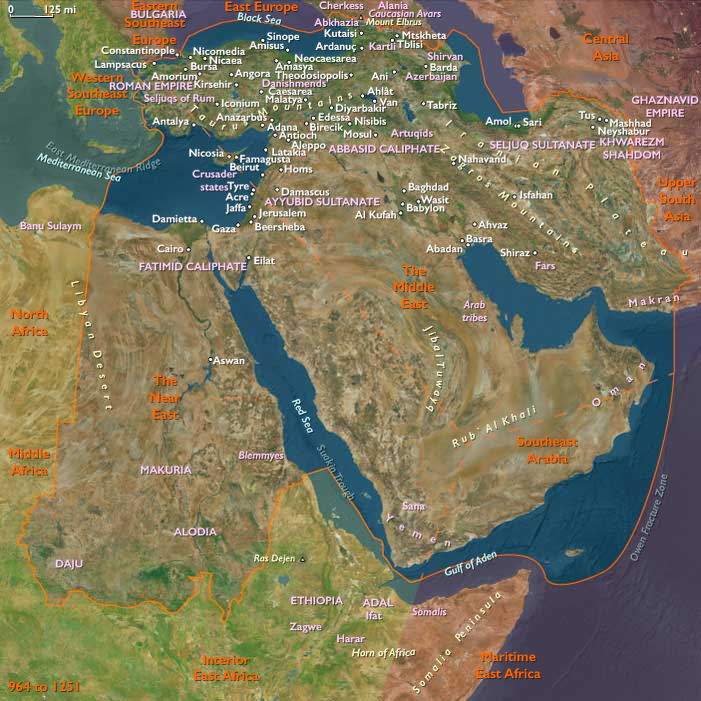
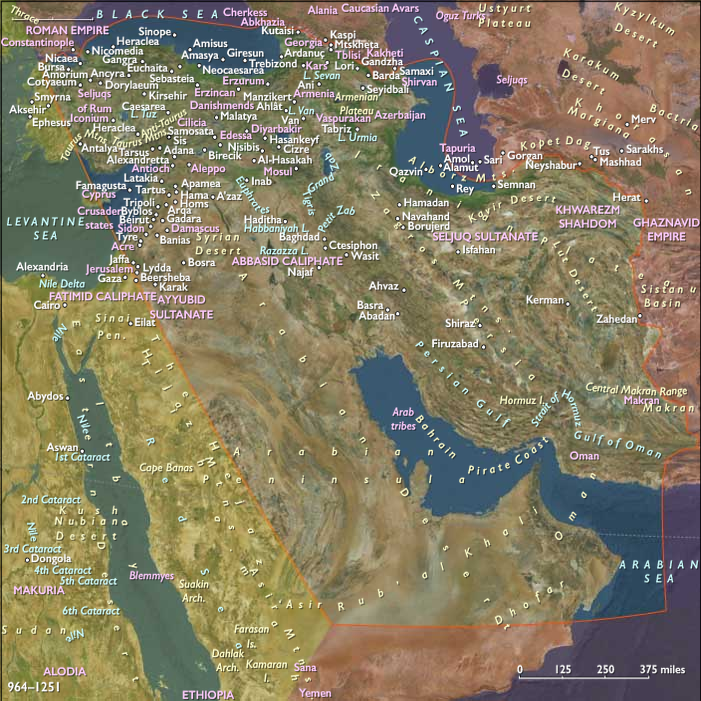
On May 1, 1228, most likely as a result of the insistent invitation of 'Alā' ud-Dīn Kayqubad, Baha ud-Din had come to and finally settled in Konya in Anatolia, within the westernmost territories of the Seljuq Sultanate of Rûm.
Baha ud-Din had become the head of a madrassa (religious school) and when he died in 1232, Rumi, aged twenty-five, had inherited his father’s position as the Islamic molvi.
One of Baha' ud-Din's students, Sayyed Burhan ud-Din Muhaqqiq Termazi, had continued to train Rumi in the Shariah as well as the Tariqa, especially that of Rumi's father.
For nine years, Rumi had practiced Sufism as a disciple of Burhan ud-Din until the latter died in 1240 or 1241, at which point Rumi's public life began: he became an Islamic jurist, issuing fatwas and giving sermons in the mosques of Konya.
He also served as a Molvi (Islamic teacher) and taught his adherents in the madrassa.
During this period, Rumi had also traveled to Damascus and is said to have spent four years there.
His meeting with the dervish Shams-e Tabrizi on November 5, 1244 had completely changed his life.
From an accomplished teacher and jurist, Rumi had been transformed into an ascetic.
On the night of December 5, 1248, as Rumi and Shams are talking, Shams is called to the back door.
He goes out, never to be seen again.
It is rumored that Shams had been murdered with the connivance of Rumi's son, 'Ala' ud-Din.
Rumi's love for, and his bereavement at the death of, Shams will find their expression in an outpouring lyric poems, Divan-e Shams-e Tabrizi.
He himself goes out searching for Shams and journeys again to Damascus.
Divan-e Shams-e Tabrizi, written in the New Persian language, is considered one of the greatest works of Persian literature.
Locations
People
Groups
Subjects
Regions
Subregions
Related Events
Showing 10 events out of 46696 total
Years: 1248 - 1248
Locations
People
Groups
Subjects
Regions
Subregions