
The approximate geography of Denmark as we …
Years: 7821BCE - 6094BCE
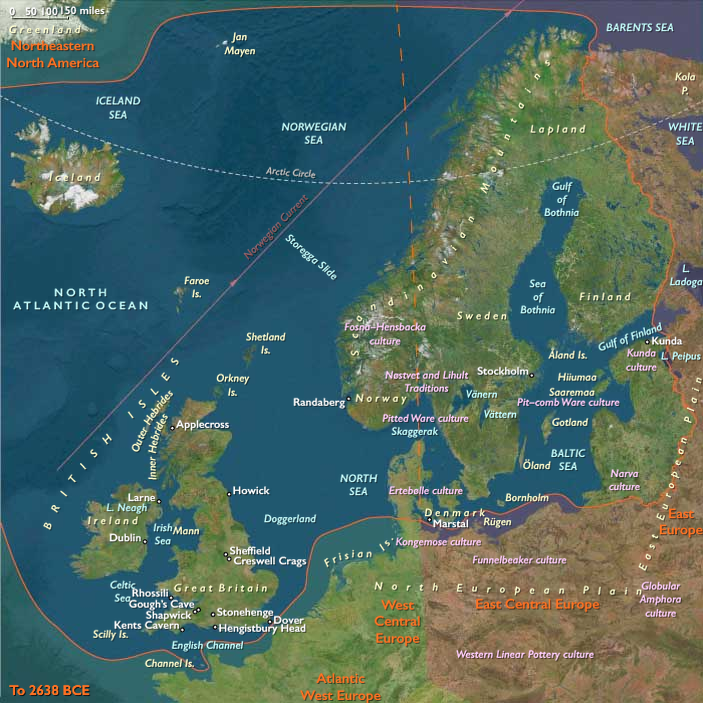
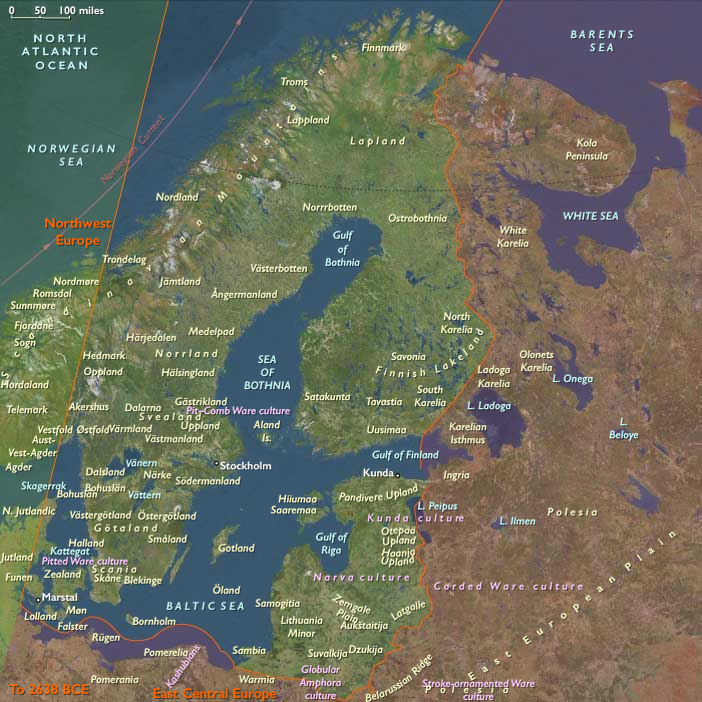
The approximate geography of Denmark as we know it today has been shaped by around 6000 BCE.
Denmark has some unique natural conditions for preservation of artifacts, providing a rich and diverse archeological record from which to understand the prehistoric cultures of this area.
The first inhabitants of this early post-glacial landscape in the so-called Boreal period were very small and scattered populations living from hunting of reindeer and other land mammals and gathering whatever fruits the climate was able to offer.
Around 8,300 BCE the temperature had risen drastically, now with summer temperatures around 15 degrees Celsius, and the landscape changed into dense forests of aspen, birch and pine and the reindeer moved north, while aurochs and elk arrived from the south.
The Koelbjerg Man is the oldest known bog body in the world and also the oldest set of human bones found in Denmark, dated to the time of the Maglemosian culture around 8,000 BCE.
With a continuing rise in temperature the oak, elm and hazel arrived in Denmark around 7000 BCE.
Now boar, red deer, and roe deer also begin to abound.
A burial from Bøgebakken at Vedbæk dates to about 6,000 BCE and contains twenty-two persons—including four newborns and one toddler.
Eight of the twenty-two had died before reaching twenty years of age—testifying to the hardness of hunter-gatherer life in the cold north.
Based on estimates of the amount of game animals, scholars estimate the population of Denmark to have been between thirty-three hundred to eight thousand persons in the time around seven thousand BCE.
It is believed that the early hunter-gatherers lived nomadically, exploiting different environments at different times of the year, gradually shifting to the use of semi permanent base camps.
Denmark has some unique natural conditions for preservation of artifacts, providing a rich and diverse archeological record from which to understand the prehistoric cultures of this area.
The first inhabitants of this early post-glacial landscape in the so-called Boreal period were very small and scattered populations living from hunting of reindeer and other land mammals and gathering whatever fruits the climate was able to offer.
Around 8,300 BCE the temperature had risen drastically, now with summer temperatures around 15 degrees Celsius, and the landscape changed into dense forests of aspen, birch and pine and the reindeer moved north, while aurochs and elk arrived from the south.
The Koelbjerg Man is the oldest known bog body in the world and also the oldest set of human bones found in Denmark, dated to the time of the Maglemosian culture around 8,000 BCE.
With a continuing rise in temperature the oak, elm and hazel arrived in Denmark around 7000 BCE.
Now boar, red deer, and roe deer also begin to abound.
A burial from Bøgebakken at Vedbæk dates to about 6,000 BCE and contains twenty-two persons—including four newborns and one toddler.
Eight of the twenty-two had died before reaching twenty years of age—testifying to the hardness of hunter-gatherer life in the cold north.
Based on estimates of the amount of game animals, scholars estimate the population of Denmark to have been between thirty-three hundred to eight thousand persons in the time around seven thousand BCE.
It is believed that the early hunter-gatherers lived nomadically, exploiting different environments at different times of the year, gradually shifting to the use of semi permanent base camps.
Groups
Topics
Commodoties
Subjects
Regions
Subregions
Related Events
Showing 10 events out of 69350 total
Years: 7821BCE - 6094BCE
Groups
Topics
Commodoties
Subjects
Regions
Subregions