
How much of the ultimate success of …
Years: 1240 - 1240
October
How much of the ultimate success of the Crusade of 1239 (the most successful since the First in territorial terms) is attributable to Theobald's intentions and how much was just fortuitous is debatable.
Theobald returns from Palestine late in 1240, before Richard of Cornwall arrives, because he had not wished to be present during any more debating over the leadership and direction of the enterprise.
Souvenirs that he brings back to Europe include the rose called "Provins" (Latin name rosa gallica 'officinalis', the Apothecary's Rose) from Damascus, transporting it "in his helmet"; a piece of the true cross; and perhaps the Chardonnay grape, which in modern times is an important component of champagne and many still white wines.
Richard fights no battles but manages to negotiate for the release of prisoners and the burials of Crusaders killed at a battle in Gaza in 1239.
He also refortifies Ascalon, which had been demolished by Saladin.
Locations
People
- Frederick II
- Henry I of Cyprus
- Hermann von Salza
- Pope Gregory IX
- Richard Filangieri
- Richard of Cornwall
- Theobald I of Navarre
- as-Salih Ayyub
Groups
- Muslims, Sunni
- Papal States (Republic of St. Peter)
- Champagne, County of
- Holy Roman Empire
- Pisa, (first) Republic of
- Genoa, (Most Serene) Republic of
- Christians, Roman Catholic
- Jerusalem, Latin Kingdom of
- Palestine, Frankish (Outremer)
- Hospitallers of St. John of Jerusalem
- Templar, Knights (Poor Knights of Christ and of the Temple of Solomon)
- Venice, (Most Serene) Republic of
- England, (Plantagenet, Angevin) Kingdom of
- Damascus, Ayyubid Dynasty of
- Egypt, Ayyubid Sultanate of
- Teutonic Knights of Acre (House of the Hospitalers of Saint Mary of the Teutons in Jerusalem)
- Cyprus, Kingdom of
- Sicily, Hohenstaufen Kingdom of
Topics
- Crusades, The
- Guelphs and Ghibellines
- Holy Roman Empire-Papacy War of 1228-43
- Lombards, War of the
- Aftermath of the Sixth Crusade: Crusader-Turkish Wars of 1230-48
Commodoties
Subjects
Regions
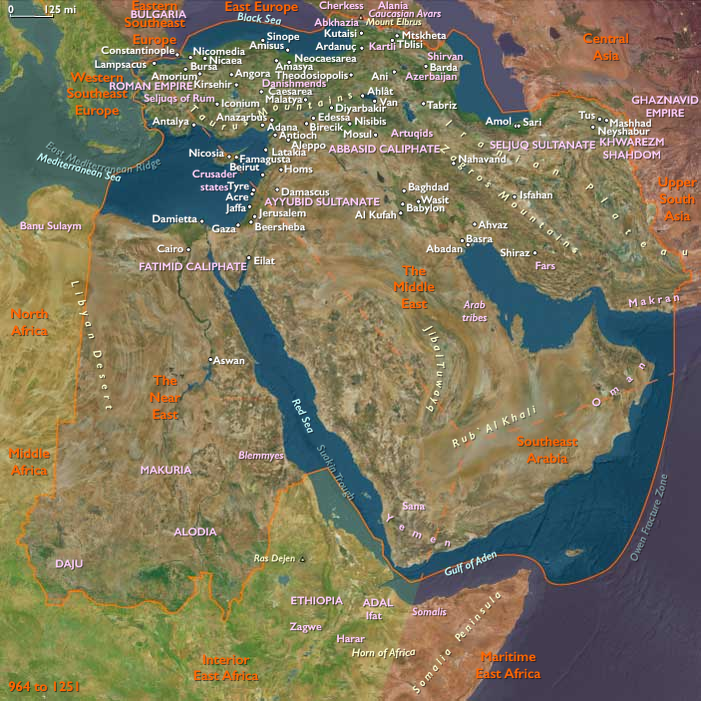
Subregions
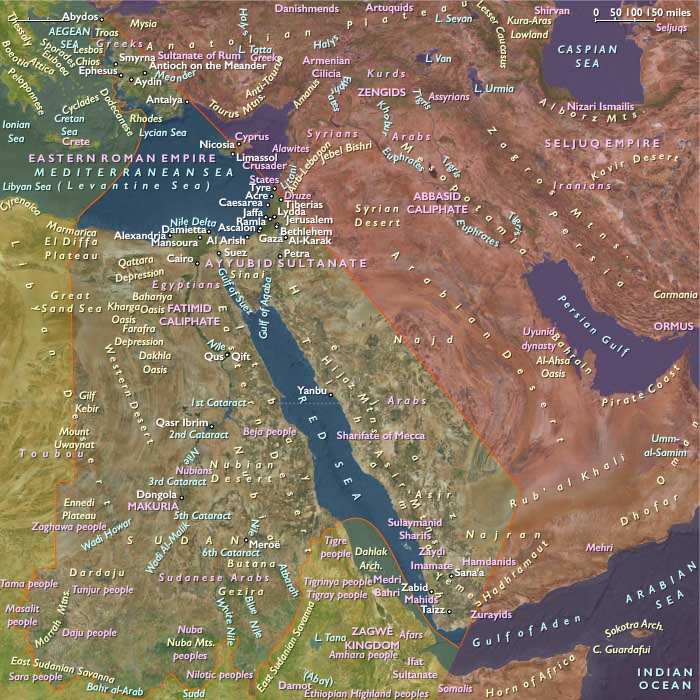
Related Events
Showing 10 events out of 19 total
Years: 1240 - 1240
October
Locations
People
- Frederick II
- Henry I of Cyprus
- Hermann von Salza
- Pope Gregory IX
- Richard Filangieri
- Richard of Cornwall
- Theobald I of Navarre
- as-Salih Ayyub
Groups
- Muslims, Sunni
- Papal States (Republic of St. Peter)
- Champagne, County of
- Holy Roman Empire
- Pisa, (first) Republic of
- Genoa, (Most Serene) Republic of
- Christians, Roman Catholic
- Jerusalem, Latin Kingdom of
- Palestine, Frankish (Outremer)
- Hospitallers of St. John of Jerusalem
- Templar, Knights (Poor Knights of Christ and of the Temple of Solomon)
- Venice, (Most Serene) Republic of
- England, (Plantagenet, Angevin) Kingdom of
- Damascus, Ayyubid Dynasty of
- Egypt, Ayyubid Sultanate of
- Teutonic Knights of Acre (House of the Hospitalers of Saint Mary of the Teutons in Jerusalem)
- Cyprus, Kingdom of
- Sicily, Hohenstaufen Kingdom of
Topics
- Crusades, The
- Guelphs and Ghibellines
- Holy Roman Empire-Papacy War of 1228-43
- Lombards, War of the
- Aftermath of the Sixth Crusade: Crusader-Turkish Wars of 1230-48
Commodoties
Subjects
Regions
Subregions