
Southern North America (7,821–6,094 BCE): Early Holocene …
Years: 7821BCE - 6094BCE
Southern North America (7,821–6,094 BCE): Early Holocene — Lakes & Caves, Coves & Gardens-in-the-Making
Geographic & Environmental Context
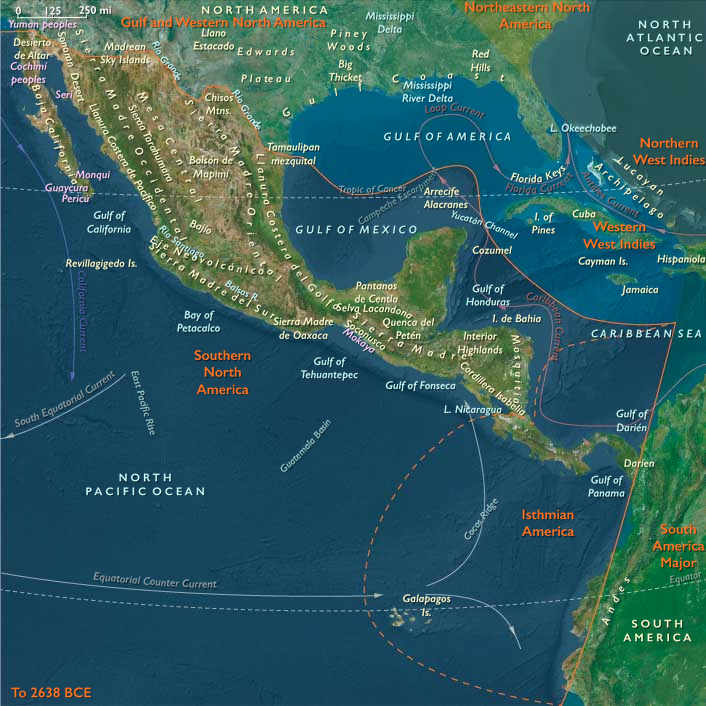
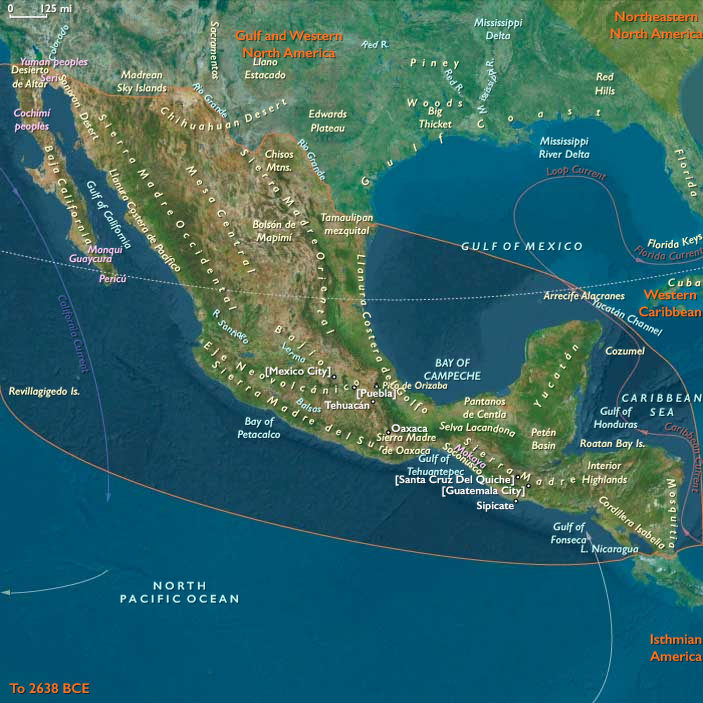
Southern North America spans Mexico and northern Central America (Guatemala, Belize, Honduras, El Salvador, Nicaragua):
Basin-and-range uplands and caldera lake basins (Basin of Mexico, Puebla–Tlaxcala), Tehuantepec and Soconusco Pacific coves, Maya karst with aguadas and bajos, and Gulf/Caribbean lagoon–mangrove belts.
Anchors: Basin of Mexico lake shores; Balsas–Tehuacán drainages; Oaxaca valleys; Usumacinta–Grijalva–Motagua corridors; Soconusco coves; Yucatán cenotes/aguadas; Papaloapan–Pánuco wetlands.
Climate & Environmental Shifts
Holocene Thermal Maximum brought warmer, wetter, seasonally reliable regimes: lake stands high; mangrove estuaries fixed along both coasts; rain-shadow basins retained perennial springs and marshy lake edges—ideal for semi-sedentary anchoring.
Subsistence & Settlement
Semi-sedentary forager–tenders clustered at water nodes:
-
Lakes & wetlands: fish, waterfowl, turtles; reeds for mats; manos–metates for seeds/tubers.
-
Valleys & slopes: managed stands and early tending of teosinte, squash/gourd, chile, amaranths, and avocadonear camps; gathered agave, oak mast, and palms.
-
Coasts: shellfish and fish from Pacific coves (Soconusco–Guerrero) and Gulf lagoons; seasonal turtle runs.
Camps and hamlets repeatedly reoccupied levees, springs, dune bars, and caves, forming place-memory landscapes.
Technology & Material Culture
Microlithic points and atlatl darts; manos/metates, polished adzes; nets, basketry, fish weirs; dugout canoes on quiet waters. Fired clay appears mainly as hearth lining/figurines; true pottery rare or absent this early. Ornaments in shell/seed/stone and persistent ochre use.
Movement & Interaction Corridors
River spines (Usumacinta–Grijalva–Motagua; Papaloapan; Pánuco) and short-hop coasts stitched systems together; Tehuantepec and Isthmian saddles enabled cross-continental portage; cave–spring shrine circuits organized exchange and rendezvous.
Cultural & Symbolic Expressions
Caves and springs acted as cosmological thresholds; hearth compounds and feast middens anchored rights to gardens, weirs, and groves; curated stones and pigments marked shrines at landings and passes.
Environmental Adaptation & Resilience
Resilience rested on portfolio livelihoods + storage: smoked/dried fish and meats; roasted seed/nut stores; slope gardens as “planted insurance.” Seasonal coast–valley–lake–upland rounds hedged variability.
Long-Term Significance
By 6,094 BCE, Southern North America was a proto-horticultural heartland: semi-sedentary lake and lagoon villages, slope gardens in embryo, and corridors linking coves to caves—operating codes that presage Mesoamerican village nucleation.
Groups
Commodoties
Subjects
Regions
Subregions
Related Events
Showing 10 events out of 69350 total
Years: 7821BCE - 6094BCE
Groups
Commodoties
Subjects
Regions
Subregions