
Southern North America (28,577 – 7,822 …
Years: 28577BCE - 7822BCE
Southern North America (28,577 – 7,822 BCE): Upper Pleistocene II — Deglaciation, Lake–Lagoon Worlds, and Gardens-in-the-Making
Geographic & Environmental Context
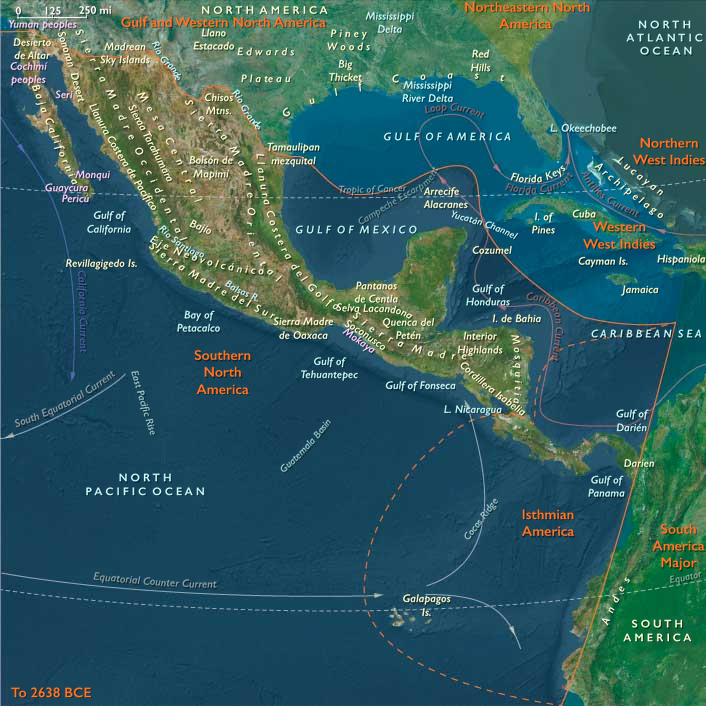
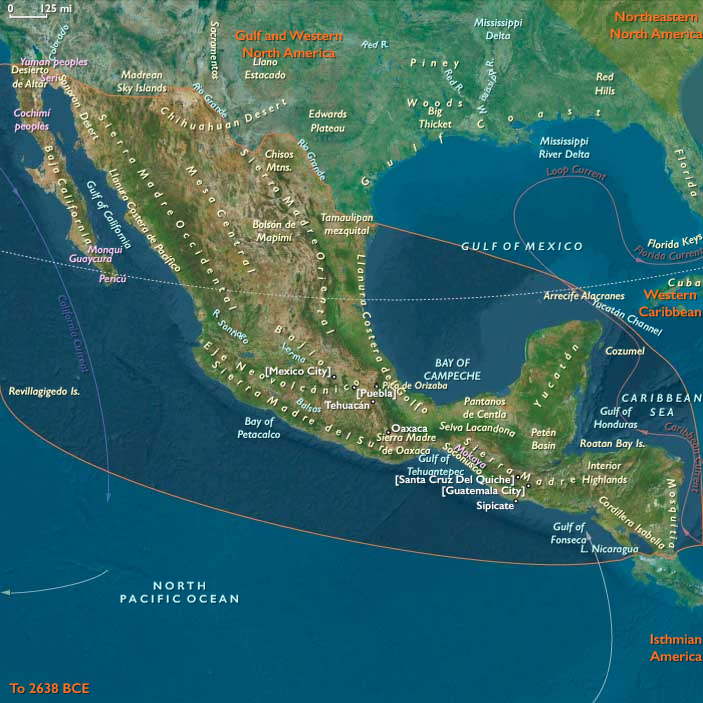
Southern North America spans Mexico and the northern Central American isthmus (Guatemala, Belize, Honduras, El Salvador, Nicaragua): a lattice of caldera lakes (Basin of Mexico, Puebla–Tlaxcala), valley strings (Balsas–Tehuacán, Oaxaca, Motagua), karst plateaus (Yucatán aguadas/bajos), great rivers (Usumacinta–Grijalva), the Isthmus of Tehuantepec saddle, and dual coasts—Pacific coves (Soconusco–Guerrero) and Gulf/Caribbean lagoons–mangroves.
-
Deglaciation dropped eustatic sea level rise into motion: Pacific pocket bays and Gulf lagoons took shape; lake stands in closed basins were high and productive; braided terraces formed along the Ebro-like Balsas/Motagua analogs of Mesoamerica.
Climate & Environmental Shifts
-
Last Glacial Maximum (26.5–19 ka): cooler/drier; expanded grass–shrub in rain shadows; mangroves contracted; many basins held shallower lakes.
-
Bølling–Allerød (14.7–12.9 ka): warm/wet pulse—lake levels rose, springs strengthened, riparian gallery woods returned; reef productivity climbed offshore.
-
Younger Dryas (12.9–11.7 ka): brief cool/dry relapse—basin vegetation opened, coastal reliance increased, mobility widened.
-
Early Holocene (post-11.7 ka): stabilized warmth and monsoons—lagoons and estuaries matured, cenotes/aguadas recharged, and valley soils rejuvenated.
Subsistence & Settlement
A broad-spectrum, water-anchored foraging economy crystallized, with early plant tending in favored pockets:
-
Lakes & wetlands (Basin of Mexico, Chalco–Xochimilco analogs; highland basins): fish, waterfowl, turtles; reed/rush use; manos–metates for seeds/tubers.
-
Valleys & slopes (Balsas–Tehuacán, Oaxaca): recurrent terrace/spring camps; teosinte, squash/gourd, chile, amaranth and avocado tended near shelters; agave, palms, and oak mast rounded diets.
-
Karst lowlands (Yucatán/Belize): aguada/bajo nodes with deer, peccary, tapir, wild fruits; wet–dry scheduling around water pockets.
-
Coasts (Soconusco–Guerrero; Gulf/Caribbean lagoons): shellfish, reef fish, turtles; strandings; mangrove crabs; seasonal tunny/sardine pulses.
Camps became semi-recurrent at river mouths, cenotes/springs, dune bars, and rock shelters, forming place-memory landscapes that prefigure village permanence.
Technology & Material Culture
-
Lithics: microlithic flake–blade sets (backed bladelets, triangles, trapezes); atlatl/dart systems; scrapers and burins.
-
Aquatic gear: net weights, basket traps, gorges/harpoons; weir elements appear late in calm reaches.
-
Processing: grinding stones/querns common by late Pleistocene–early Holocene for seeds, geophytes, and pigments.
-
Watercraft: rafts/early dugouts for lagoon and short cove-to-cove runs.
-
Symbolics: ochre, shell/seed/teeth beads, engraved pebbles; curated hearths.
Movement & Interaction Corridors
-
Pacific cape chain: Soconusco ⇄ Tehuantepec ⇄ Guerrero coves (short-hop “kelp-edge” analog) for fish, shell, and stone.
-
Gulf/Caribbean lagoons: Papaloapan–Pánuco and Campeche–Tabasco mangrove belts knit coastal nodes.
-
River spines: Usumacinta–Grijalva–Motagua ferried stone, pigments, dried fish, and seeds between interior gardens and shore; portages bridged short divides.
-
Isthmus passes: Tehuantepec saddles enabled quick coast-to-coast transfers and knowledge flow.
Cultural & Symbolic Expressions
-
Cave–spring sanctuaries: repeated hearth replastering, pigment floors, and small deposits mark ritualized tenure over water and gardens.
-
Shell-midden feasts at lagoon inlets signal aggregation and first-fish/first-turtle rites; bead strings and curated stones served as identity tokens.
-
Early clearing shrines at plot margins tied plant tending to season-opening fires and rains.
Environmental Adaptation & Resilience
-
Portfolio subsistence: lagoon fish/shell + slope gardens + basin wetlands buffered Younger Dryas stress.
-
Storage: smoked/dried fish and meats; roasted seeds/nuts; geophyte caches extended stays.
-
Refugium tethering: anchoring at reliable springs, cenotes, levees, and coves, with mobile spokes to uplands/coasts, spread risk across micro-climates.
Transition Toward the Early Holocene
By 7,822 BCE, Southern North America was a proto-horticultural heartland: semi-recurrent lake and lagoon hamlets, garden-in-embryo plots near springs and shelters, and braided river/coast corridors. These lifeways—route scheduling, niche engineering, grove/plot curation, storage, and ritual governance of landings and water—set the stage for the Early Holocene’s semi-sedentary rounds and, much later, the formal village economies of Middle America.
Groups
Commodoties
Subjects
Regions
Subregions
Related Events
Showing 10 events out of 69584 total
Years: 28577BCE - 7822BCE
Groups
Commodoties
Subjects
Regions
Subregions