
Isthmian America (1984–1995 CE): Crisis, Intervention, and …
Years: 1984 - 1995
Isthmian America (1984–1995 CE): Crisis, Intervention, and Democratic Renewal
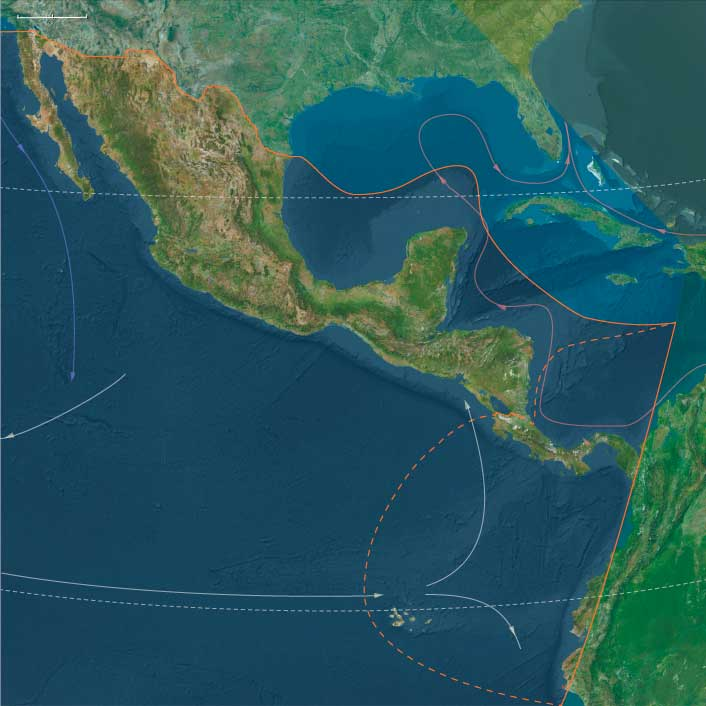
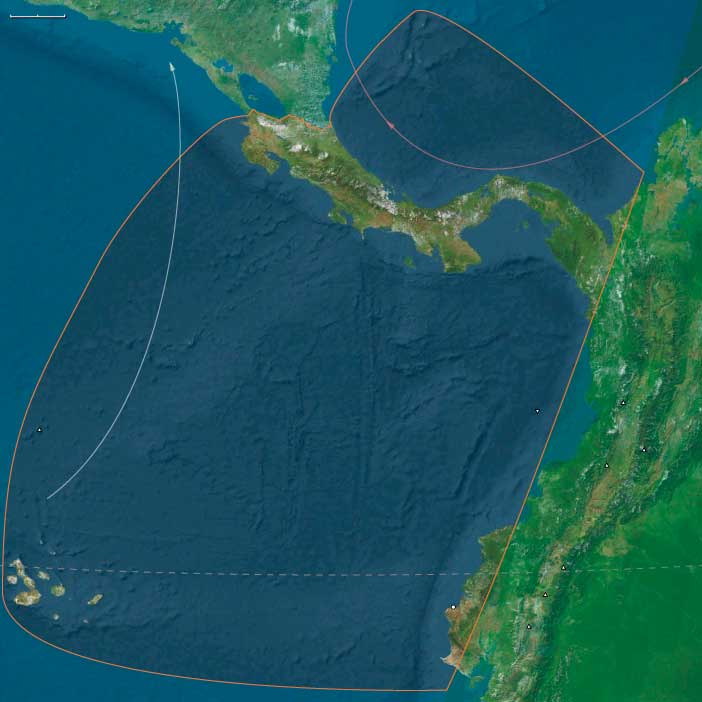
Between 1984 and 1995, Isthmian America—comprising Costa Rica, Panama, northwestern Colombia, western Ecuador, the Raizal Islands, and the Galápagos Islands—experiences profound upheaval marked by political crises, foreign interventions, regional conflicts, economic transformations, and movements toward democratic renewal. Central events include the crisis and U.S. intervention in Panama, continued democratic stability in Costa Rica, intensified internal conflict in Colombia, social mobilization in western Ecuador, and the expansion of ecological conservation efforts in the Galápagos Islands.
Panama: Dictatorship, U.S. Invasion, and Democratic Restoration
Panama enters a tumultuous period dominated by the military dictatorship of General Manuel Antonio Noriega, who assumes full control after 1983, following the earlier death of Omar Torrijos. Noriega’s regime becomes increasingly authoritarian, repressive, and entangled in international drug trafficking and corruption scandals, severely damaging Panama’s global reputation.
Rising domestic opposition and deteriorating U.S.–Panama relations culminate dramatically in December 1989 with the U.S. invasion—Operation Just Cause. American forces swiftly depose Noriega, who is subsequently extradited to the U.S. to face drug-related charges. The invasion, controversial internationally, marks a pivotal turning point for Panamanian sovereignty and democratic governance.
Following the intervention, Panama transitions toward democratic restoration under President Guillermo Endara (1989–1994). Endara’s administration attempts economic reconstruction, democratization, and reconciliation, though significant social, political, and economic challenges persist, including widespread poverty, unemployment, infrastructural damage, and national trauma from the invasion’s violence.
Costa Rica: Stability Amidst Regional Turmoil
Costa Rica maintains its distinctive democratic stability and social cohesion amid regional turbulence. Successive democratic administrations under Presidents Luis Alberto Monge (1982–1986), Óscar Arias Sánchez (1986–1990), and Rafael Calderón Fournier (1990–1994) manage complex economic pressures and reinforce Costa Rica’s longstanding commitment to peace and diplomacy. Arias notably receives the Nobel Peace Prize in 1987 for facilitating regional peace agreements (Esquipulas II Accords) aimed at resolving conflicts in neighboring Nicaragua, El Salvador, and Guatemala.
Despite economic challenges, including inflation, external debt pressures, and fluctuating global commodity markets, Costa Rica further consolidates its status as a regional model for democracy, social welfare, and environmental protection during this period.
Northwestern Colombia: Escalating Conflict and Social Crisis
In northwestern Colombia—particularly the northern Chocó and Gulf of Urabá—social and economic marginalization continues amidst intensifying violence. Guerrilla movements, paramilitary groups, and drug cartels increasingly dominate regional dynamics, leading to widespread displacement, human rights abuses, and deepening poverty.
The region becomes central to Colombia’s internal armed conflict and drug trade, significantly affecting local populations. State efforts remain insufficient, leaving communities vulnerable and exacerbating regional instability, violence, and international humanitarian concerns.
Western Ecuador: Political Activism and Socioeconomic Struggles
Western Ecuador, notably the provinces of Esmeraldas, Manabí, and western Guayas, experiences continued socioeconomic struggles. Persistent rural poverty, limited infrastructure, fluctuating agricultural markets, and rapid urbanization provoke political mobilizations demanding land reform, improved infrastructure, and greater economic justice.
Particularly in major urban centers such as Guayaquil, social and political tensions escalate, leading to frequent demonstrations, labor strikes, and civil activism. These movements lay foundations for future political reform and increased democratic participation, though significant social and economic challenges remain unresolved.
Raizal Islands: Rising Autonomy Demands and Cultural Assertion
The culturally distinctive Raizal Islands witness growing demands for autonomy, cultural preservation, and improved economic and social rights. Islanders increasingly challenge central-government policies perceived as marginalizing their distinct identity and economic interests. Rising tourism brings economic opportunities but also prompts concerns over cultural and ecological preservation. Local activism emerges strongly, advocating greater political representation and rights, significantly shaping regional political discourse.
Galápagos Islands: Global Ecological Significance and Conservation
The Galápagos Islands further solidify their international reputation as global conservation exemplars. Ecuador, collaborating closely with international conservation groups, significantly expands ecological protections, implementing stricter environmental regulations and sustainable-tourism guidelines.
In 1986, the islands gain designation as a UNESCO World Heritage Site, substantially raising global recognition. Increasing eco-tourism provides critical economic resources while demanding careful ecological stewardship. Conservation successes and challenges in the Galápagos become influential globally, shaping international approaches to biodiversity preservation and environmental management.
Regional Economic Pressures and Neoliberal Reforms
During this era, Isthmian America experiences substantial economic shifts characterized by neoliberal reforms. Panama undertakes significant privatization and deregulation measures after 1990 to rebuild its economy following the invasion. Costa Rica, pressured by international financial institutions, cautiously adopts market-oriented reforms, balancing liberalization with its social-welfare traditions.
Northwestern Colombia and western Ecuador face harsher economic conditions, exacerbating socioeconomic disparities. Neoliberal policies provoke considerable social backlash, fueling labor activism, rural protests, and heightened political mobilization throughout the region.
Cold War Decline and Regional Geopolitical Realignment
The decline of Cold War tensions post-1989 significantly alters geopolitical dynamics. U.S. regional involvement shifts from overt military interventions toward economic influence and diplomatic pressure, particularly regarding anti-drug initiatives. While the U.S.–Panama relationship recalibrates after the invasion, Costa Rica maintains stable, cooperative diplomatic ties with the U.S. Conversely, Colombia experiences intensified U.S. engagement due to drug-war concerns and escalating internal violence.
Legacy of the Era: Crisis, Transformation, and Democratic Realignment
Thus, the period 1984–1995 significantly transforms Isthmian America through dramatic political crises, interventions, and social movements. Panama’s turbulent experiences, including Noriega’s downfall and democratic restoration, profoundly affect its national identity and governance. Costa Rica further entrenches its democratic and peace-oriented reputation, becoming a regional exemplar amid widespread instability.
Northwestern Colombia endures escalating conflict and social crisis, shaping long-term challenges. Western Ecuador’s political activism lays foundations for greater political engagement. Meanwhile, cultural and ecological movements in the Raizal and Galápagos Islands raise critical questions about identity, sustainability, and globalization.
Collectively, these dramatic developments decisively influence the subsequent political, economic, and social trajectories of Isthmian America, firmly setting the stage for its future evolution into the late twentieth century and beyond.
People
- Guillermo Endara
- José Figueres Ferrer
- Luis Alberto Monge
- Manuel Noriega
- Omar Torrijos
- Rafael Ángel Calderón Fournier
- Rodrigo Carazo Odio
- Óscar Arias
Groups
- United States of America (US, USA) (Washington DC)
- Ecuador, Republic of
- Costa Rica, Republic of
- Colombia, Republic of
- Panama, Republic of
- Panama Canal Zone
Commodoties
Subjects
Regions
Subregions
Years: 1984 - 1995
People
- Guillermo Endara
- José Figueres Ferrer
- Luis Alberto Monge
- Manuel Noriega
- Omar Torrijos
- Rafael Ángel Calderón Fournier
- Rodrigo Carazo Odio
- Óscar Arias
Groups
- United States of America (US, USA) (Washington DC)
- Ecuador, Republic of
- Costa Rica, Republic of
- Colombia, Republic of
- Panama, Republic of
- Panama Canal Zone
Commodoties
Subjects
Regions
Subregions