
Isthmian America (1972–1983 CE): Canal Treaties, Political …
Years: 1972 - 1983
Isthmian America (1972–1983 CE): Canal Treaties, Political Transformation, and Regional Upheaval
Between 1972 and 1983, Isthmian America—comprising Costa Rica, Panama, northwestern Colombia, western Ecuador, the Raizal Islands, and the Galápagos Islands—undergoes profound transformations driven by major diplomatic breakthroughs, internal political upheavals, economic challenges, and heightened regional tensions amid the escalating Cold War. Panama’s quest for sovereignty over the canal, Costa Rica’s continued democratic stability, and significant environmental initiatives in the Galápagos Islands prominently define this pivotal era.
Panama: The Torrijos–Carter Canal Treaties
The era’s defining diplomatic event occurs in 1977 with the signing of the historic Torrijos–Carter Treaties by Panamanian leader General Omar Torrijos Herrera and U.S. President Jimmy Carter. These treaties, ratified in 1978, fundamentally alter Panama–U.S. relations by guaranteeing eventual Panamanian sovereignty over the Panama Canal and ending American control of the Canal Zone.
Under the treaties, the canal’s administration transitions progressively to Panamanian hands, with full control promised by December 31, 1999. The U.S. retains defensive rights and operation responsibilities during this transition, but Panamanians immediately perceive the treaty as a monumental nationalist victory, significantly boosting Torrijos’s political stature and Panama’s international legitimacy.
Political Changes and Social Reforms under Torrijos
General Torrijos, ruling since 1968, employs authoritarian methods yet implements notable populist reforms focused on poverty alleviation, rural development, infrastructure expansion, and education improvements. His nationalist rhetoric reinforces Panamanian identity, significantly influencing domestic politics. However, political dissent remains restricted under his regime.
Torrijos’s unexpected death in an airplane crash in 1981 leaves Panama politically uncertain, triggering internal power struggles within the military government. Colonel Manuel Antonio Noriega emerges as a dominant figure by the early 1980s, initially behind the scenes, influencing Panama’s trajectory toward greater authoritarianism and increasing internal repression.
Costa Rica: Continued Democratic Stability and Economic Challenges
Costa Rica continues its trajectory as a stable democratic state, reinforcing its reputation as a regional exception amidst Central American political turmoil. Under presidents José Figueres Ferrer (1970–1974), Daniel Oduber Quirós (1974–1978), and Rodrigo Carazo Odio (1978–1982), Costa Rica faces economic challenges due to inflation, external debt, and fluctuating export markets, but maintains political stability, a strong welfare state, and extensive social infrastructure.
Costa Rica’s continued emphasis on peace, neutrality, and democratic governance during this era contrasts starkly with regional conflicts and Cold War geopolitics, affirming its regional influence as a mediator and advocate of peace.
Northwestern Colombia: Persistent Marginalization and Rising Conflict
In northwestern Colombia, especially the Chocó and Gulf of Urabá regions, economic marginalization continues, intensified by governmental neglect, limited infrastructure, and rising social conflicts. The region increasingly becomes a contested zone amid Colombia’s growing internal armed conflicts, drug trafficking, and paramilitary violence, exacerbating already severe economic disparities and social challenges.
Western Ecuador: Economic Pressures and Political Mobilization
Western Ecuador, particularly the provinces of Esmeraldas, Manabí, and western Guayas, faces economic challenges driven by unstable commodity markets, rising debt, and political turbulence at the national level. Agricultural communities demand land reforms, improved economic conditions, and better infrastructure, fueling periodic social unrest. Urban areas, particularly Guayaquil, confront rapid urbanization pressures, creating social and infrastructural tensions that intensify political mobilizations.
Raizal Islands: Autonomy Movements and Cultural Challenges
The culturally distinct Raizal Islands experience rising concerns regarding cultural autonomy and economic opportunities. Increased tourism in the Caribbean, along with economic hardships, fuel demands among islanders for greater recognition of cultural identity, economic independence, and improved social services from the central government. Islanders assert their distinctiveness and rights amid growing regional and global influences.
Galápagos Islands: International Conservation Leadership
The Galápagos Islands further solidify their global ecological significance. Ecuador’s dedication to environmental conservation attracts significant international support, enhancing protective measures. International eco-tourism steadily expands, supported by robust conservation efforts. Ecuador’s environmental policies, closely coordinated with international partners and organizations, position the Galápagos as a global conservation model, highlighting crucial issues of biodiversity and sustainable development.
Cold War Geopolitics and U.S. Influence
Cold War geopolitical tensions profoundly shape Isthmian America. Panama’s sovereignty struggles and subsequent treaty negotiations occur within a broader context of U.S. efforts to maintain strategic influence in the region. Meanwhile, Costa Rica’s neutrality and democratic stability are lauded by Western allies, providing a diplomatic counterpoint to nearby regional conflicts in Nicaragua and El Salvador.
Economic and political instability in northwestern Colombia and Ecuador draws concern as these regions become increasingly susceptible to internal violence and radical movements, heightening U.S. strategic interest and involvement in regional politics.
Legacy of the Era: Sovereignty Achievements and Emerging Challenges
Thus, the period 1972–1983 significantly reshapes Isthmian America. Panama’s successful renegotiation of canal sovereignty represents a historic diplomatic triumph, setting the stage for later full sovereignty restoration. Torrijos’s reforms, despite authoritarian elements, leave a profound social legacy. Costa Rica solidifies its democratic stability amid regional turmoil, reinforcing its distinct regional role.
Persistent economic struggles and rising internal violence in northwestern Colombia and western Ecuador underscore enduring socio-economic challenges. Simultaneously, emerging cultural autonomy movements in the Raizal Islands and pioneering conservation achievements in the Galápagos Islands highlight important regional cultural and ecological developments.
Collectively, these transformations decisively influence Isthmian America’s subsequent political, economic, and ecological trajectories, laying essential foundations for future regional dynamics and global interactions into the late twentieth century and beyond.
People
- Daniel Oduber Quirós
- Jimmy Carter
- José Figueres Ferrer
- Manuel Noriega
- Omar Torrijos
- Rodrigo Carazo Odio
Groups
- United States of America (US, USA) (Washington DC)
- Ecuador, Republic of
- Costa Rica, Republic of
- Colombia, Republic of
- Panama, Republic of
- Panama Canal Zone
Commodoties
Subjects
Regions
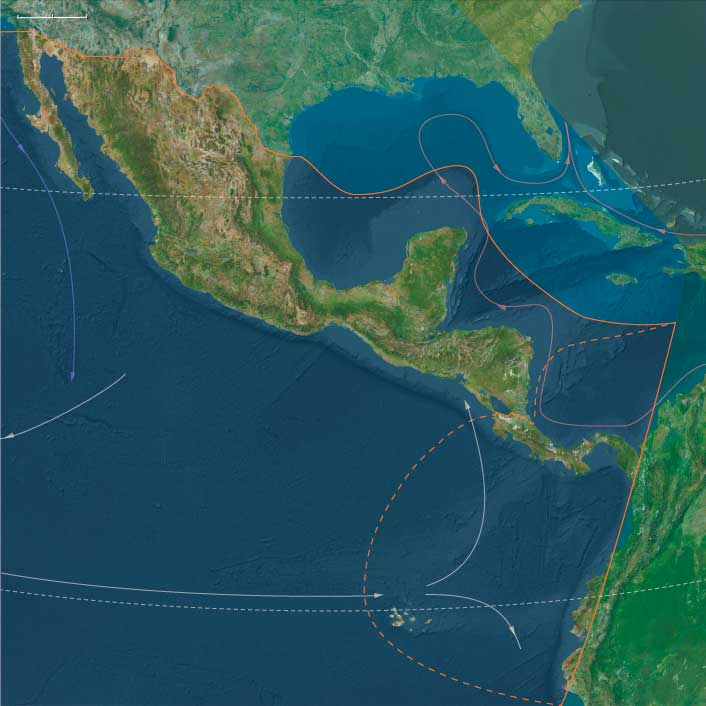
Subregions
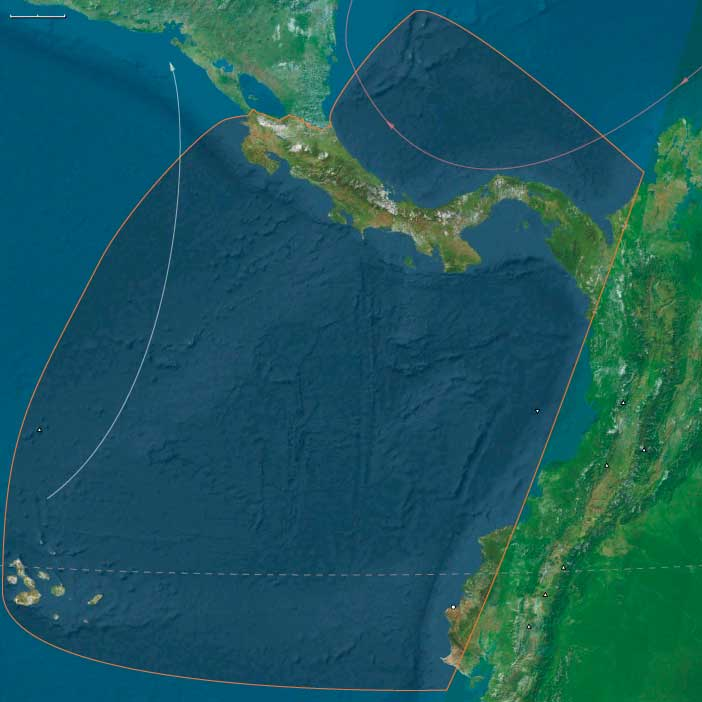
Years: 1972 - 1983
People
- Daniel Oduber Quirós
- Jimmy Carter
- José Figueres Ferrer
- Manuel Noriega
- Omar Torrijos
- Rodrigo Carazo Odio
Groups
- United States of America (US, USA) (Washington DC)
- Ecuador, Republic of
- Costa Rica, Republic of
- Colombia, Republic of
- Panama, Republic of
- Panama Canal Zone
Commodoties
Subjects
Regions
Subregions