
Isthmian America (1828–1971 CE): Republics, Canal Dreams, …
Years: 1828 - 1971
Isthmian America (1828–1971 CE): Republics, Canal Dreams, and Strategic Crossroads
Geographic & Environmental Context
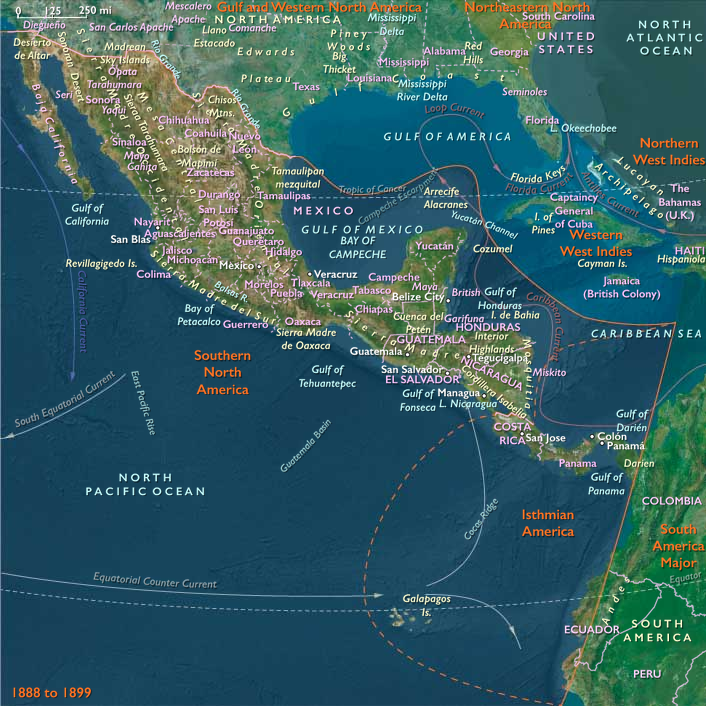
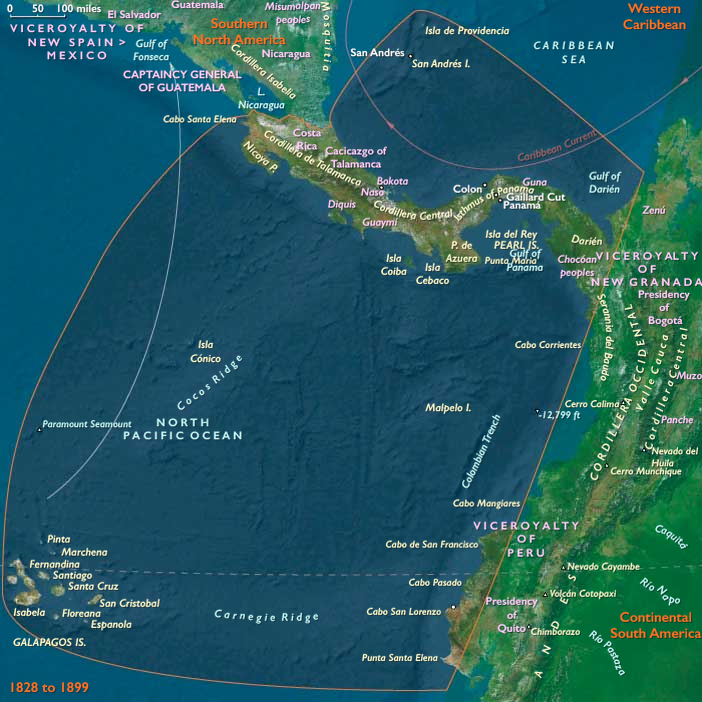
The subregion of Isthmian America includes Costa Rica, Panama, the Galápagos Islands, the San Andrés Archipelago, and the northeastern edge of South America (the Darién of Colombia and the capes of Ecuador). Anchors included the Cordillera Central of Costa Rica, the Panama isthmus corridor, the Darién swamps, and the offshore Galápagos and San Andrés Islands. By the modern era, the isthmus stood as a global chokepoint, drawing imperial and later U.S. interest.
Climate & Environmental Shifts
Rainfall variability, tropical storms, and flooding continued to define lowland Panama and Darién. Costa Rica’s volcanic valleys remained fertile, sustaining coffee and banana exports. The Galápagos saw recurring El Niño events disrupting marine ecosystems. Hurricanes periodically struck San Andrés and its Caribbean neighbors, damaging crops and settlements.
Subsistence & Settlement
-
Costa Rica: Emerged as one of Central America’s most stable republics. Coffee became the backbone of the economy, complemented by bananas in the lowlands through the United Fruit Company by the late 19th century.
-
Panama: Remained under Colombian sovereignty until the Panama Canal project reshaped its destiny. French efforts under Ferdinand de Lesseps failed (1880s), but the U.S. engineered independence (1903), creating the Panama Canal Zone. The canal opened in 1914, making Panama a strategic world hub.
-
Darién: Indigenous Guna and Emberá peoples maintained cultural autonomy, balancing farming, fishing, and forest economies despite pressures from colonization and the canal’s expansion.
-
Galápagos: Annexed by Ecuador in 1832; sporadically settled by colonists, penal colonies, and whalers. By the mid-20th century, conservationists began to recognize its global ecological significance, leading to Galápagos National Park (1959).
-
San Andrés Archipelago: Integrated into Colombia; Afro-Caribbean communities relied on smallholder farming, fishing, and trade. Protestant churches and English creole culture persisted alongside Colombian administration.
Technology & Material Culture
Railways and steamships transformed Costa Rica’s coffee and banana export corridors. The Panama Canal embodied global engineering, with locks, dams, and dredging works reshaping the isthmus. Afro-Caribbean canal workers carried labor traditions, music, and foodways into Panama’s culture. In the Galápagos, colonists used stone pens and imported livestock, altering fragile ecosystems. San Andrés Islanders built wooden houses, sloops, and cultural traditions blending English, African, and Colombian elements.
Movement & Interaction Corridors
-
Panama Canal: Opened in 1914, becoming the world’s central maritime artery, guarded by the U.S. Canal Zone until 1977 treaties (outside this time span).
-
Coffee and banana export routes: Linked Costa Rica and Panama to U.S. and European markets.
-
Galápagos voyages: Connected whalers, scientists, and settlers; Charles Darwin’s 1835 visit with HMS Beagle made the islands symbolic in natural science.
-
San Andrés trade routes: Carried goods to and from Jamaica, Central America, and Colombian ports.
Cultural & Symbolic Expressions
Costa Rica cultivated a national identity rooted in rural democracy, Catholic festivals, and coffee farmer imagery. Panama blended Indigenous, Afro-Caribbean, and Hispanic traditions, with canal construction introducing cosmopolitan diversity. The Guna preserved rituals, dances, and sacred textiles (molas), asserting autonomy in the Guna Revolution (1925). In the Galápagos, Darwin’s theories made the islands a global symbol of evolution. San Andrés Islanders sustained Afro-Protestant hymns, drumming, and oral lore, distinct within Colombia’s cultural mosaic.
Environmental Adaptation & Resilience
Costa Rican farmers terraced slopes and intercropped to sustain yields. Afro-Caribbean and Indigenous workers in Panama cultivated provision grounds to survive canal-era disruption. Guna communities preserved fishing and forest stewardship despite encroachment. Galápagos conservation advanced mid-century, buffering species loss with park status. San Andrés Islanders adapted to hurricanes with raised houses, storm-resistant crops, and cooperative networks.
Transition
By 1971 CE, Isthmian America had become central to global commerce and strategy. Costa Rica was recognized as a stable democracy in a turbulent region. Panama, defined by the canal, balanced sovereignty struggles with economic opportunity. The Galápagos gained worldwide ecological renown. San Andrés remained culturally distinct but politically tied to Colombia. Darién’s Indigenous communities preserved autonomy in the forest frontier. From cacao trails to the Panama Canal, the isthmus had evolved into a keystone of the modern world.
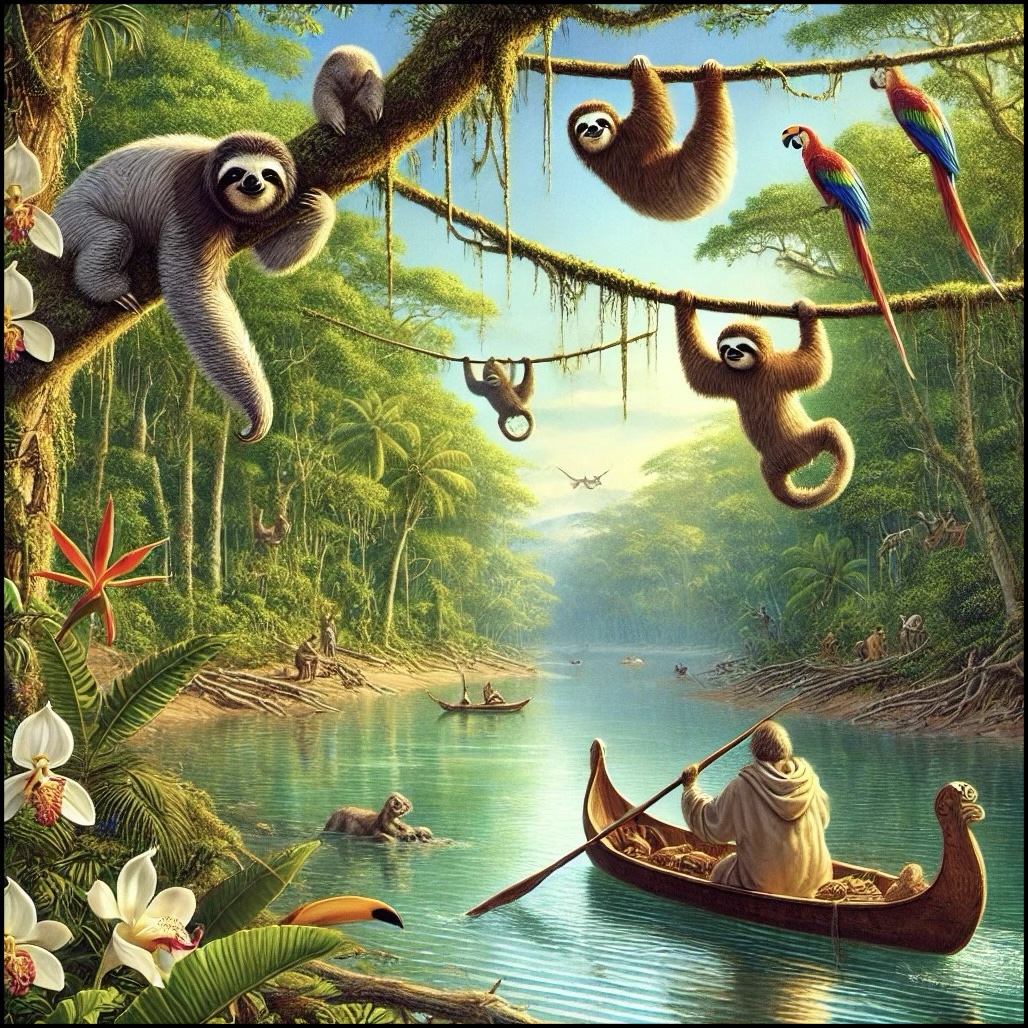
Isthmian America (with civilization) ©2024-25 Electric Prism, Inc. All rights reserved.
People
Groups
- Guna
- United States of America (US, USA) (Washington DC)
- Colombia, Republic of (Gran Colombia)
- Ecuador, Republic of
- Costa Rica, Republic of
- California Territory
- France (French republic); the Third Republic
- Colombia, Republic of
- United Fruit Company
- Panama Canal Zone
- Panama, Republic of
Topics
- California Gold Rush, California, United States
- Watermelon War
- San Blas Rebellion
- World War, Second (World War II)
- Cold War
- Panama: Anti-American Rioting
Commodoties
Subjects
Regions
Subregions
Years: 1828 - 1971
Isthmian America (with civilization) ©2024-25 Electric Prism, Inc. All rights reserved.
People
Groups
- Guna
- United States of America (US, USA) (Washington DC)
- Colombia, Republic of (Gran Colombia)
- Ecuador, Republic of
- Costa Rica, Republic of
- California Territory
- France (French republic); the Third Republic
- Colombia, Republic of
- United Fruit Company
- Panama Canal Zone
- Panama, Republic of
Topics
- California Gold Rush, California, United States
- Watermelon War
- San Blas Rebellion
- World War, Second (World War II)
- Cold War
- Panama: Anti-American Rioting
Commodoties
Subjects
Regions
Subregions