
Middle America (1828–1971 CE) Empires Receding, …
Years: 1828 - 1971
Middle America (1828–1971 CE)
Empires Receding, Republics Emerging, and the Crossroads of the Americas
Geography & Environmental Context
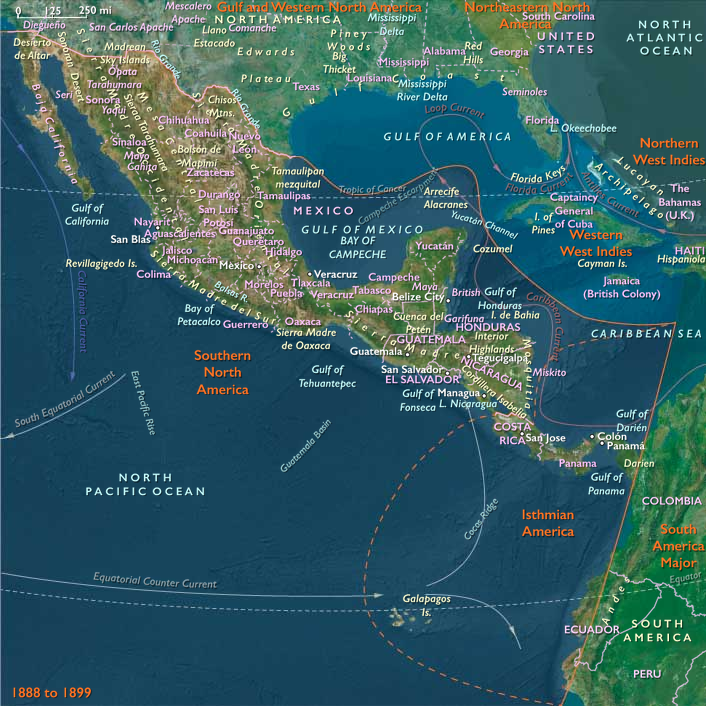
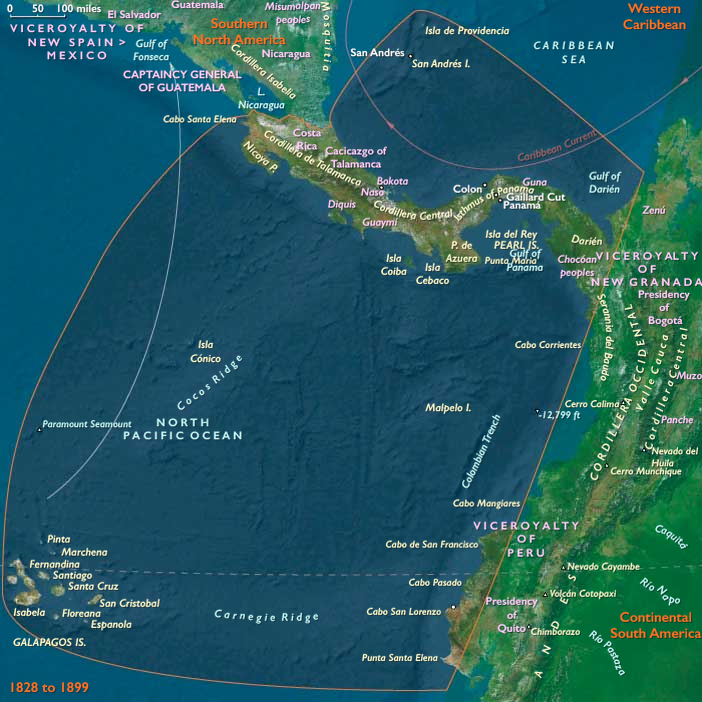
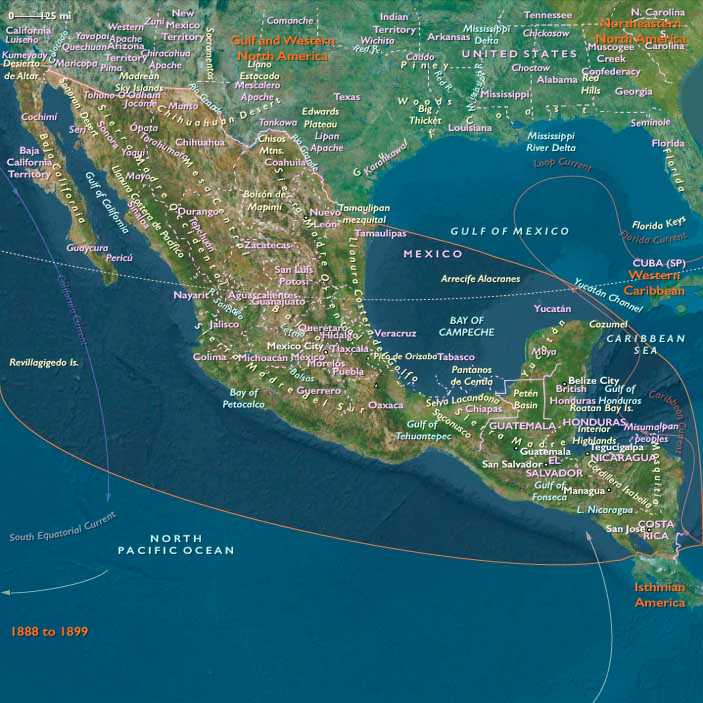
Middle America consists of two fixed subregions:
-
Southern North America — Mexico, Guatemala, Belize, Honduras, El Salvador, and Nicaragua. Anchors include the Valley of Mexico, the Yucatán Peninsula, the Chiapas highlands, and the Pacific and Caribbean coasts.
-
Isthmian America — Costa Rica, Panama, the Galápagos Islands, the San Andrés Archipelago, and the northeastern edge of South America (the Darién of Colombia and the capes of Ecuador). Anchors include the Cordillera Central of Costa Rica, the Panama Isthmus corridor, the Darién swamps, and the offshore Galápagos and San Andrés Islands.
Volcanic cordilleras, tropical forests, and coastal plains defined settlement. By the modern era, the narrow Panama Isthmus stood as a global chokepoint—its harbors, rivers, and low divides shaping imperial strategy, canal construction, and U.S. expansion.
Climate & Environmental Shifts
Tropical and subtropical regimes alternated between wet and dry seasons; hurricanes, earthquakes, and eruptions were frequent. The Chiapas, Guatemalan, and Nicaraguan volcanoes punctuated seismic belts; 19th-century deforestation and coffee expansion eroded slopes. Canal excavation at Panama (1880s – 1914) altered drainage and health ecologies, while 20th-century dams and banana plantations transformed wetlands and coasts.
Subsistence & Settlement
-
Southern North America:
-
Rural economies moved from haciendas toward diversified peasant holdings after Mexican Reform Laws (1850s) and Revolution (1910–20).
-
Coffee, bananas, sugar, and cotton underpinned export sectors in Guatemala, Honduras, and El Salvador; Maya communities in the highlands continued maize and bean cultivation within communal ejidos.
-
Cities such as Mexico City, Guadalajara, and León expanded through rail and manufacturing; Central American capitals—Guatemala City, San Salvador, and Tegucigalpa—grew as administrative and commercial hubs.
-
-
Isthmian America:
-
Costa Rica’s coffee republic balanced smallholder prosperity with export dependency.
-
Panama became the archetypal transit economy: the Panama Canal (1904–14) created a U.S.-controlled zone, new towns (Balboa, Colón), and global shipping corridors.
-
The Galápagos remained sparsely settled—used for whaling, penal colonies, and later science and tourism.
-
The San Andrés and Providencia Islands sustained fishing, coconut, and inter-Caribbean trade.
-
Technology & Material Culture
Railroads, telegraphs, and ports expanded after mid-century; the Mexican Railway linked Veracruz to the plateau, while Central American lines served coffee and banana zones. The Canal’s locks and machinery epitomized modern engineering. Mission presses and later radio diffused mass politics. Adobe, tile, and tropical hardwood architecture persisted beside neoclassical palaces and modernist ministries.
Movement & Interaction Corridors
-
Maritime networks: Gulf, Caribbean, and Pacific routes bound Veracruz, Havana, and New Orleans to Panama and South America.
-
Migration: Indigenous and mestizo peasants moved seasonally to plantations; foreign concession workers arrived for railways and the Canal.
-
Trade corridors: The Pan-American Highway (begun 1920s) integrated continental transport; air routes after WWII made Panama a regional hub.
-
Diasporas: Lebanese, Chinese, and Caribbean communities established trading enclaves; U.S. capital and settlers followed the Canal.
Cultural & Symbolic Expressions
Catholicism remained dominant but syncretized with Indigenous and Afro-Caribbean traditions. Murals and revolutionary art—Rivera, Orozco, Siqueiros—in Mexico redefined national identity. Folk music and dance—mariachi, son, marimba, calypso, punto guanacasteco—expressed local and trans-Caribbean continuities. Education reforms, universities, and print culture disseminated liberal and socialist thought.
Environmental Adaptation & Resilience
Maize–bean intercropping, milpa rotation, and highland terrace systems persisted beside plantation monocultures. In humid lowlands, banana companies drained swamps and built company towns; peasant cooperatives later diversified crops. Reforestation and soil-conservation programs arose mid-20th century in Mexico and Costa Rica; volcanic soils remained highly productive but erosion-prone.
Political & Military Shocks
-
Wars of reform and empire: Mexico’s Reform War (1857–61), the French Intervention (1862–67), and Benito Juárez’s republican triumph reasserted sovereignty; Central America’s federation efforts collapsed amid caudillo rivalries.
-
U.S. expansion: The Mexican–American War (1846–48) cost half of Mexico’s territory; U.S. interventions followed across the isthmus and Caribbean (notably the Banana Wars, 1898–1934).
-
Canal diplomacy: The Hay–Bunau-Varilla Treaty (1903) created the U.S.-controlled Panama Canal Zone; subsequent nationalist movements pressed for revision.
-
Revolutions and reforms:
-
The Mexican Revolution (1910–20) inspired agrarian and labor movements throughout the region.
-
Anastasio Somoza’s dynasty (Nicaragua, from 1936) and military regimes in Guatemala and El Salvador entrenched authoritarianism.
-
Costa Rica’s Civil War (1948) abolished the army and ushered in stable democracy.
-
-
Cold War upheavals: U.S. influence deepened through anti-communist aid; Cuba’s 1959 revolution reverberated in Central America, feeding guerrilla and reform currents.
Transition
Between 1828 and 1971, Middle America evolved from post-colonial fragmentation and canal dreams into a region divided between revolutionary nationalism and U.S.-aligned conservatism. Southern North America forged modern Mexican and Central American republics amid land reform and dictatorship; Isthmian America became the hinge of hemispheric trade and strategy through the Panama Canal. Coffee, bananas, oil, and copper tied the isthmus to global markets, while migration and revolution remade its societies. By 1971, Middle America—bridging two continents and two oceans—embodied both the promise and peril of modernization: a crossroads of empire, ecology, and enduring cultural resilience.
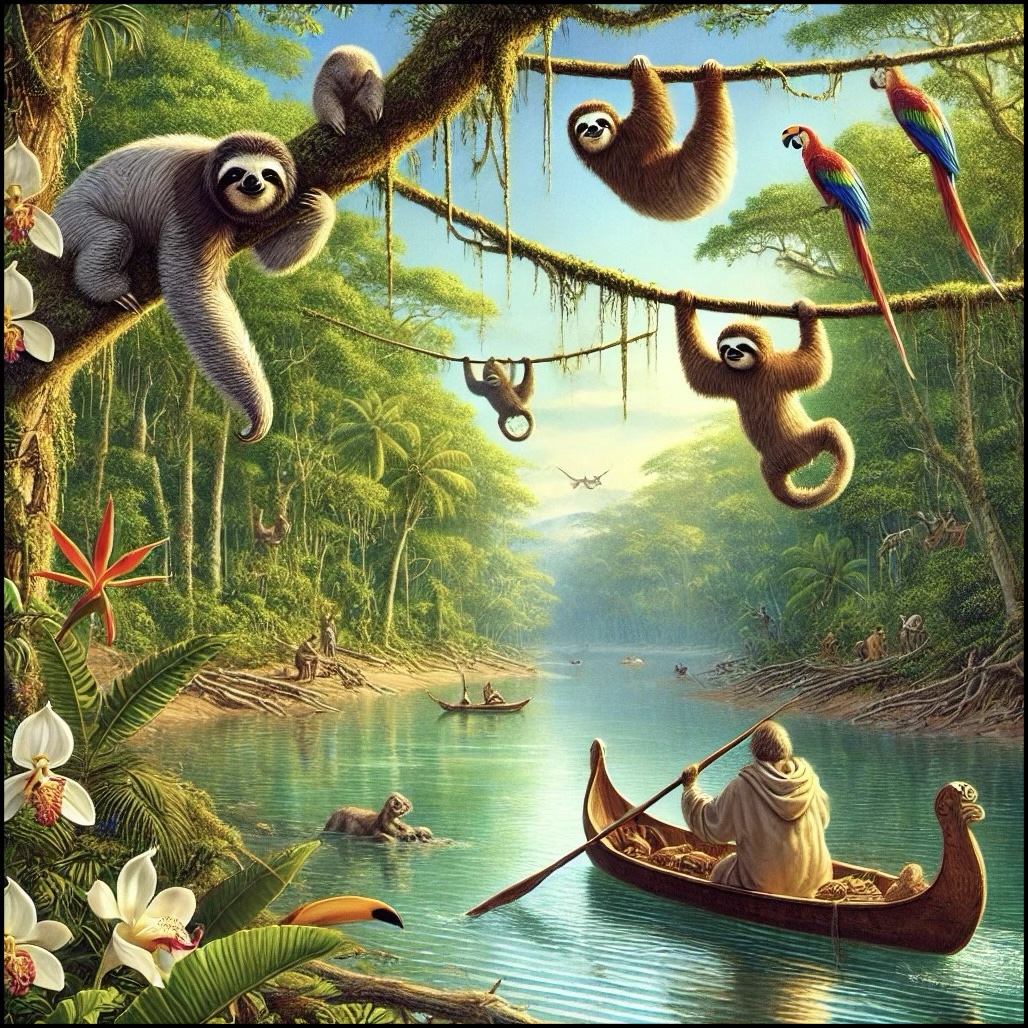
Isthmian America (with civilization) ©2024-25 Electric Prism, Inc. All rights reserved.
People
Groups
- Guna
- United States of America (US, USA) (Washington DC)
- Colombia, Republic of (Gran Colombia)
- Ecuador, Republic of
- Costa Rica, Republic of
- California Territory
- France (French republic); the Third Republic
- Colombia, Republic of
- United Fruit Company
- Panama Canal Zone
- Panama, Republic of
Topics
- California Gold Rush, California, United States
- Watermelon War
- San Blas Rebellion
- World War, Second (World War II)
- Cold War
- Panama: Anti-American Rioting
Commodoties
Subjects
Regions
Subregions
Related Events
Showing 10 events out of 19829 total
Years: 1828 - 1971
Isthmian America (with civilization) ©2024-25 Electric Prism, Inc. All rights reserved.
People
Groups
- Guna
- United States of America (US, USA) (Washington DC)
- Colombia, Republic of (Gran Colombia)
- Ecuador, Republic of
- Costa Rica, Republic of
- California Territory
- France (French republic); the Third Republic
- Colombia, Republic of
- United Fruit Company
- Panama Canal Zone
- Panama, Republic of
Topics
- California Gold Rush, California, United States
- Watermelon War
- San Blas Rebellion
- World War, Second (World War II)
- Cold War
- Panama: Anti-American Rioting
Commodoties
Subjects
Regions
Subregions