
Isthmian America (1540–1683 CE): Spain’s Transisthmian Lifeline …
Years: 1540 - 1683
Isthmian America (1540–1683 CE): Spain’s Transisthmian Lifeline and Indigenous Frontiers
Geographic & Environmental Context
The subregion of Isthmian America includes Costa Rica, Panama, the Galápagos Islands, the San Andrés Archipelago, and the northeastern edge of South America (the Darién of Colombia and the capes of Ecuador). Anchors included the Isthmus of Panama, the Cordillera Central, the Darién swamps, the Pacific littoral of Costa Rica and Ecuador, and the outlying Galápagos Islands. The isthmus became a keystone of Spain’s empire, channeling silver from the Andes to the Caribbean.
Climate & Environmental Shifts
The Little Ice Age brought alternating droughts and floods. The Caribbean lowlands endured heavy rains and swollen rivers, while Pacific slopes alternated between long dry seasons and sudden storms. In the Galápagos, El Niño events periodically collapsed fisheries and seabird rookeries, while La Niña years heightened aridity. Hurricanes remained rare, but tropical storms disrupted navigation.
Subsistence & Settlement
-
Panama: Became a Spanish colonial hub. Indigenous Cueva and Chibchan groups declined under disease and encomienda, replaced by African slaves in ranching, transport, and domestic labor. Ranching and smallholder farming supplied the transisthmian corridor.
-
Costa Rica: Remained a marginal frontier. Indigenous populations persisted longer; Spaniards established scattered towns and cattle ranches, relying on Indigenous labor and tribute.
-
Darién: Retained semi-autonomous Indigenous groups who resisted Spanish penetration. Some communities allied with escaped Africans (cimarrones), forging new societies in the swamps and forests.
-
Galápagos: Used intermittently as a provisioning base for Spanish ships—water, turtles, and firewood sustained mariners. Permanent settlement did not yet occur.
-
San Andrés Archipelago: Sporadic use by Spanish and later English privateers; little colonial presence.
Technology & Material Culture
Stone cathedrals, warehouses, and plazas mayores rose in Panama City, fortified with walls and watchtowers. Indigenous crafts survived in remote areas, while African traditions enriched foodways, music, and festivals. Canoes and mule caravans carried silver and goods across the Camino Real and Las Cruces trail. In the Galápagos, introduced goats and pigs began to alter ecosystems.
Movement & Interaction Corridors
-
The Panama route: Silver from Potosí moved by ship to Portobelo on the Caribbean via mule trains from Panama City. The annual Portobelo fairs became imperial trade spectacles.
-
Caribbean–Pacific nexus: The San Andrés and Cayman waters became corridors for contraband and piracy.
-
Galápagos anchorages: Emerged as supply points for passing galleons and later privateers.
-
Indigenous and cimarrón corridors: Sustained resistance and survival in Darién forests.
Cultural & Symbolic Expressions
Catholic churches and festivals dominated Panama City, but Afro-descended confraternities and Indigenous rituals persisted beneath official religion. Cimarrón communities celebrated victories and kinship ties through oral traditions and drumming. Remote groups in Costa Rica and Darién preserved shamanic rituals tied to rivers, mountains, and forests. For Spain, the isthmus itself became a symbolic “hinge of empire,” celebrated in chronicles and maps.
Environmental Adaptation & Resilience
-
Colonists adapted to heavy rains with raised streets and stone causeways.
-
Indigenous groups shifted settlements deeper into forests, preserving autonomy.
-
Cimarrones cultivated provision grounds of cassava, plantains, and maize in swamp refuges.
-
Mariners adapted Galápagos resources—tortoises, fish, wood—for long voyages.
Transition
By 1683 CE, Isthmian America was the beating heart of Spain’s transatlantic system, yet fragile at its edges. Panama City and Portobelo flourished as silver arteries, but pirates like Henry Morgan (who sacked Panama in 1671) revealed the vulnerability of empire. Costa Rica remained marginal, Darién Indigenous and African frontiers endured, and the Galápagos drifted between imperial outpost and ecological sanctuary. The subregion was both Spain’s jewel and its Achilles’ heel.
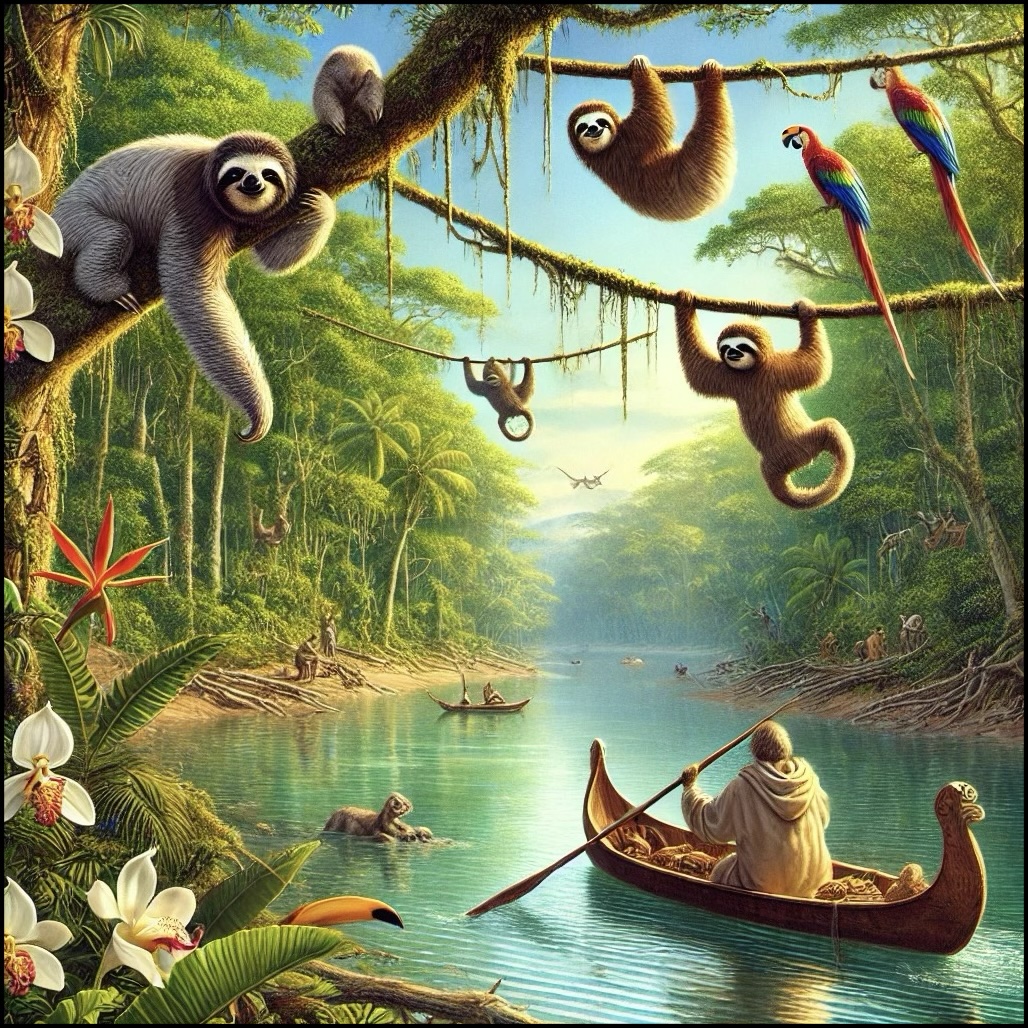
Isthmian America (with civilization) ©2024-25 Electric Prism, Inc. All rights reserved.
People
Groups
- Spanish Empire
- Spain, Habsburg Kingdom of
- Panama, Royal Audencia of
- Netherlands, United Provinces of the (Dutch Republic)
- France, (Bourbon) Kingdom of
- England, (Stuart) Kingdom of
Topics
- Colonization of the Americas, Spanish
- Colonization of the Americas, French
- Colonization of the Americas, English
- Colonization of the Americas, Dutch
Commodoties
Subjects
Regions
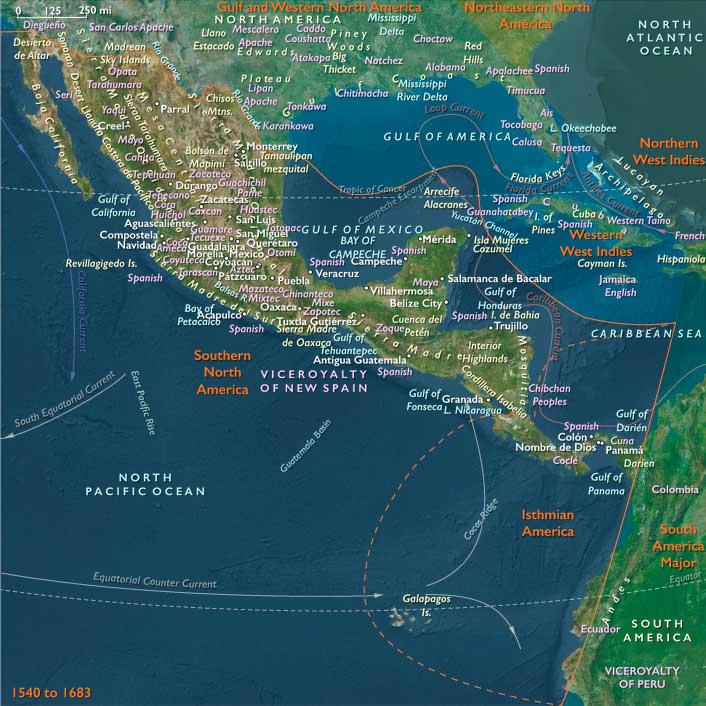
Subregions
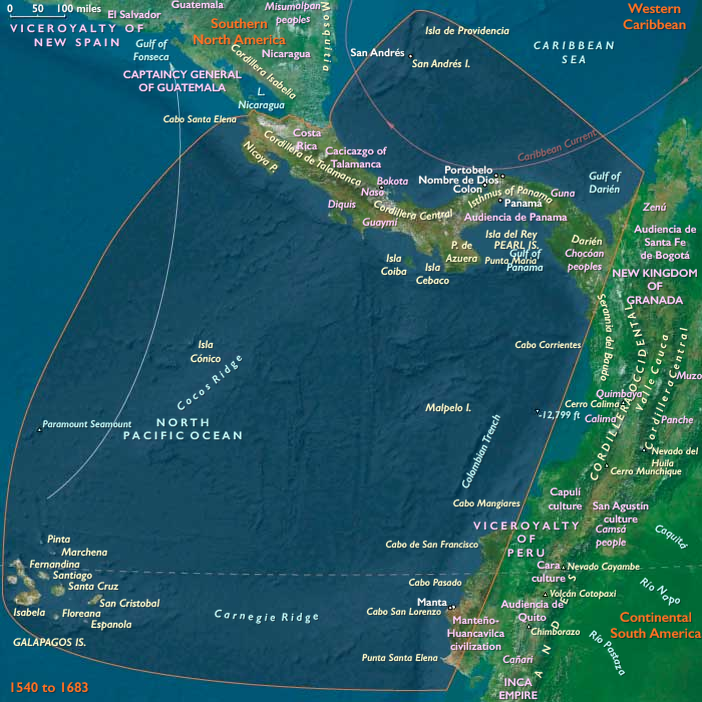
Years: 1540 - 1683
Isthmian America (with civilization) ©2024-25 Electric Prism, Inc. All rights reserved.
People
Groups
- Spanish Empire
- Spain, Habsburg Kingdom of
- Panama, Royal Audencia of
- Netherlands, United Provinces of the (Dutch Republic)
- France, (Bourbon) Kingdom of
- England, (Stuart) Kingdom of
Topics
- Colonization of the Americas, Spanish
- Colonization of the Americas, French
- Colonization of the Americas, English
- Colonization of the Americas, Dutch
Commodoties
Subjects
Regions
Subregions