
Isma'ilis from Yemen have reached North Africa, …
Years: 909 - 909
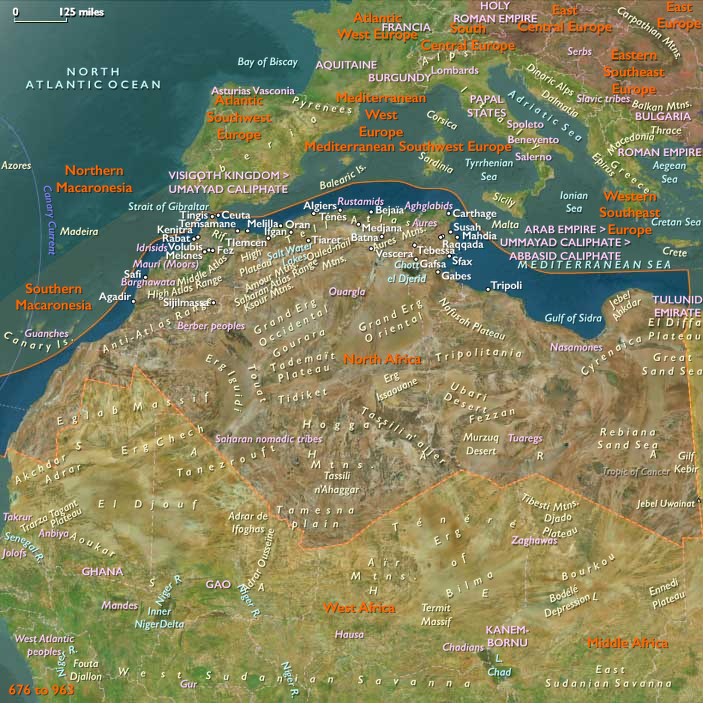
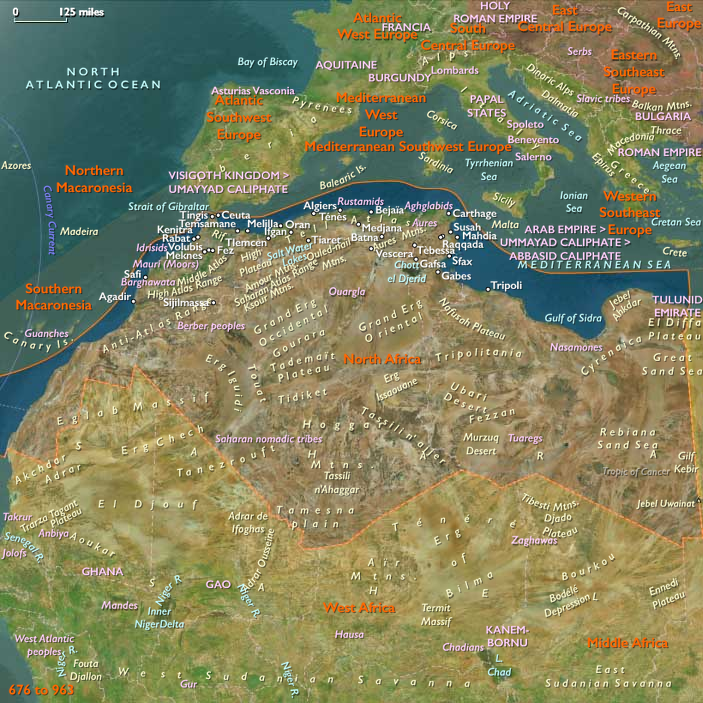
Isma'ilis from Yemen have reached North Africa, where the Fatimid movement arises.
Before the Fatimids, there had been other rulers in North Africa and Egypt who had succeeded in making themselves virtually independent of the 'Abbasid caliphs in Baghdad; but they had been Muslims of the Sunni branch of Islam, willing to recognize the token suzerainty of the caliph as head of the Islamic community.
The Fatimids, however, as the heads of a rival religious movements—the Isma'ili sect of the Shi'i branch—are dedicated to the overthrow of the existing religious and political order in all Islam.
Unlike their predecessors, they refuse to offer even nominal recognition to the 'Abbasid caliphs, whom they reject as usurpers.
They themselves—as Isma'ili imams, descendants of the Prophet through his daughter Fatimah and his kinsman 'Ali—are, in the eyes of their followers, the rightful caliphs, both by descent and by divine choice the custodians of the true faith and the legitimate heads of the universal Islamic state and community.
Their purpose is not to establish another regional sovereignty but to supersede the 'Abbasids and to found a new caliphate in their place.
By 909, they are strong enough for their imam, who had been in hiding, to emerge and proclaim himself caliph, with the messianic title of al-Mahdi (the Rightly Guided One).
This marks the beginning of a new state and dynasty.
Locations
People
Groups
- Arab people
- Berber people (also called Amazigh people or Imazighen, "free men", singular Amazigh)
- Islam
- Egypt in the Middle Ages
- Muslims, Sunni
- Muslims, Shi'a
- Ismailism
- Ifriqiya, Aghlabid Emirate of
- Abbasid Caliphate (Baghdad)
- Ifriqiya, Fatimid Caliphate of
Topics
Commodoties
Subjects
Regions
Subregions
Years: 909 - 909
Locations
People
Groups
- Arab people
- Berber people (also called Amazigh people or Imazighen, "free men", singular Amazigh)
- Islam
- Egypt in the Middle Ages
- Muslims, Sunni
- Muslims, Shi'a
- Ismailism
- Ifriqiya, Aghlabid Emirate of
- Abbasid Caliphate (Baghdad)
- Ifriqiya, Fatimid Caliphate of
Topics
Commodoties
Subjects
Regions
Subregions