
Shams-ud-Din Iletmish (or Iltutmish; r. 1211-36), a …
Years: 1396 - 1539
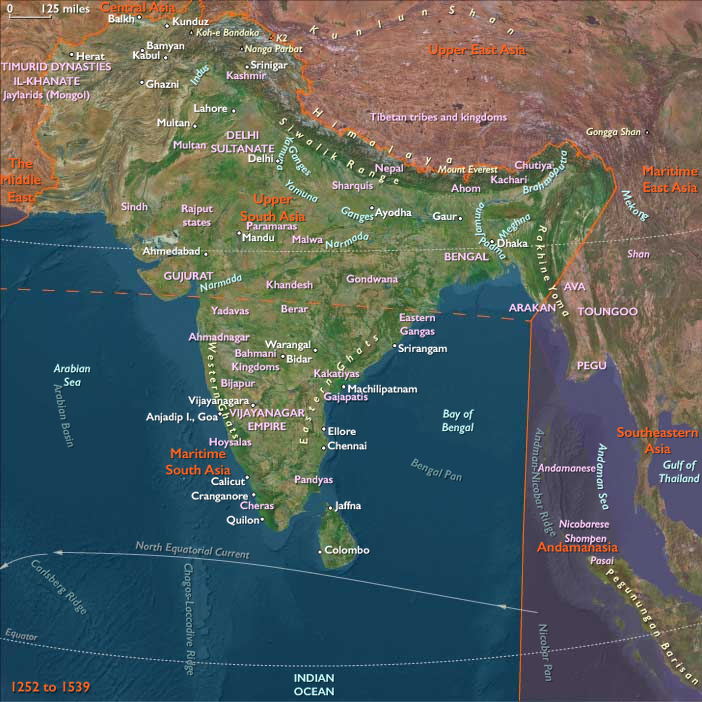
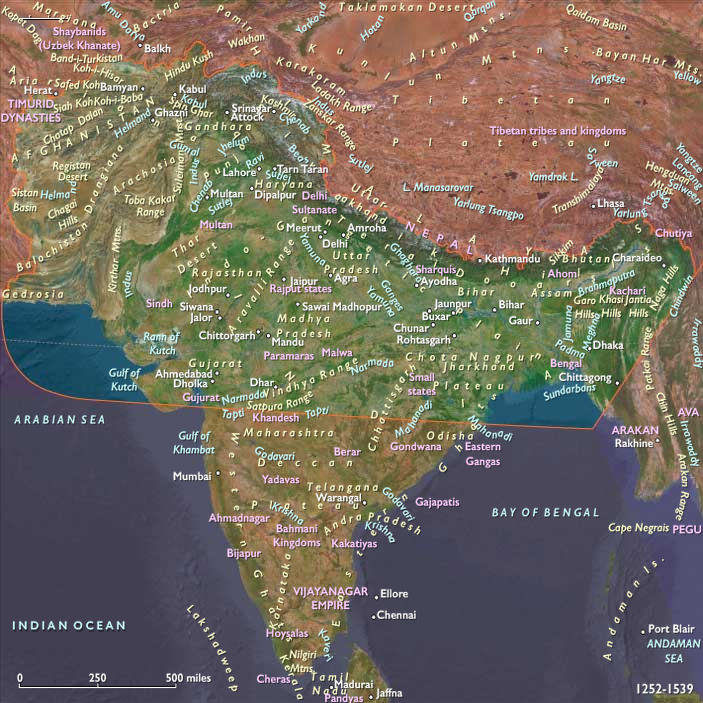
Shams-ud-Din Iletmish (or Iltutmish; r. 1211-36), a former slave-warrior in the thirteenth century, had established a Turkic kingdom in Delhi, which enabled future sultans to push in every direction; within the next hundred years, the Delhi Sultanate had extended its sway east to Bengal and south to the Deccan, while the sultanate itself experiences repeated threats from the northwest and internal revolts from displeased, independent- minded nobles.
The sultanate is in constant flux as five dynasties rise and fell: Mamluk or Slave (1206-90), Khalji (1290- 1320), Tughluq (1320-1413), Sayyid (1414-51), and Lodi (1451-1526).
The Khalji Dynasty under Ala-ud-Din (r. 1296- 1315) had succeeded in bringing most of South India under its control for a time, although conquered areas broke away quickly.
Power in Delhi is often gained by violence—nineteen of the thirty-five sultans are assassinated—and is legitimized by reward for tribal loyalty.
Factional rivalries and court intrigues are as numerous as they are treacherous; territories controlled by the sultan expand and shrink depending on his personality and fortunes.
Locations
People
Groups
- Hinduism
- Pashtun people (Pushtuns, Pakhtuns, or Pathans)
- Islam
- Turkmen people
- Delhi, Sultanate of (Tughluq Dynasty)
- Delhi, Sultanate of (Sayyid Dynasty)
- Delhi, Sultanate of (Lodi, or Afghan, Dynasty)
Topics
Subjects
Regions
Subregions
Years: 1396 - 1539
Locations
People
Groups
- Hinduism
- Pashtun people (Pushtuns, Pakhtuns, or Pathans)
- Islam
- Turkmen people
- Delhi, Sultanate of (Tughluq Dynasty)
- Delhi, Sultanate of (Sayyid Dynasty)
- Delhi, Sultanate of (Lodi, or Afghan, Dynasty)
Topics
Subjects
Regions
Subregions