
Isidore of Seville, celebrated for his outstanding …
Years: 636 - 636
Isidore of Seville, celebrated for his outstanding charity to the poor, dies on April 4, 636, leaving a compilation of scriptural, theological, and encyclopedic writings, including Etymologiae (“Origins”), a compendium of classical knowledge, and Historia de Regibus Gothorum, Vandalorum et Suevorum (“History of the Reigns of the Goths, Vandals, and Suebi”).
The instability of this period can be attributed to the power struggle between the kings and the nobility.
Religious unification has strengthened the political power of the church, which it exercises through church councils at Toledo along with the nobles.
The fourth council, held during the brief reign of Sisinand in 633, excommunicates and exiles the king, replacing him with Chintila.
The church councils are now the most powerful institution in the Visigothic state; they assume the role of regulating the process of succession to the kingship by election of the king by Gothic noble 'senators' and the church officials.
They also decide to meet on a regular basis to discuss ecclesiastical and political matters affecting the Church.
Chintila is elected by a convention of bishops and nobles in accordance with the 75th canon of the Fourth Council of Toledo as ruler of the Visigoths after the death of king Sisenand.
With his election, nothing changes and instability reigns.
In the Fifth Council of Toledo, convened in the church of St. Leocadia, the bishops accept in a decree that only Gothic nobility (with military functions) may be king of the Visigothic Kingdom.
Locations
People
Groups
Topics
Subjects
Regions
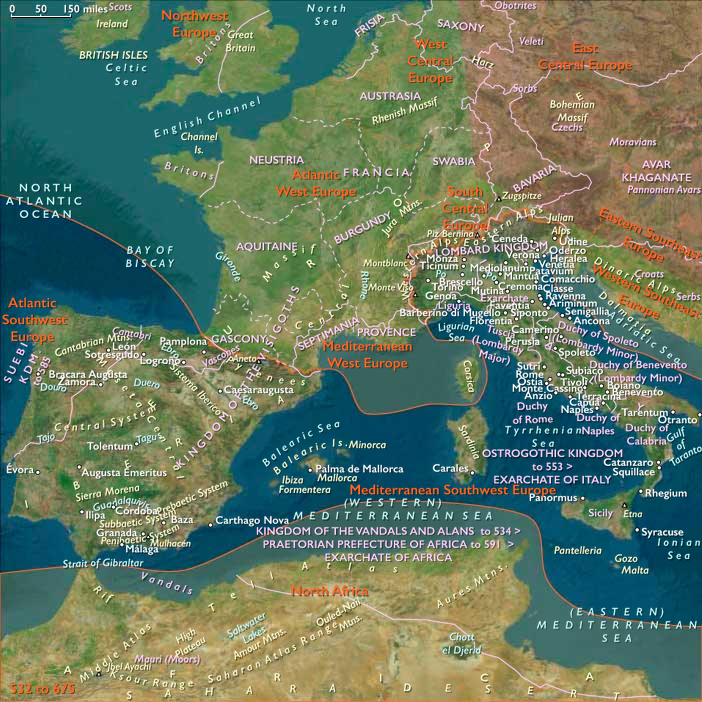
Subregions
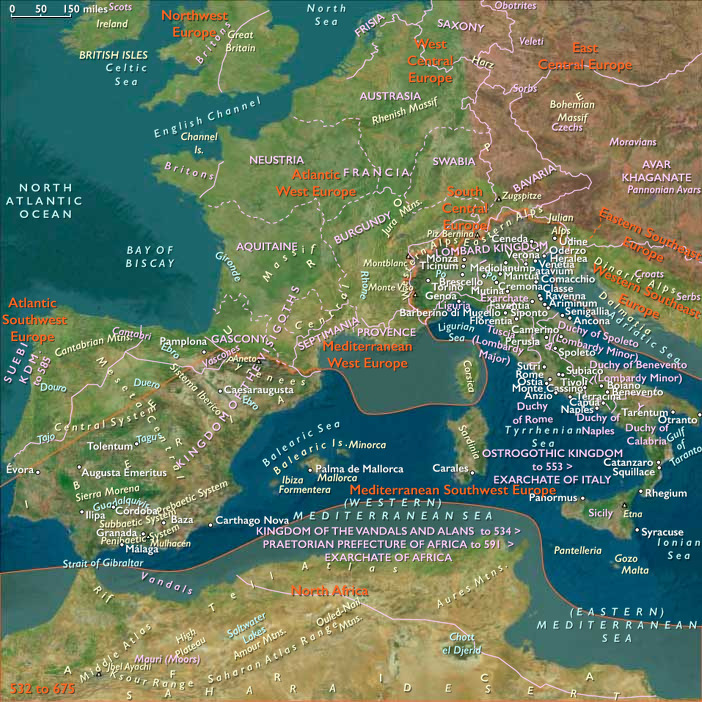
Related Events
Showing 10 events out of 56645 total
Years: 636 - 636
Locations
People
Groups
Topics
Subjects
Regions
Subregions