
Ioánnis Fokás, a Greek maritime pilot in …
Years: 1592 - 1592
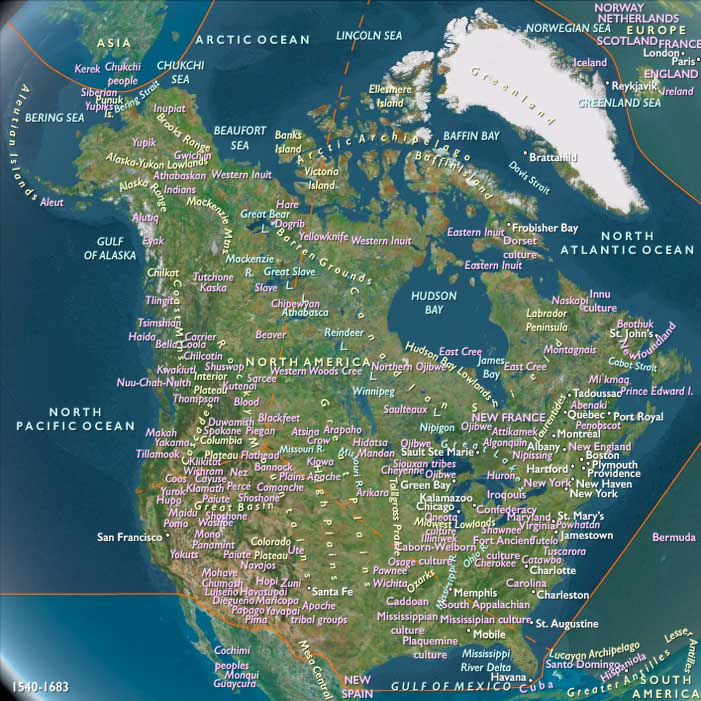
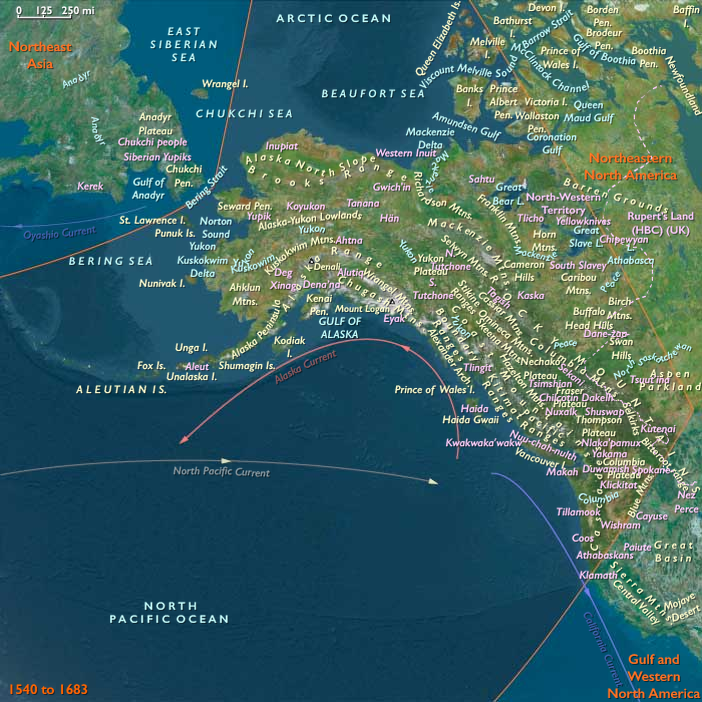
Ioánnis Fokás, a Greek maritime pilot in Portuguese employ who has sailed to China, the Philippines, and Mexico, claims the discovery of the waters Drake had sought twenty years earlier, which is why the strait south of Vancouver bears the name of Juan de Fuca, the Spanish transcription of his name.
Fokás claims to have sailed the strait from the Pacific to the North Sea and back in 1592 on his his famous trip up the northwest coast of the North American continent.
Born in Ceffalonia in 1536, little to nothing is known of his life before he entered the service of Spain, some time around 1555.
His early voyages were to the Far East, and he claimed to have arrived in New Spain in 1587 when, off Cabo San Lucas in Baja California, the English privateer Thomas Cavendish seized his galleon Santa Ana and deposited him ashore.
Having perfected his skill as a pilot in the Spanish fleet, the King of Spain had recognized him for his excellence and made him pilot of the Spanish navy in the West Indies, a title that he has kept for forty years.
According to Fuca's account, he had undertaken two voyages of exploration on the orders of the second viceroy of New Spain, Luis de Velasco, marqués de Salinas, both intended to find the fabled Strait of Anián that would lead to the Northwest Passage, a northern sea route linking the Atlantic and Pacific Oceans.
At this time, Spanish doctrine divides control of ships and fleets between the military commander, who is an army officer, and the sailing and navigation commander, who is a mariner.
The first voyage had seen two hundred soldiers and three small ships under the overall command of a Spanish captain (with Fuca as pilot and master) assigned the task of finding the Strait of Anián and fortifying it against the English. This expedition had failed when, allegedly due to the captain's malfeasance, the soldiers mutinied and returned home to California.)
Fuca enjoys success in 1592, on his second voyage.
Having sailed north with a caravel and a pinnace and a few armed marines, he returns to Acapulco and claims to have found the strait, with a large island at its mouth, at around 47° north latitude (the Strait of Juan de Fuca is in fact at around 48° N, as is the southern tip of the large island now called Vancouver Island).
The Strait of Juan de Fuca between the United States of America and Canada will be named for him by Captain Charles Barkley in 1787.
Locations
People
Groups
Topics
Commodoties
Subjects
Regions
Subregions
Related Events
Showing 10 events out of 34394 total
Years: 1592 - 1592
Locations
People
Groups
Topics
Commodoties
Subjects
Regions
Subregions