
The sons of Emperor Theodosius split the …
Years: 388 - 531
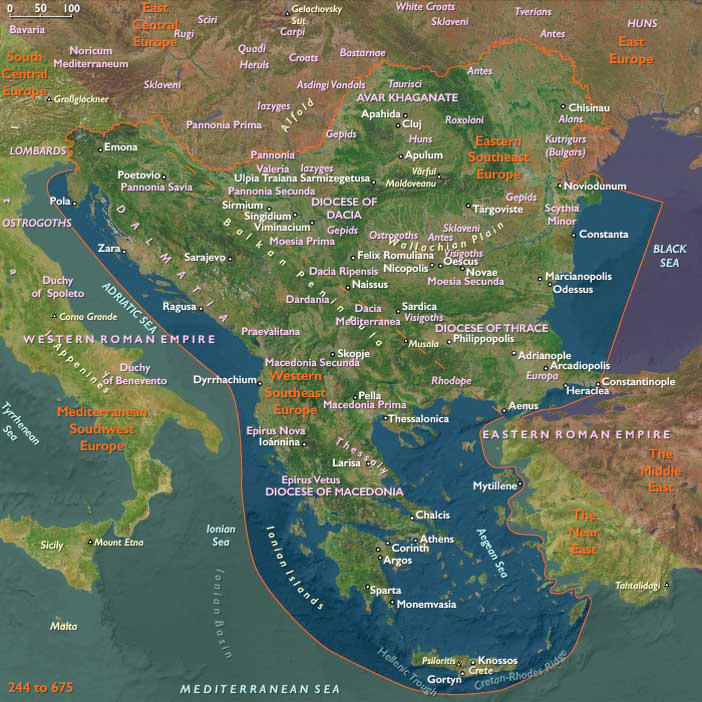
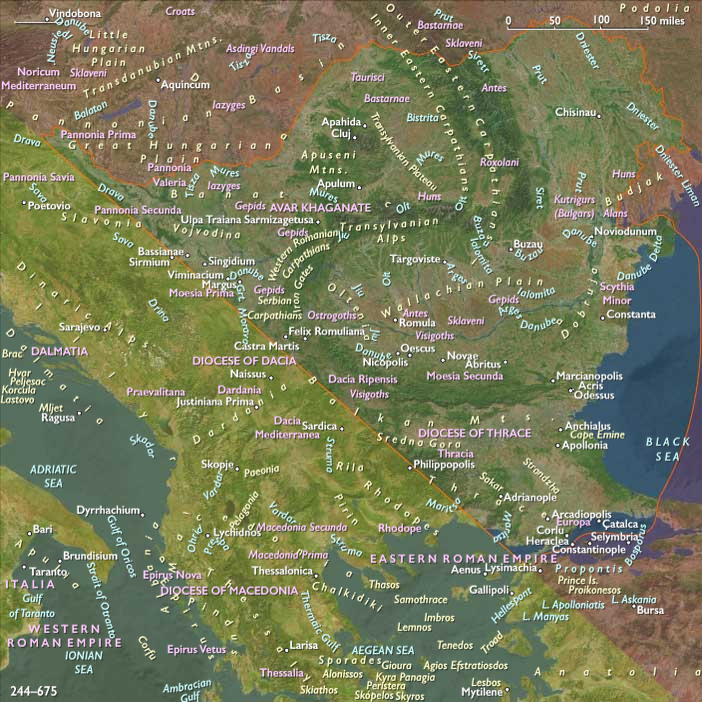
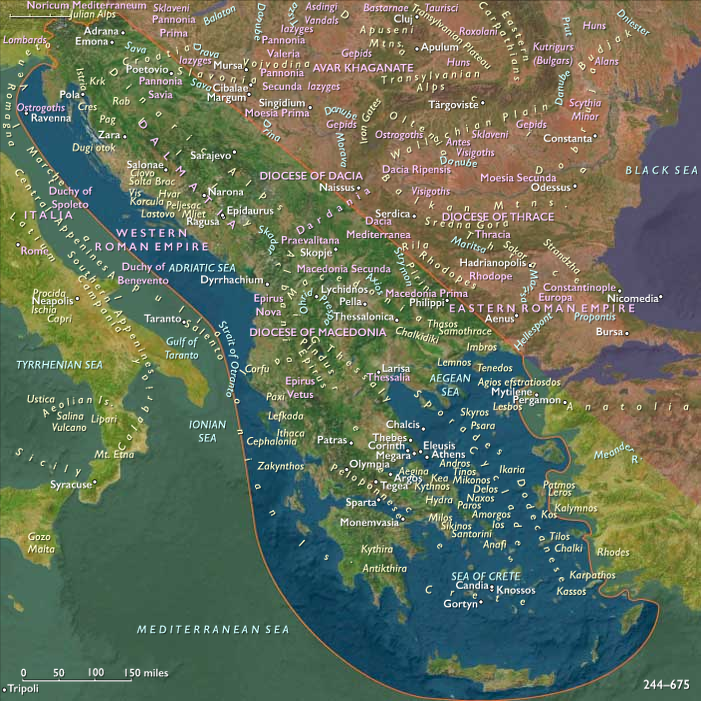
The sons of Emperor Theodosius split the empire into eastern and western halves in 395.
The division, which becomes a permanent feature of the European cultural landscape, separates Greek Constantinople (as Byzantium was renamed in 330) from Latin Rome and eventually the Eastern Orthodox and Roman Catholic churches.
It likewise separates the lands in what is now Serbia and Croatia, exercising a critical influence on the future Serbs and Croats.
Economic and administrative breakdown soon softens the empire's defenses, especially in the western half, and barbarian tribes begin to attack.
In the fourth century, the Goths sack Roman fortresses along the Danube River, and in 448 the Huns ravage Sirmium (now Sremska Mitrovica northwest of present- day Belgrade), Singidunum (now Belgrade), and Emona (now Ljubljana).
The Ostrogoths have conquered Dalmatia and other provinces by 493.
Emperor Justinian will drive the invaders out in the sixth century, but the defenses of the empire will prove inadequate to maintain this gain.
People
Groups
- Veneti, Adriatic
- Thracians
- Celts
- Illyrians
- Macedonia, Roman
- Dalmatia (Roman province)
- Goths (East Germanic tribe)
- Christians, Jewish
- Christians, Early
- Moesia Inferior (Roman province)
- Moesia Superior (Roman province)
- Pannonia Inferior (Roman province)
- Pannonia Superior (Roman province)
- Roman Empire: Tetrarchy
- Dardania (Roman province)
- Roman Empire: Valentinian dynasty (Rome)
- Hunnic Empire
- Roman Empire: Theodosian dynasty (Constantinople)
- Ostrogoths, Realms of the
- Roman Empire, Western (Milan)
- Roman Empire, Western (Ravenna)
- Roman Empire, Eastern: Leonid dynasty
- Roman Empire, Eastern: Justinian dynasty
Topics
- Migration Period
- Visigothic Raids on the Roman Empire, Early
- Hun Raids on the Roman Empire
- Gothic War (402-403)
- Visigothic Raids on the Roman Empire, Later
Subjects
Regions
Subregions
Years: 388 - 531
People
Groups
- Veneti, Adriatic
- Thracians
- Celts
- Illyrians
- Macedonia, Roman
- Dalmatia (Roman province)
- Goths (East Germanic tribe)
- Christians, Jewish
- Christians, Early
- Moesia Inferior (Roman province)
- Moesia Superior (Roman province)
- Pannonia Inferior (Roman province)
- Pannonia Superior (Roman province)
- Roman Empire: Tetrarchy
- Dardania (Roman province)
- Roman Empire: Valentinian dynasty (Rome)
- Hunnic Empire
- Roman Empire: Theodosian dynasty (Constantinople)
- Ostrogoths, Realms of the
- Roman Empire, Western (Milan)
- Roman Empire, Western (Ravenna)
- Roman Empire, Eastern: Leonid dynasty
- Roman Empire, Eastern: Justinian dynasty
Topics
- Migration Period
- Visigothic Raids on the Roman Empire, Early
- Hun Raids on the Roman Empire
- Gothic War (402-403)
- Visigothic Raids on the Roman Empire, Later
Subjects
Regions
Subregions