
Interior East Africa (388 to 531 CE): …
Years: 388 - 531
Interior East Africa (388 to 531 CE): Axumite Decline and Loss of Maritime Trade
Axumite Dominance and Retreat in Southwest Arabia
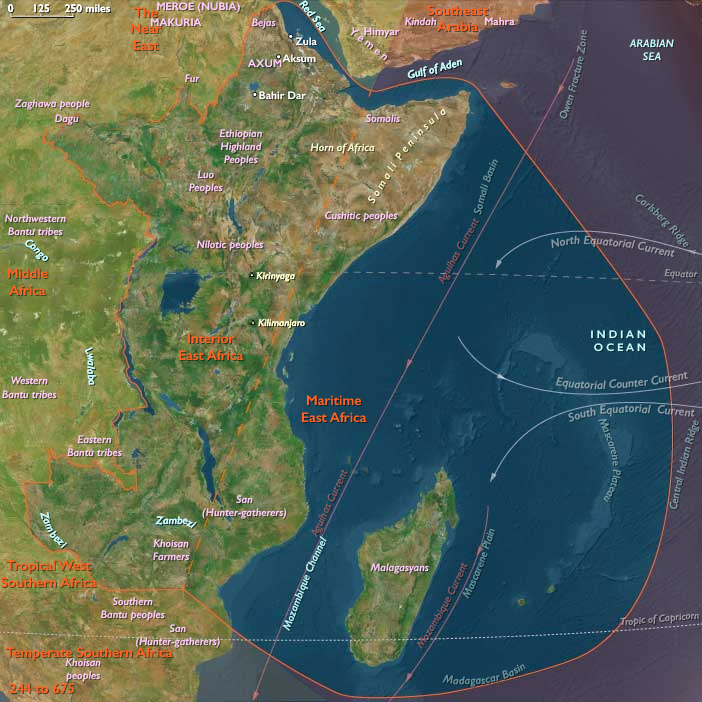
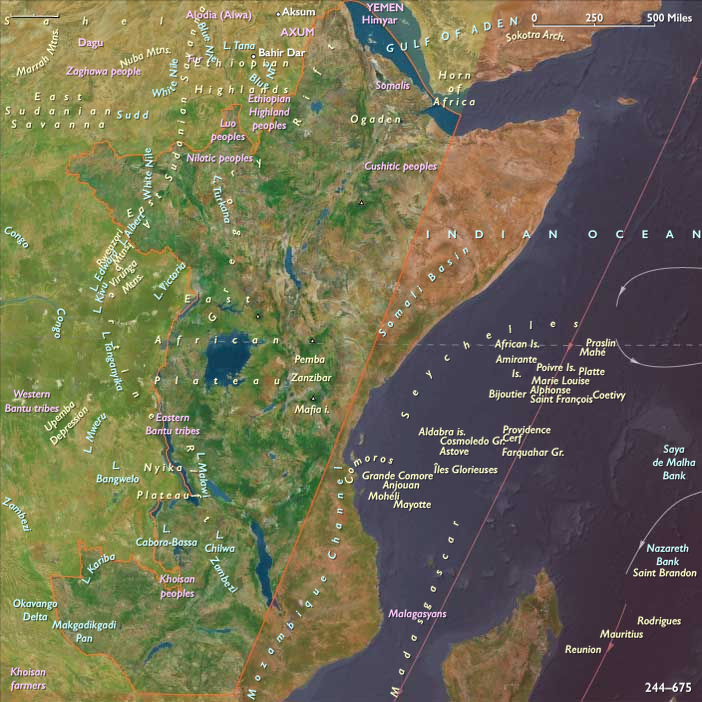
During the period 388 to 531 CE, the Axumite kingdom experiences significant fluctuations in power and influence, particularly regarding its overseas territories. Little detailed historical evidence remains from fifth-century Axum, but early sixth-century records indicate that Axumite rulers briefly reassert control over Southwest Arabia (modern-day Yemen). This renewed expansion, however, is ephemeral, lasting only until later in the same century.
Sassanian Incursion and the Collapse of Axumite Influence
In the mid-sixth century, the geopolitical landscape changes dramatically with the arrival of the Sassanian Persians in Yemen. Establishing dominance in the region, the Sassanians decisively end Axumite ambitions and influence over Southwest Arabia. This loss significantly impacts Axumite economic and political stability, as the kingdom is deprived of vital maritime trading hubs along the Red Sea.
Disruption of Axumite Trade Networks
Further compounding Axum's difficulties, Sassanian Persians extend their incursions by attacking Byzantine-controlled Egypt. This geopolitical turmoil dramatically disrupts the Axumite maritime trade networks in the Red Sea, upon which the kingdom had relied for economic prosperity and international prestige. As Axum becomes increasingly isolated from its traditional commercial centers, its economic vitality and regional influence diminish.
Gradual Inland Withdrawal and Economic Decline
The declining access to maritime trade compels Axum to gradually abandon its overseas commercial interests, prompting a strategic retreat into the northern Ethiopian interior. This shift away from maritime commerce initiates a prolonged phase of economic, political, and cultural decline. Axum begins to relinquish its former dominance, entering an extended era of diminished political authority and economic hardship.
Key Historical Developments
-
Brief Axumite reconquest of Southwest Arabia in the early sixth century, followed by rapid loss.
-
Arrival and consolidation of Sassanian Persian power in Yemen, decisively ending Axumite influence.
-
Persian attacks on Byzantine Egypt disrupting Red Sea trade networks critical to Axum’s prosperity.
-
Axum’s withdrawal from maritime trading hubs, marking the beginning of a prolonged inland retreat.
Long-Term Consequences and Historical Significance
Between 388 and 531 CE, Axum transitions from a dominant regional power to a kingdom experiencing steady decline. The loss of overseas territories and trade networks profoundly reshapes the kingdom’s geopolitical role and economic foundation, ultimately contributing to Axum’s withdrawal into isolation and setting the stage for the kingdom's slow transition to subsequent medieval Ethiopian states.
Groups
- Aksum (or Axum), Kingdom of
- Egypt (Roman province)
- Persian Empire, Sassanid, or Sasanid
- Roman Empire (Rome): Non-dynastic
- Christianity, Nicene
- Roman Empire: Theodosian dynasty (Constantinople)
- Roman Empire, Eastern: Leonid dynasty
- Roman Empire, Eastern: Justinian dynasty
Topics
Commodoties
Subjects
Regions
Subregions
Years: 388 - 531
Groups
- Aksum (or Axum), Kingdom of
- Egypt (Roman province)
- Persian Empire, Sassanid, or Sasanid
- Roman Empire (Rome): Non-dynastic
- Christianity, Nicene
- Roman Empire: Theodosian dynasty (Constantinople)
- Roman Empire, Eastern: Leonid dynasty
- Roman Empire, Eastern: Justinian dynasty
Topics
Commodoties
Subjects
Regions
Subregions