
Interior East Africa (1828–1971 CE): Slave Caravans, …
Years: 1828 - 1971
Interior East Africa (1828–1971 CE): Slave Caravans, Imperial Revival, and Colonial Partition
Geographic & Environmental Context
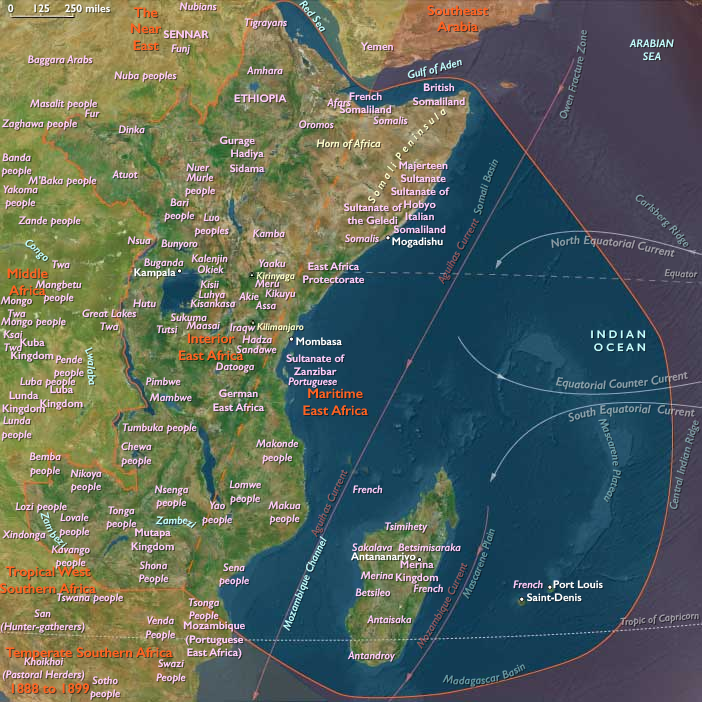
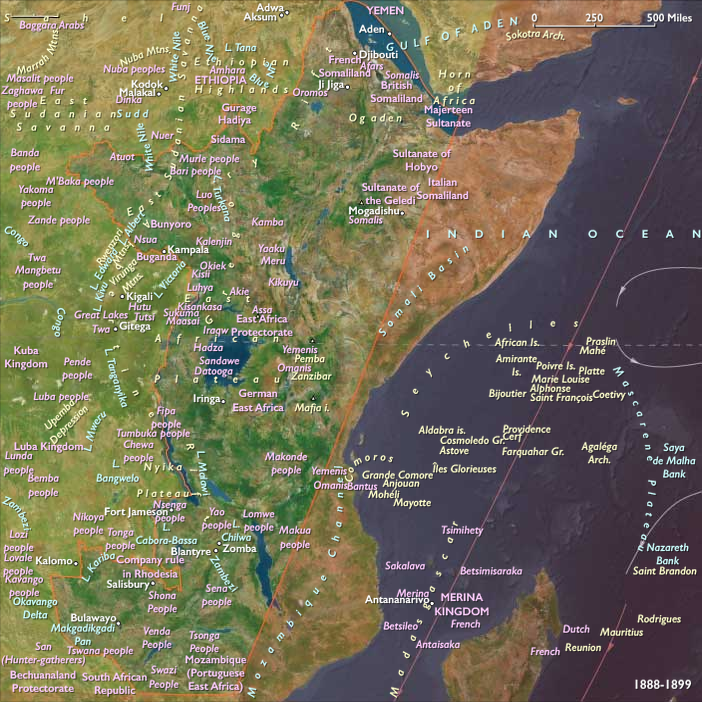
The subregion of Interior East Africa includes Eritrea, Djibouti, Ethiopia, South Sudan, Uganda, Rwanda, Burundi, Zambia, northern Zimbabwe, northern Malawi, northwestern Mozambique, inland Tanzania, and inland Kenya. Anchors included the Ethiopian highlands, the Great Rift lakes (Victoria, Tanganyika, Turkana, Kivu, Mweru), the interlacustrine kingdoms of Rwanda–Burundi–Uganda, the savanna–woodland mosaics of inland Tanzania and Zambia, and the Nile–Sudd marshes in South Sudan. By this period, the region was increasingly reshaped by Indian Ocean trade, European exploration, and later colonial boundaries.
Climate & Environmental Shifts
The 19th century saw alternating droughts and heavy rain years. The mid-1880s famine years devastated highland Ethiopia and the Great Lakes, tied to rinderpest outbreaks that decimated cattle. Fluctuating lake levels affected fisheries and floodplain cultivation. In the mid-20th century, population growth, soil depletion, and drought cycles placed further stress on subsistence systems, especially in pastoral belts of South Sudan and northern Kenya.
Subsistence & Settlement
-
Highlands (Ethiopia/Eritrea): Terrace agriculture of teff, barley, and wheat persisted; ox-plowing remained central. Coffee expanded as a cash crop. Sheep, goats, and cattle supplemented diets.
-
Great Lakes kingdoms (Buganda, Bunyoro, Rwanda, Burundi): Banana groves, sorghum, beans, and cattle supported dense populations. Tribute flows supplied royal courts.
-
Savanna zones (inland Tanzania–Zambia–Malawi–Mozambique): Sorghum, millet, and maize (now widespread) structured village subsistence; cassava spread as a famine reserve. Fisheries on Victoria and Tanganyika supported large communities.
-
Pastoral belts (South Sudan–Turkana–Karamoja): Cattle herding remained central; milk, hides, and bridewealth structured society. Grain was acquired via exchange with cultivators.
Technology & Material Culture
Iron hoes and knives remained vital, supplemented by imported textiles, beads, and firearms. Canoe fleets on the Great Lakes expanded for trade and warfare. Court regalia included drums, spears, and thrones, while Christian Ethiopia produced illuminated manuscripts and stone churches. In the 20th century, colonial regimes built roads, railways, and administrative compounds. Mission schools and printing presses introduced new literacies. Urban craft traditions developed in Kampala, Addis Ababa, Kigali, and Lusaka.
Movement & Interaction Corridors
-
19th-century caravan trade: From inland Tanzania and Zambia, ivory and enslaved people moved to coastal entrepôts like Bagamoyo, Kilwa, and Zanzibar, under Swahili and Omani merchant control.
-
Ethiopia: Caravans carried salt, coffee, and grain across the highlands to Red Sea ports; arms and textiles moved inland.
-
Nile–Sudd routes: Linked South Sudanese cattle and captives to Egyptian markets.
-
Colonial era: Railways tied Mombasa to Kampala, Dar es Salaam to Kigoma, and Benguela (Angola) to Zambian copper mines. Roads and steamers integrated Victoria and Tanganyika into wider circuits.
-
Air and road networks: By mid-20th century, Nairobi, Addis Ababa, Kampala, and Lusaka became aviation and trade hubs.
Cultural & Symbolic Expressions
-
Ethiopia: The Solomonic dynasty revived under Menelik II, who built Addis Ababa and symbolized Christian kingship. The victory over Italy at the Battle of Adwa (1896) became a touchstone of African resistance.
-
Great Lakes kingdoms: Courtly rituals of drums, regnal names, and oral epics remained central, while Christianity and Islam spread through missions and traders.
-
Colonial missions: Introduced Christian festivals, hymnody, and schools, while Islamic brotherhoods deepened ties across the Nile and Sahel.
-
Postcolonial culture: Writers, musicians, and political leaders articulated national identity—Congolese rumba influenced Uganda and Rwanda, while Ethiopia projected imperial grandeur through Haile Selassie’s court rituals.
Environmental Adaptation & Resilience
Communities diversified crops—cassava and maize buffered famine risk. Pastoralists rebuilt herds after rinderpest, adjusted transhumance routes, and negotiated pasture rights. Fisherfolk smoked and dried catches to stabilize diets. Colonial governments attempted irrigation (Gezira scheme, Tanganyika sisal estates), though often favoring export crops. Kinship, clan systems, and cooperative labor traditions sustained resilience, supplemented by missions and churches that organized relief during famine.
Technology & Power Shifts (Conflict Dynamics)
-
Ethiopia: Menelik II expanded territory southward; the empire endured Italian invasion attempts, defeating them at Adwa (1896). Later, Haile Selassie I modernized state institutions, only to face Italian occupation (1936–1941) before liberation with Allied support.
-
Great Lakes: Buganda expanded under British alliance; Rwanda and Burundi fell under German, then Belgian rule. Colonial indirect rule reshaped clan and clientship systems.
-
Savannas and Zambia: Caravans gave way to colonial railroads; copper mining in Katanga and Zambia drew massive labor migrations.
-
Resistance and nationalism: Maji Maji Rebellion (1905–1907) in Tanzania resisted German rule; later independence movements mobilized unions, churches, and student groups. Uganda (1962), Tanzania (1961), Zambia (1964), Malawi (1964), Rwanda (1962), and Burundi (1962) emerged as new states; Ethiopia and Liberia stood as symbols of African sovereignty.
Transition
By 1971 CE, Interior East Africa was a patchwork of newly independent nations and enduring monarchies. Ethiopia remained an empire under Haile Selassie, though unrest grew. The Great Lakes had transitioned from kingdoms to fragile republics. Zambia and Tanzania led pan-African movements, while Uganda under Idi Amin (from 1971) entered authoritarian rule. Across the region, legacies of caravans, Christian and Islamic traditions, and resilient subsistence systems met the challenges of sovereignty, development, and Cold War geopolitics.
People
- Abebe Aregai
- Belay Zeleke
- Benito Mussolini
- David Livingstone
- Haile Selassie
- Hastings Banda
- Henry Morton Stanley
- Idi Amin
- Jomo Kenyatta
- Julius Nyerere
- Kenneth Kaunda
- Menelik II
- Milton Obote
- Tewodros II
- Yohannes IV
Groups
- Hadza people
- Dinka people
- Nuer people
- Arab people
- Tigray-Tigrinya people
- Yao people
- Sandawe
- Oromo people
- Baganda
- Giriama
- Kikuyu
- Luhya people
- Islam
- Hutu
- Tutsi
- Amhara people
- Luo people of Kenya and Tanzania
- Atuot
- Murle people
- Datooga
- Akie
- Iraqw
- Kalenjin
- Zande people
- Kisii people
- Maasai
- Buganda, Kingdom of
- Maravi
- Bari people
- Bunyoro (Bunyoro-Kitara), kingdom of
- Burundi, Kingdom of
- Britain (United Kingdom of Great Britain and Ireland)
- Italy, Kingdom of
- French Somaliland
- British Somaliland
- East Africa, German
- British South Africa Company (SAC)
- Zanzibar, (British) Protectorate of
- East Africa, German
- Uganda, Protectorate of
- Buganda, (British) Protectorate of (Uganda Protectorate)
- East Africa Protectorate (Kenya)
- Sudan, Anglo-Egyptian
- King's African Rifles (KAR)
- Nyasaland (British Protectorate)
- Belgian Congo
- South Africa, Union of (British Dominion)
- Southern Rhodesia
- Northern Rhodesia
- Ruanda-Urundi, Territory of
- Kenya, (British) Protectorate of
- Young Kikuyu Association (YKA)
- Tanganyika (territory)
- Britain (United Kingdom of Great Britain and Northern Ireland)
- East Africa, Italian
- Ethiopia, (restored) Empire of
- United Nations, The (U.N.)
- France (French republic); the Fourth Republic
- Rhodesia and Nyasaland, Federation of (Central African Federation)
- Anyanya
- Congo, Republic of the (Lèopoldville)
- Somalia
- Rwanda, Republic of
- Uganda, Republic of
- Kenya, Republic of
- Zambia, Republic of
- Tanzania, United Republic of
- Malawi, Republic of
- Burundi, (First) Republic of
Topics
- Zemene Mesafint (Ethiopia's "Age of Princes")
- Berlin Conference
- Italo-Ethiopian War, First
- Adwa, Battle of
- World War, Second (World War II)
- Mau Mau Uprising
- Sudanese Civil War, First
- Congo Crisis
Commodoties
Subjects
Regions
Subregions
Years: 1828 - 1971
People
- Abebe Aregai
- Belay Zeleke
- Benito Mussolini
- David Livingstone
- Haile Selassie
- Hastings Banda
- Henry Morton Stanley
- Idi Amin
- Jomo Kenyatta
- Julius Nyerere
- Kenneth Kaunda
- Menelik II
- Milton Obote
- Tewodros II
- Yohannes IV
Groups
- Hadza people
- Dinka people
- Nuer people
- Arab people
- Tigray-Tigrinya people
- Yao people
- Sandawe
- Oromo people
- Baganda
- Giriama
- Kikuyu
- Luhya people
- Islam
- Hutu
- Tutsi
- Amhara people
- Luo people of Kenya and Tanzania
- Atuot
- Murle people
- Datooga
- Akie
- Iraqw
- Kalenjin
- Zande people
- Kisii people
- Maasai
- Buganda, Kingdom of
- Maravi
- Bari people
- Bunyoro (Bunyoro-Kitara), kingdom of
- Burundi, Kingdom of
- Britain (United Kingdom of Great Britain and Ireland)
- Italy, Kingdom of
- French Somaliland
- British Somaliland
- East Africa, German
- British South Africa Company (SAC)
- Zanzibar, (British) Protectorate of
- East Africa, German
- Uganda, Protectorate of
- Buganda, (British) Protectorate of (Uganda Protectorate)
- East Africa Protectorate (Kenya)
- Sudan, Anglo-Egyptian
- King's African Rifles (KAR)
- Nyasaland (British Protectorate)
- Belgian Congo
- South Africa, Union of (British Dominion)
- Southern Rhodesia
- Northern Rhodesia
- Ruanda-Urundi, Territory of
- Kenya, (British) Protectorate of
- Young Kikuyu Association (YKA)
- Tanganyika (territory)
- Britain (United Kingdom of Great Britain and Northern Ireland)
- East Africa, Italian
- Ethiopia, (restored) Empire of
- United Nations, The (U.N.)
- France (French republic); the Fourth Republic
- Rhodesia and Nyasaland, Federation of (Central African Federation)
- Anyanya
- Congo, Republic of the (Lèopoldville)
- Somalia
- Rwanda, Republic of
- Uganda, Republic of
- Kenya, Republic of
- Zambia, Republic of
- Tanzania, United Republic of
- Malawi, Republic of
- Burundi, (First) Republic of
Topics
- Zemene Mesafint (Ethiopia's "Age of Princes")
- Berlin Conference
- Italo-Ethiopian War, First
- Adwa, Battle of
- World War, Second (World War II)
- Mau Mau Uprising
- Sudanese Civil War, First
- Congo Crisis
Commodoties
Subjects
Regions
Subregions