
Interior East Africa (1780–1791 CE): Transition to …
Years: 1780 - 1791
Interior East Africa (1780–1791 CE): Transition to the Wara Seh Dynasty
The years between 1780 and 1791 constituted a critical transitional period in Ethiopian history, marked by the further erosion of imperial authority and the rise of influential regional figures who came to dominate the political landscape. Emperor Tekle Giyorgis I, who first ascended the throne in 1779, struggled to reassert imperial dominance and reclaim the central powers traditionally vested in the monarchy. His ambitious efforts, however, soon encountered staunch opposition from powerful regional nobles and military commanders who had grown accustomed to autonomy and resisted any attempts to curtail their influence.
In early 1784, Ras Ali I, the powerful Ras of Begemder, decisively defeated Emperor Tekle Giyorgis at the Battle of Afara Wanat, effectively deposing him and signaling a new phase of Ethiopian politics. In Tekle Giyorgis's place, Ras Ali installed Iyasu III, an emperor who served merely as a puppet, entirely subordinate to the interests of regional strongmen. This event heralded the emergence of the Wara Seh dynasty, originating from the powerful Oromo clan of Yejju, who would dominate the political scene for decades as Enderases—regents wielding actual control behind figurehead emperors.
Following Ras Ali I’s ascent as Ras bitwadad (chief regent), power passed to his brother, Ras Aligaz. After Ras Aligaz's death, control shifted temporarily to Ras Wolde Selassie, the hereditary ruler of Enderta and overlord of Tigray, briefly interrupting the Wara Seh dominion. Upon Ras Wolde Selassie's death, authority reverted to the Wara Seh lineage, with Ras Gugsa, Ras Aligaz's nephew, assuming power. Ras Gugsa’s sons—Ras Yimam, Ras Mariye, and Ras Dori—successively wielded considerable influence, perpetuating the era’s political fragmentation.
Ultimately, the power of the Wara Seh dynasty culminated in the figure of Ras Ali II, Ras Gugsa's nephew, who later became the prominent Enderase. Throughout this era, Amha Iyasus, Meridazmach of Shewa (1744–1775), and his successors strategically remained detached from these tumultuous power struggles, instead concentrating on consolidating their own domains and enhancing the stability of their territory. Amha Iyasus notably founded Ankober, establishing a precedent of relative political independence that his descendants continued to uphold amid the broader imperial chaos.
During this era, regional powers in the interior highlands and along the coast navigated shifting alliances, as local sultanates and pastoral groups sought autonomy from centralized imperial influence, further fragmenting Ethiopia’s traditional unity.
People
Groups
- Tigray-Tigrinya people
- Agaw people
- Oromo people
- Gurage people
- Amhara people
- Ethiopia, Solomonid Dynasty of
Topics
Subjects
Regions
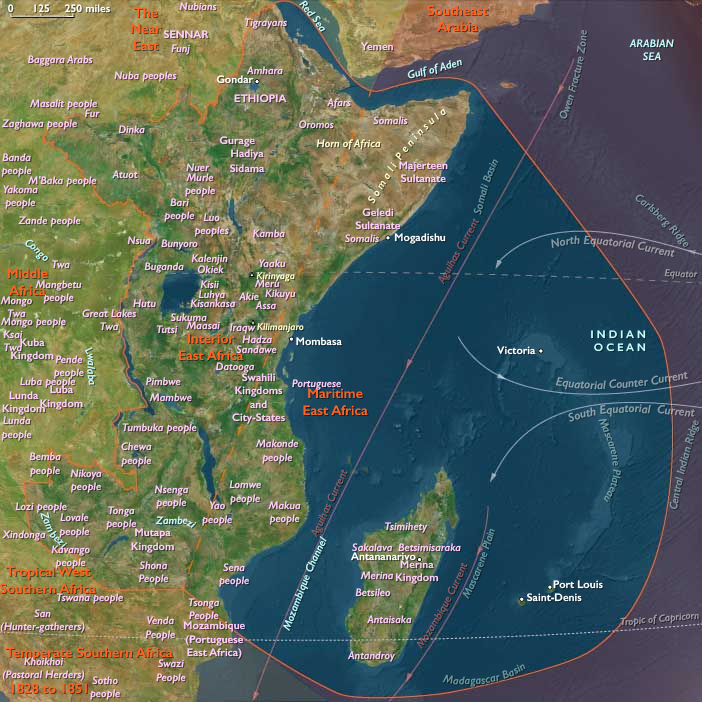
Subregions
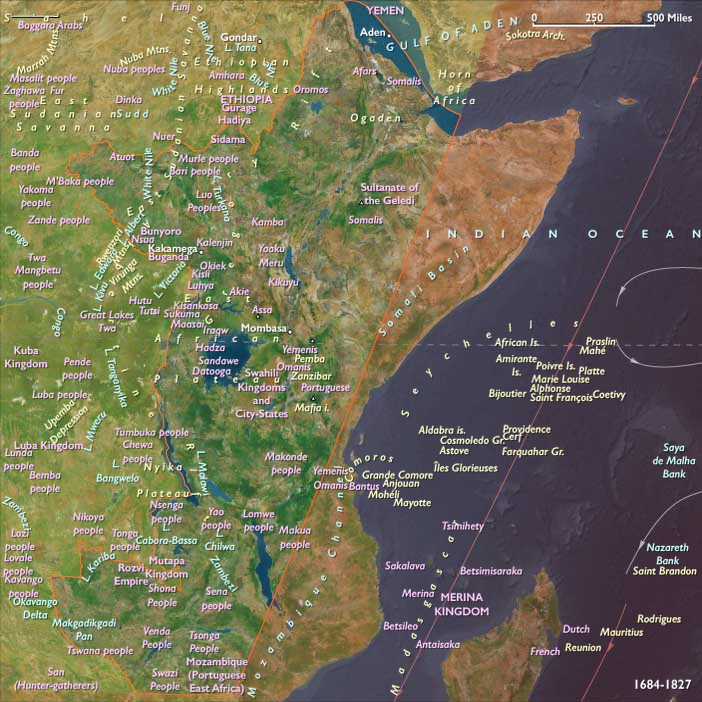
Years: 1780 - 1791
People
Groups
- Tigray-Tigrinya people
- Agaw people
- Oromo people
- Gurage people
- Amhara people
- Ethiopia, Solomonid Dynasty of
Topics
Subjects
Regions
Subregions