
Interior East Africa (1540–1683 CE): Gunpowder Frontiers, …
Years: 1540 - 1683
Interior East Africa (1540–1683 CE): Gunpowder Frontiers, Oromo Migrations, and Great Lakes Statecraft
Geographic & Environmental Context
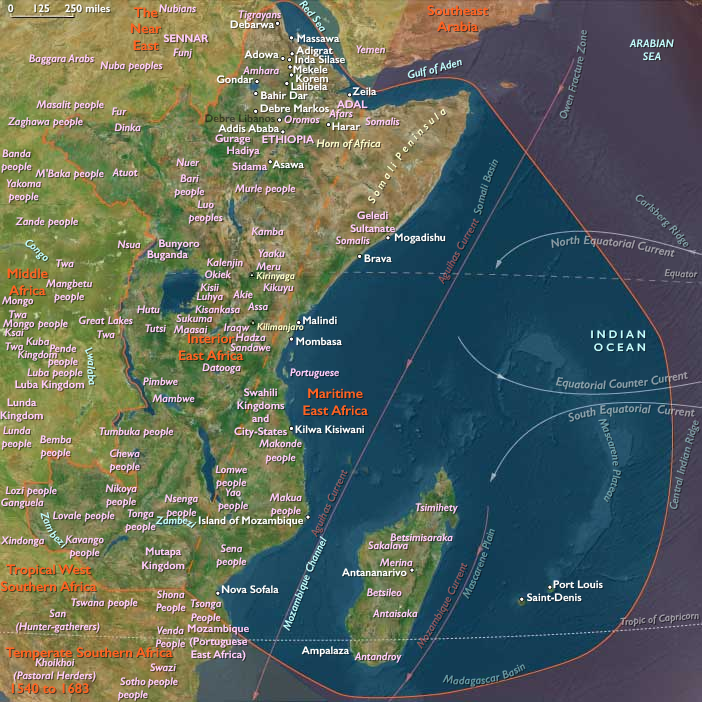
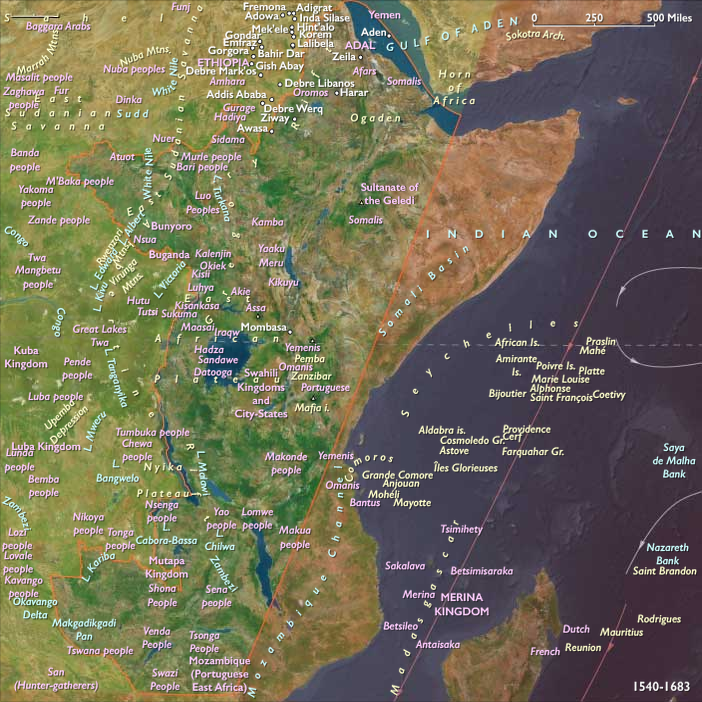
The subregion of Interior East Africa includes Eritrea, Djibouti, Ethiopia, South Sudan, Uganda, Rwanda, Burundi, Zambia, northern Zimbabwe, northern Malawi, northwestern Mozambique, inland Tanzania, and inland Kenya. Anchors include the Ethiopian and Eritrean highlands, the Rift Valley lakes and corridors (Tana, Turkana, Victoria, Kivu, Tanganyika, Mweru), the interlacustrine plateaus (Rwanda–Burundi–Uganda), the savanna woodlands of inland Tanzania and Zambia, and the Lake Chad–Nile fringe toward South Sudan. Highlands, plateaus, and rift basins remained the interior’s great funnels, carrying people, herds, ideas, and goods between the Nile and the Indian Ocean.
Climate & Environmental Shifts
The later Little Ice Age intensified interannual variability. Highland Ethiopia experienced frost episodes and drought pulses that stressed terrace fields and church granaries. Equatorial plateaus saw uneven long and short rains, with years of bumper banana and millet harvests followed by shortfalls. Major rift lakes fluctuated, shifting fisheries and floodplain soils; farther south, miombo belts alternated between fire-opened woodland and denser canopies as rainfall wavered.
Subsistence & Settlement
-
Highlands (Ethiopia/Eritrea): Mixed plow agriculture—teff, barley, wheat, pulses—on terraced slopes; ox traction; beekeeping; coffee gardens in humid pockets. Sheep, goats, and cattle grazed uplands; church forests protected springs and pollinators.
-
Interlacustrine plateau (Uganda–Rwanda–Burundi): Intensive banana/plantain (matoke) complexes with beans, yams, and finger millet; cattle and small stock structured rank, tribute, and marriage payments.
-
Savannas and rift margins (inland Tanzania–Zambia–n. Malawi/n. Mozambique): Sorghum, pearl millet, later maize (gaining ground mid-period); groundnuts and cucurbits; riverine and lacustrine fisheries on Victoria, Tanganyika, Mweru.
-
Pastoral–agro-pastoral belts (Turkana, Karamoja, South Sudan): Seasonal transhumance of cattle, sheep, goats; grain via exchange with cultivators; dry-season wells and pasture reserves managed by lineage councils.
Technology & Material Culture
Highland terraces, stone bunds, and hillside canals stabilized soils; wooden scratch plows with iron shares anchored grain regimes. Ironworking furnished hoes, knives, and prestige blades; salt bars from Danakil and rift natron moved as media of exchange. Courtly ateliers in the Great Lakes produced drums, inlaid stools, and regalia; barkcloth and banana-fiber cordage provisioned dense settlements. In churches and monasteries, parchment manuscripts, bindings, and processional crosses embodied elite devotion. Matchlocks and powder arrived to the northern highlands via the Red Sea; inland, smiths refitted imported barrels and forged spearheads and mail.
Movement & Interaction Corridors
Ridge-top roads and river fords tied Solomonic capitals to granary provinces and Massawa; caravan paths crossed Afar to salt pans. Southward, drum-roads and canoe chains linked Bunyoro, Buganda, Rwanda, Burundi, and Karagwe to fisheries, iron districts, and interior–coast exchanges (cloth, beads, copper, later slaves and ivory) that fed Swahili entrepôts indirectly from inland markets. To the west and south, copper and salt moved between plateau polities and the central African savannas; to the Nile, cattle, captives, and gum filtered through the Sudd margins.
Cultural & Symbolic Expressions
-
Highlands: The Solomonic monarchy maintained Christian sacral kingship; saints’ feasts, fasting calendars, and monastic networks bound rural parishes to the throne. Hymns, hagiographies, and chronicles legitimated rule and recorded calamities and victories.
-
Great Lakes kingdoms: Royal drums and regnal names staged sovereignty; origin epics and shrine cults ordered land, cattle, and rain. Clientship idioms (ubugabire, ubuhake) tied patrons and clients; clan shrines mediated justice.
-
Pastoral belts: Age sets, cattle rituals, oath-taking over spears and gourds, and ngoma song cycles governed drought, pasture, and war.
Environmental Adaptation & Resilience
Highlanders intercropped cereals and pulses, rotated terraces, and relied on church granaries; when fields failed, bee-keeping and forest coffee buffered diets. Plateau households stabilized soils through perennial banana groves, mulch, and shade; smoked fish bridged hungry seasons. Pastoralists staggered herds by age/sex across grazing zones, kept drought boreholes in reserve, and traded milk/meat for grain. Salt, iron, and cloth circulated as crisis goods; shrine networks coordinated labor for canal repair and terrace rebuilding after deluges.
Technology & Power Shifts (Conflict Dynamics)
Northern politics pivoted on gunpowder frontiers and migration:
-
The Adal–highland wars crested when Ahmad ibn Ibrahim “Gragn” drove matchlock-armed campaigns deep into the Christian kingdom (1529–1543). With Portuguese musketeers and cannon, highland forces reversed Adal’s advances; by the 1540s the immediate threat subsided.
-
The Oromo expansions (mid-16th–17th centuries) surged into the highlands via gadaa-organized age-sets, transforming demography, landholding, and tribute in Shewa, Bale, and beyond; armed horsemen and lancers reshaped frontier ecologies and politics.
-
Jesuit missions followed victory—Susenyos briefly embraced Catholicism (1620s), provoking revolt; Fasilidesexpelled Jesuits (1632) and inaugurated the Gondar era (from c. 1636), rebuilding churches and courts while keeping firearms at arm’s length.
Across the interlacustrine, statecraft thickened: Bunyoro defended iron and fish corridors; Buganda expanded eastward along Lake Victoria’s shores; Rwanda’s Nyiginya court centralized hills through cattle-clientship; Burundiconsolidated regnal drums and hill polities. Earthwork forts, stockades, and long-drum signals coordinated musters; raiding and captives entered inland–coast circuits more visibly late in the period.
Transition
By 1683 CE, Interior East Africa had been remapped by war, migration, and statecraft. The highland throne survived the gunpowder shock, turned inward to Gondar, and faced a transformed Oromo frontier; the Great Lakes courts consolidated along lakes, gardens, and drum-roads; pastoral corridors adapted to climate flicker with deeper transhumance calendars. Inland caravan and canoe markets bound producers to distant Indian Ocean demand without ceding autonomy. The next age would tighten those links: ivory, captives, and cloth flows, new firearms, and missionary diplomacy—extending interior polities’ reach even as external pressures grew.
People
Groups
- Somalis
- Ethiopian Orthodox Tewahedo Church
- Oromo people
- Islam
- Amhara people
- Afar people
- Christians, Roman Catholic
- Ethiopia, Solomonid Dynasty of
- Portugal, Avizan (Joannine) Kingdom of
- Adal Sultanate
- Ottoman Empire
- Jesuits, or Order of the Society of Jesus
- Adal Sultanate
- Habesh Eyalet
- Aussa, Imamate of
- Portugal, Habsburg (Philippine) Kingdom of
Topics
Commodoties
- Hides and feathers
- Gem materials
- Domestic animals
- Strategic metals
- Slaves
- Aroma compounds
- Stimulants
- Spices
Subjects
Regions
Subregions
Related Events
Showing 10 events out of 37475 total
Years: 1540 - 1683
People
Groups
- Somalis
- Ethiopian Orthodox Tewahedo Church
- Oromo people
- Islam
- Amhara people
- Afar people
- Christians, Roman Catholic
- Ethiopia, Solomonid Dynasty of
- Portugal, Avizan (Joannine) Kingdom of
- Adal Sultanate
- Ottoman Empire
- Jesuits, or Order of the Society of Jesus
- Adal Sultanate
- Habesh Eyalet
- Aussa, Imamate of
- Portugal, Habsburg (Philippine) Kingdom of
Topics
Commodoties
- Hides and feathers
- Gem materials
- Domestic animals
- Strategic metals
- Slaves
- Aroma compounds
- Stimulants
- Spices
Subjects
Regions
Subregions