
Interior East Africa (1672–1683 CE): Imperial Consolidation …
Years: 1672 - 1683
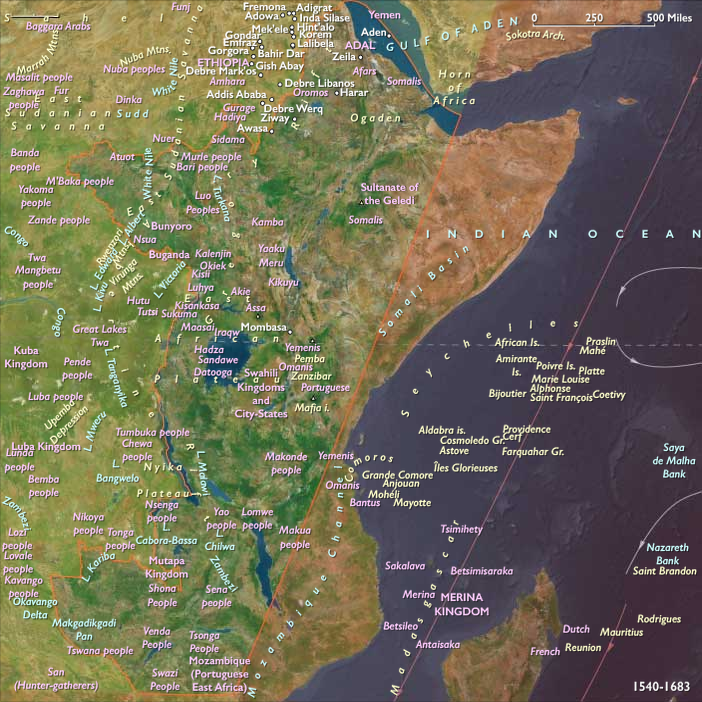
Interior East Africa (1672–1683 CE): Imperial Consolidation and Cultural Prosperity under Yohannes I
Continued Stability under Yohannes I
During the later years of Emperor Yohannes I (r. 1667–1682), Ethiopia enjoyed continued political stability, economic growth, and cultural flourishing. Yohannes expanded upon the foundations laid by his father, Emperor Fasilides, reinforcing the imperial power centered at Gondar—a thriving urban and cultural hub. The decade marked Ethiopia as one of East Africa’s most politically cohesive and culturally vibrant regions.
Architectural and Cultural Achievements
The imperial capital at Gondar continued to witness impressive architectural growth during this period. Yohannes I extended and enhanced the Fasil Ghebbi—the royal enclosure that became emblematic of the Ethiopian monarchy’s prestige and power. Notable among his accomplishments were additional palaces, administrative buildings, ornate churches, and monasteries. These projects solidified Gondar as the empire's symbolic heart and a major center of Orthodox Christianity and scholarship.
Ecclesiastical Influence and Literary Flourishing
Yohannes I placed strong emphasis on ecclesiastical scholarship and religious leadership, further consolidating the power of the Ethiopian Orthodox Church. Numerous illuminated manuscripts, religious texts, and chronicles were created during this era, enhancing Ethiopia’s literary tradition. Monastic centers around Lake Tana, particularly at monasteries such as Debre Libanos and Debre Damo, were actively supported by royal patronage, thereby reinforcing Ethiopia’s cultural and religious identity.
Diplomacy and Frontier Management
Yohannes maintained Ethiopia’s political stability through skillful diplomatic maneuvering. He ensured peace and balanced power along Ethiopia's eastern border with the Islamic Imamate of Aussa, the successor polity to the Adal Sultanate. Carefully managed diplomatic ties prevented major conflicts, ensuring safe trade routes through Zeila and other coastal settlements. Relations with the Afar and Somali peoples remained relatively peaceful, facilitating ongoing economic exchanges.
Integration and Stability of the Oromo Frontier
A major achievement of Yohannes’s administration was the progressive integration and accommodation of the Oromo peoples in the southern and western provinces of the empire. Employing strategies of intermarriage, land allocation, and careful military oversight, Yohannes stabilized these regions, further securing Ethiopia’s southern frontier and promoting peaceful coexistence among diverse ethnic groups.
Economic Expansion and Internal Prosperity
Stable governance under Yohannes I spurred economic prosperity. Trade routes linking the Ethiopian highlands with the Red Sea, the Arabian Peninsula, and the wider Indian Ocean basin were increasingly secure. Gondar benefited directly from this trade, becoming a hub for commerce in luxury goods, spices, ivory, coffee, and gold, thereby enriching the Ethiopian state and supporting the empire’s thriving urban centers.
Succession and Continuity
Yohannes I died in 1682, and his succession was orderly, reinforcing the political continuity and relative stability Ethiopia had enjoyed for decades. His son, Iyasu I (1682–1706), smoothly assumed the throne, continuing his father’s policies and further cementing the cultural achievements of the Gondarine period.
Key Historical Developments
-
Continued stability and flourishing of the imperial capital Gondar.
-
Expansion of monumental architecture in the royal compound (Fasil Ghebbi).
-
Strengthened ecclesiastical leadership, scholarship, and literary output.
-
Diplomatic stability maintained along the eastern frontier with Islamic polities, notably the Imamate of Aussa.
-
Successful integration and management of Oromo peoples in southern provinces.
-
Economic growth through secure internal trade and stable external commerce.
Long-Term Consequences and Historical Significance
The era from 1672 to 1683, under Emperor Yohannes I, marked a high point of Ethiopia’s Gondarine period. This time saw the consolidation of imperial authority, religious unity, and cultural prestige. Yohannes's diplomacy and integration policies provided Ethiopia with long-lasting stability, significantly influencing subsequent Ethiopian politics, religion, and cultural identity, and laying a robust foundation for the continued prosperity of the Gondarine Empire.
People
Groups
- Somalis
- Ethiopian Orthodox Tewahedo Church
- Oromo people
- Islam
- Afar people
- Ethiopia, Solomonid Dynasty of
- Aussa, Imamate of
Commodoties
Subjects
Regions

Subregions
Related Events
Showing 10 events out of 30765 total
Years: 1672 - 1683
People
Groups
- Somalis
- Ethiopian Orthodox Tewahedo Church
- Oromo people
- Islam
- Afar people
- Ethiopia, Solomonid Dynasty of
- Aussa, Imamate of
Commodoties
Subjects
Regions
Subregions