
Interior East Africa (1600–1611 CE): Challenges of …
Years: 1600 - 1612
Interior East Africa (1600–1611 CE): Challenges of Succession, Religious Tensions, and Growing Foreign Influence in Ethiopia
The Brief Reign of Emperor Yaqob and Dynastic Instability
The early seventeenth century in Interior East Africa began with uncertainty and internal instability, centered around Ethiopia’s imperial throne. Emperor Yaqob (Malak Sagad II) (reigned 1597–1603), successor of the strong and centralizing Sarsa Dengel, faced mounting opposition from powerful regional nobles who had chafed under his father’s firm administrative policies. Yaqob's rule quickly became characterized by court intrigues and rebellion, notably from ambitious provincial governors seeking to reassert their traditional autonomy.
Despite his efforts to maintain central control, Emperor Yaqob was eventually overthrown in a coup in 1603, plunging the empire into a short but chaotic struggle for power.
Ascension and Early Rule of Emperor Za Dengel
Following Yaqob’s deposition, Ethiopia witnessed a swift succession by his cousin, Emperor Za Dengel (reigned 1603–1604). Za Dengel initially demonstrated promise, moving decisively to suppress revolts and restore central authority. He, too, was drawn into religious controversies as Portuguese Jesuits increased pressure to convert the Ethiopian Orthodox Church to Roman Catholicism, promising military and diplomatic support from Portugal in exchange.
In a notable diplomatic and religious shift, Za Dengel briefly aligned himself with the Jesuit missionaries, declaring openness to conversion to Catholicism—largely a political maneuver aimed at gaining external support to stabilize his precarious rule. This decision, however, severely alienated influential segments of Ethiopian society, especially the powerful Orthodox clergy and traditionally-minded nobility, triggering a significant backlash.
The Restoration and Firm Rule of Emperor Susenyos I
The religious and political crises under Za Dengel's brief reign paved the way for the emergence of a more durable ruler, Emperor Susenyos I (reigned 1607–1632), who ascended the throne following several years of turmoil and contested successions. Initially hailed as a stabilizing figure capable of reunifying the empire, Susenyos swiftly acted to suppress revolts and reassert imperial authority in Ethiopia’s central and peripheral provinces.
Recognizing the damage wrought by his predecessor's Catholic overtures, Susenyos initially appeared cautious in his approach to the Jesuits. However, his increasing interactions with Portuguese missionaries and their persuasive arguments regarding Catholic support in military and economic affairs led him gradually toward their influence.
Foreign Influences: Portuguese Jesuits and Early European Intervention
By 1610, the presence and influence of Portuguese Jesuit missionaries had grown substantially, increasingly intertwined with Ethiopia’s political dynamics. Jesuit leaders such as Pedro Páez arrived in Ethiopia, gaining access to Susenyos’s court and establishing a permanent mission presence. Páez, in particular, gained the emperor’s confidence, slowly laying the groundwork for greater Catholic influence.
The presence of these missionaries provoked tension within Ethiopian society. While the Jesuits offered expertise in architecture, engineering, and diplomacy, benefiting the imperial court materially, they simultaneously challenged the Orthodox Church's established religious traditions and authority.
Regional Stability and External Relations
Despite internal tensions, the early years of Susenyos's reign saw Ethiopia regain a measure of stability and regional authority. External threats from Muslim sultanates such as Adal had diminished considerably, though smaller skirmishes continued along border areas. The imperial administration reasserted control over vital trade routes, facilitating an economic recovery from previous decades of conflict.
Ethiopia also continued its complex diplomatic relationship with Ottoman representatives on the Red Sea, balancing cooperation with resistance to direct Ottoman domination. The emperor sought Portuguese naval support to counterbalance Ottoman maritime influence, making strategic alliances even more critical for Ethiopia’s security and prosperity.
Key Historical Developments
-
Turbulent reign of Emperor Yaqob ending in deposition (1603), followed by brief and controversial reign of Za Dengel.
-
Ascension and early stabilization under Emperor Susenyos I (1607), with renewed emphasis on central authority.
-
Increased Portuguese Jesuit missionary influence at the imperial court, notably through Pedro Páez.
-
Continued religious tensions arising from Jesuit efforts to convert the Ethiopian Orthodox Church to Roman Catholicism.
-
Strategic management of relationships with regional Muslim powers and Ottoman representatives, aiming at securing economic and military stability.
Long-Term Consequences and Historical Significance
This era in Interior East Africa marked a critical juncture in Ethiopian history. It exposed vulnerabilities in the centralized monarchy, highlighting the persistent tension between imperial authority and regional autonomy. Moreover, the increasing influence of European missionaries, especially Portuguese Jesuits, set the stage for severe internal religious conflicts that would significantly impact Ethiopia’s political and cultural landscape. Emperor Susenyos’s complex relationship with the Jesuits, characterized by both cooperation and caution, presaged a later, more dramatic embrace of Catholicism, which would lead to greater internal strife. The delicate diplomatic balancing act practiced in this era also provided important precedents for Ethiopia’s interactions with external powers in the coming centuries.
People
Groups
- Ethiopian Orthodox Tewahedo Church
- Islam
- Christians, Roman Catholic
- Ethiopia, Solomonid Dynasty of
- Portugal, Avizan (Joannine) Kingdom of
- Jesuits, or Order of the Society of Jesus
Commodoties
Subjects
Regions

Subregions
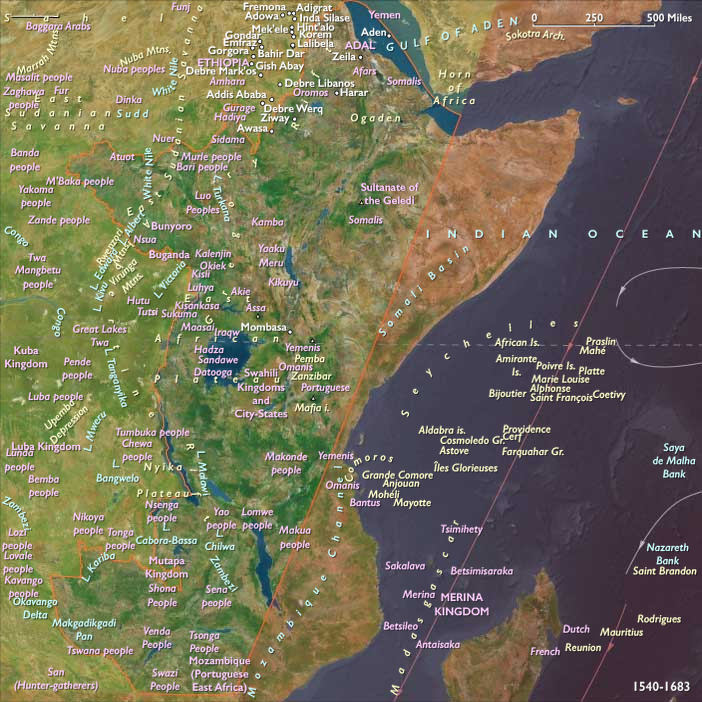
Years: 1600 - 1612
People
Groups
- Ethiopian Orthodox Tewahedo Church
- Islam
- Christians, Roman Catholic
- Ethiopia, Solomonid Dynasty of
- Portugal, Avizan (Joannine) Kingdom of
- Jesuits, or Order of the Society of Jesus
Commodoties
Subjects
Regions
Subregions