
Interior East Africa (1552–1563 CE): Restoration and …
Years: 1552 - 1563
Interior East Africa (1552–1563 CE): Restoration and Religious Controversies in Post-Gragn Ethiopia
Rebuilding and Consolidation Under Emperor Gelawdewos
In the aftermath of the pivotal Battle of Wayna Daga (1543), which decisively ended Ahmad ibn Ibrahim al-Ghazi’s devastating jihad, the Ethiopian Empire entered a period of reconstruction and consolidation under the energetic Emperor Gelawdewos (Claudius). During this decade, Gelawdewos undertook significant efforts to rebuild churches, monasteries, and towns devastated by Ahmad Gragn’s armies, reestablishing political order and central authority throughout the Ethiopian highlands. He notably promoted the renewal of the Ethiopian Orthodox Church, which had suffered extensive losses during the Muslim invasions.
Increased Portuguese Influence and Religious Frictions
Despite Gelawdewos’s military successes, Ethiopia's relationship with its Portuguese allies soon became fraught with tension. The Portuguese, encouraged by their critical role in defeating Gragn, began to advocate actively for the Ethiopian Church’s union with Roman Catholicism, a move they believed would strengthen ties between Ethiopia and Europe. Jesuit missionaries arrived in greater numbers, intensifying their missionary activities. They advocated doctrinal changes, particularly the recognition of the Pope’s spiritual authority—an idea that many in Ethiopia strongly resisted.
Debates, Doctrinal Disputes, and Resistance to Catholicism
Religious controversies emerged prominently during Gelawdewos’s reign, coming to a head in a famous doctrinal debate held at the royal court in 1555–56. During this debate, Emperor Gelawdewos himself took a strong stand in defense of traditional Ethiopian Orthodox beliefs against the Jesuit missionaries led by figures such as Father André de Oviedo. Gelawdewos affirmed Ethiopia’s Monophysite theological position and politely but firmly rejected submission to the Pope. While maintaining diplomatic ties and respectful relations with the Portuguese, he steadfastly refused to permit the introduction of Catholic rituals or to accept papal primacy, ensuring Ethiopian Orthodoxy retained its independence and distinctiveness.
Continued Struggles Against Muslim Forces and Regional Threats
Although Ahmad Gragn had been defeated, the wider threat posed by Muslim forces was not entirely neutralized. Remnants of the Adal Sultanate continued periodic raids and attempted to reorganize, aided by ongoing Ottoman support from the Red Sea coastline, especially through ports such as Massawa and Zeila. Emperor Gelawdewos was compelled to maintain vigilant defenses against these persistent threats, repeatedly confronting incursions from both Adal and allied pastoralist groups, thus preventing them from gaining sufficient strength to threaten Ethiopia’s core territories.
Death of Gelawdewos and Succession
Emperor Gelawdewos died in battle in 1559, fighting against the resurgent Muslim forces from the Harar region led by Emir Nur ibn Mujahid, who sought to avenge Ahmad Gragn’s defeat and restore Muslim dominance in the eastern lowlands. Following Gelawdewos's death, his brother Menas (1559–1563) succeeded him, continuing to maintain Ethiopia’s territorial integrity and defending its independence against both internal dissent and external threats. Menas, while less diplomatically adept than his brother, carried forward the policies of resistance to both Muslim aggression and religious conversion efforts by the Portuguese.
Key Historical Developments
-
Emperor Gelawdewos’s restoration and consolidation efforts, rebuilding Ethiopia after devastation by Gragn.
-
Increasing friction due to Portuguese and Jesuit missionary pressure to convert Ethiopia to Roman Catholicism.
-
The 1555–56 doctrinal debates, during which Gelawdewos firmly reaffirmed Ethiopian Orthodox beliefs and rejected papal primacy.
-
Continued threats from remnants of the Adal Sultanate and persistent Muslim raids, culminating in Gelawdewos's death in battle (1559).
Long-Term Consequences and Historical Significance
This era reinforced the religious and cultural independence of Ethiopia in the face of sustained external pressure. Emperor Gelawdewos’s steadfast resistance to Catholic conversion safeguarded the distinctive traditions of Ethiopian Orthodoxy, shaping Ethiopia’s identity for centuries to come. His efforts and ultimate sacrifice underscored Ethiopia’s ongoing struggle to maintain sovereignty against external pressures, whether from Muslim regional powers or European missionaries, setting the stage for subsequent dynamics of resistance and accommodation in the Horn of Africa.
People
Groups
- Ethiopian Orthodox Tewahedo Church
- Islam
- Christians, Roman Catholic
- Ethiopia, Solomonid Dynasty of
- Portugal, Avizan (Joannine) Kingdom of
- Adal Sultanate
- Ottoman Empire
- Jesuits, or Order of the Society of Jesus
Topics
Commodoties
Subjects
Regions
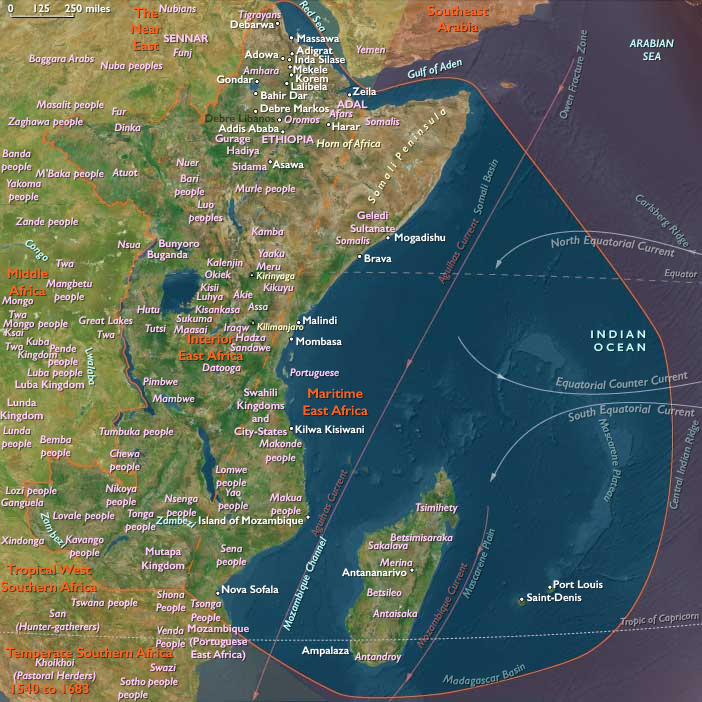
Subregions
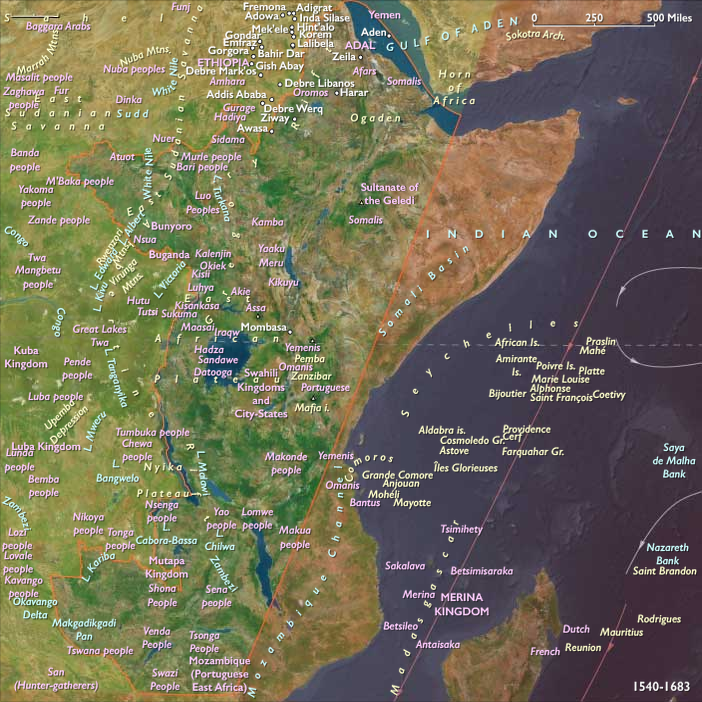
Years: 1552 - 1563
People
Groups
- Ethiopian Orthodox Tewahedo Church
- Islam
- Christians, Roman Catholic
- Ethiopia, Solomonid Dynasty of
- Portugal, Avizan (Joannine) Kingdom of
- Adal Sultanate
- Ottoman Empire
- Jesuits, or Order of the Society of Jesus
Topics
Commodoties
Subjects
Regions
Subregions