
Old Europe is a term coined by …
Years: 3645BCE - 3502BCE
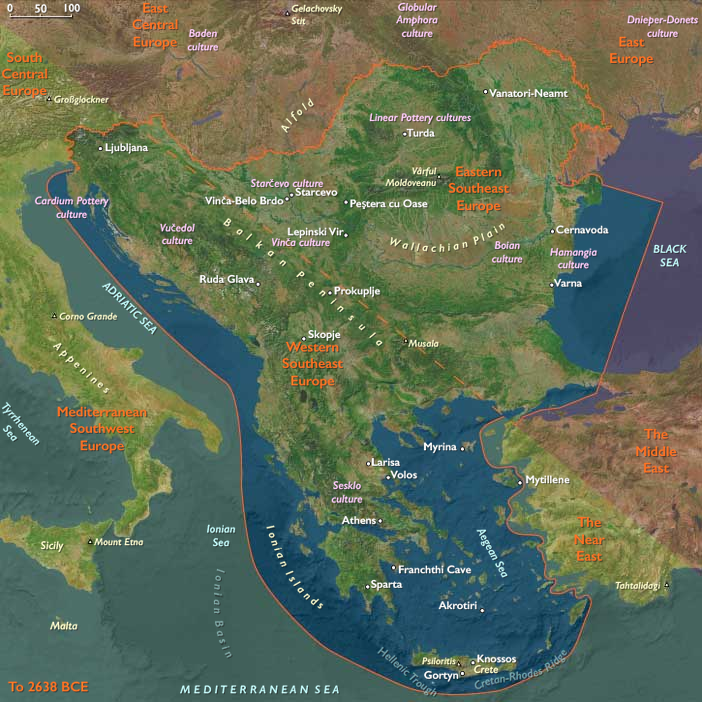
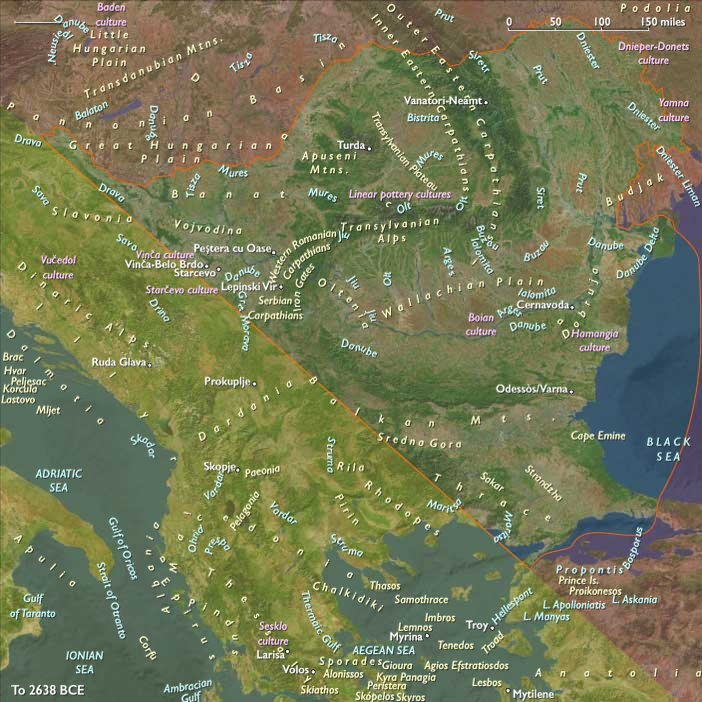
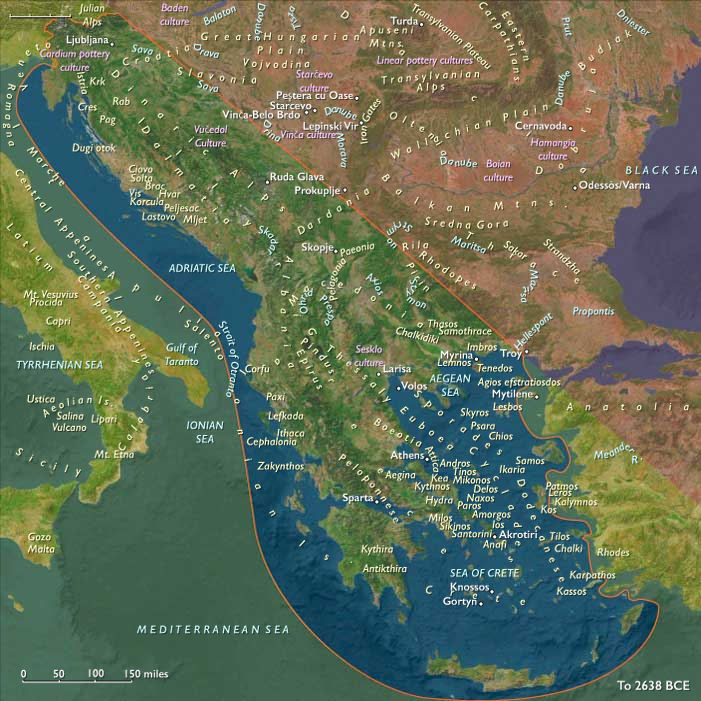
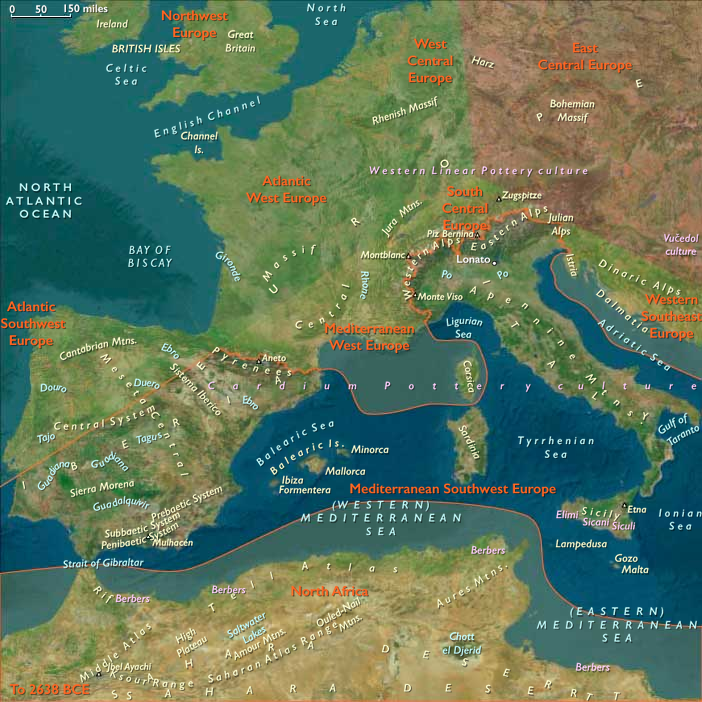
Old Europe is a term coined by archaeologist Marija Gimbutas to describe what she perceived as a relatively homogeneous and widespread pre-Indo-European Neolithic culture in Europe, particularly in Malta and the Balkans.
Archaeologists and ethnographers working within her framework believe that the evidence points to migrations of the peoples who spoke Indo-European languages at the beginning of the Bronze age (the Kurgan hypothesis).
For this reason, Gimbutas and her associates regard the terms Neolithic Europe, Old Europe, and Pre-Indo-European as synonymous.
Groups
Topics
- Chalcolithic Epoch, or Copper Ages
- Younger Peron Transgression during the Neolithic Subpluvial
- Subboreal Period
Commodoties
Subjects
Regions
Subregions
Related Events
Showing 10 events out of 68780 total
Years: 3645BCE - 3502BCE
Groups
Topics
- Chalcolithic Epoch, or Copper Ages
- Younger Peron Transgression during the Neolithic Subpluvial
- Subboreal Period
Commodoties
Subjects
Regions
Subregions