
The Siege Without Walls – Starving Out …
Years: 1762 - 1762
October
The Siege Without Walls – Starving Out the Invaders at Abrantes (October–November 1762)
By October 1762, the Franco-Spanish invasion of Portugal had stalled. The Anglo-Portuguese army under Count Wilhelm von Schaumburg-Lippe remained entrenched at Abrantes, while the Spanish and French forces under the Count of Aranda found themselves immobilized in front of the fortified Allied positions.
Although neither side launched a full-scale attack, the situation heavily favored the Anglo-Portuguese forces. While they continued to receive reinforcements and provisions, the Bourbon forces were being strangled by guerrilla warfare, starvation, and disease.
Scorched Earth – The Strategy That Destroyed the Invasion
The Portuguese scorched earth policy, carefully executed by Lippe and Pombal, turned the Province of Beira into a wasteland:
- Villages were abandoned, their inhabitants fleeing with all food supplies.
- Crops were burned and livestock was taken to prevent the enemy from foraging.
- Even houses and roads were destroyed to hinder enemy movement.
This deliberate devastation forced the Franco-Spanish army into an impossible situation:
- They could not advance, as the fortified Anglo-Portuguese positions at Abrantes blocked the route to Lisbon.
- They could not retreat, without admitting total failure.
- They could not remain where they were, because they were slowly starving to death.
The starvation tactic, used successfully against the Bourbon forces in 1762, would be repeated in 1810–11 against the French army of Marshal Masséna, who, like the invaders of 1762, would find himself trapped in front of Lisbon, cut off from supplies, harassed by guerrillas, and forced into a disastrous retreat.
Lisbon – A Fortress by Geography
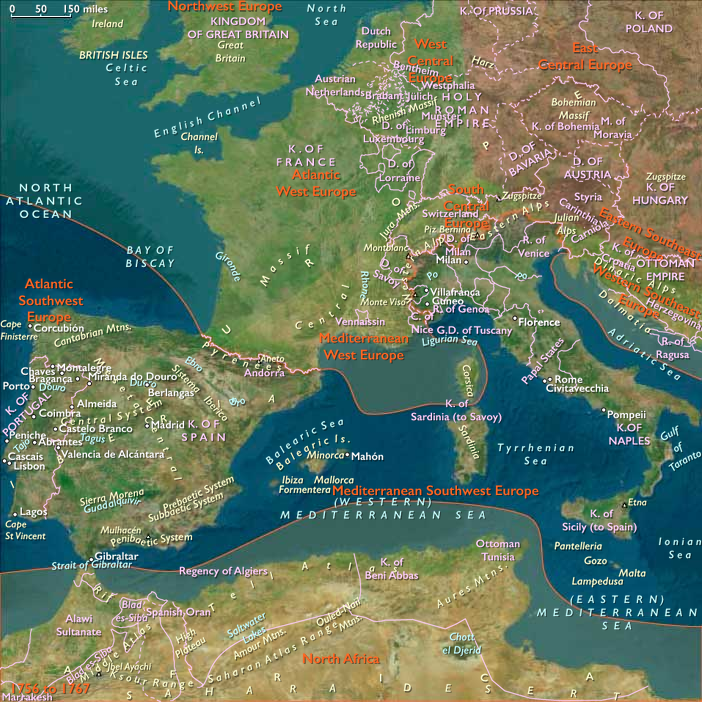
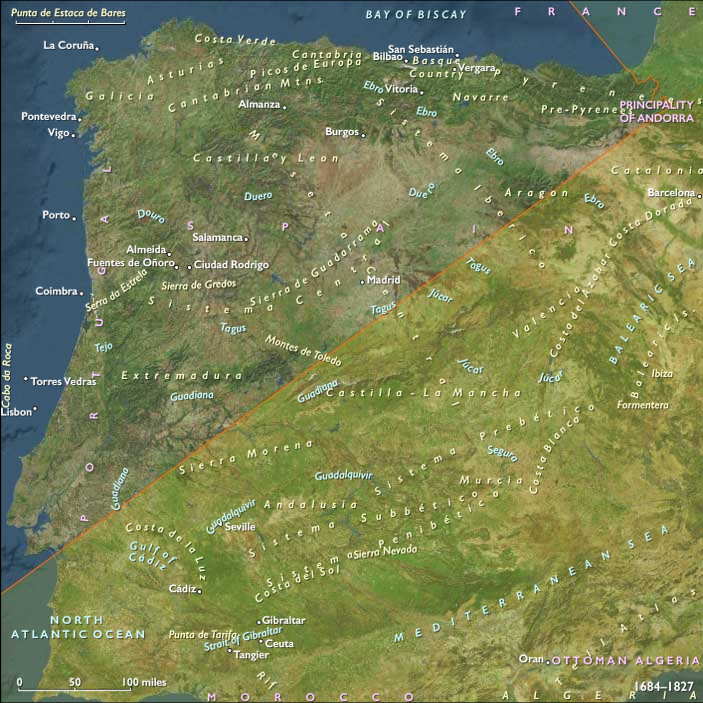
Lippe’s strategy capitalized on the unique geography of Portugal’s capital. To conquer Portugal, the Franco-Spanish forces had to take Lisbon, but:
- The Atlantic Ocean blocked any attack from the west.
- The Tagus River protected the city to the south and east.
- Only the mountainous terrain north of the city offered an approach—and that route was now blocked by the Allied defensive system centered on Abrantes.
With Lisbon still receiving provisions by sea, the Anglo-Portuguese army had no logistical issues, while the Bourbon invaders were collapsing from starvation.
The Franco-Spanish Army Begins to Disintegrate
Trapped in an uninhabitable wasteland, the Franco-Spanish forces faced mounting losses:
- Guerrilla fighters and militias relentlessly attacked supply convoys, further isolating the enemy army.
- Hunger ravaged the invading forces, leaving soldiers too weak to fight.
- Desertions soared, as soldiers abandoned their ranks to search for food.
- Disease spread rapidly among the starving troops, killing thousands.
The once-confident Bourbon army was now in survival mode, and retreat was becoming inevitable.
The Collapse of the Franco-Spanish Campaign
By November 1762, the invading Spanish and French armies were disintegrating. Their choices were clear:
- Remain at Abrantes and starve.
- Retreat while they still could—though in a shattered state.
Ultimately, the Bourbon high command chose to withdraw, abandoning their dream of conquering Portugal. The strategic brilliance of Lippe, combined with Portuguese resilience, guerrilla warfare, and the devastating scorched earth tactics, had turned the tide of war.
The defense of Lisbon was never tested, because the invaders never got close enough to attack it. Instead, they were starved into submission, much like Napoleon’s troops would be half a century later.
Conclusion – Portugal’s Victory Secured
The Second Invasion of Portugal (July–November 1762) had ended in total failure for Spain and France. Despite their vast numerical superiority, they had been outmaneuvered, outlasted, and outwitted by a smaller but more strategically mobile Anglo-Portuguese force.
The war was no longer about conquest—it was now about how many of the starving Spanish and French troops could make it back to Spain alive.
Locations
People
- Charles François Dumouriez
- Charles III of Spain
- Charles Juste de Beauvau, , Prince of Craon
- George Townshend, 1st Marquess Townshend
- John Burgoyne
- José I of Portugal
- Leopoldo de Gregorio, Marquis of Squillace
- Pedro Pablo Abarca de Bolea y Jiménez de Urrea, 10th Count of Aranda
- Sebastião José de Carvalho e Melo, 1st Marquis of Pombal
- William Pitt
- William, Count of Schaumburg-Lippe
Groups
- Portuguese people
- Scottish people
- French people (Latins)
- English people
- Spaniards (Latins)
- France, (Bourbon) Kingdom of
- Portugal, Bragança Kingdom of
- Spain, Bourbon Kingdom of
- Britain, Kingdom of Great
Topics
Subjects
Regions
Subregions
Years: 1762 - 1762
October
Locations
People
- Charles François Dumouriez
- Charles III of Spain
- Charles Juste de Beauvau, , Prince of Craon
- George Townshend, 1st Marquess Townshend
- John Burgoyne
- José I of Portugal
- Leopoldo de Gregorio, Marquis of Squillace
- Pedro Pablo Abarca de Bolea y Jiménez de Urrea, 10th Count of Aranda
- Sebastião José de Carvalho e Melo, 1st Marquis of Pombal
- William Pitt
- William, Count of Schaumburg-Lippe
Groups
- Portuguese people
- Scottish people
- French people (Latins)
- English people
- Spaniards (Latins)
- France, (Bourbon) Kingdom of
- Portugal, Bragança Kingdom of
- Spain, Bourbon Kingdom of
- Britain, Kingdom of Great
Topics
Subjects
Regions
Subregions