
Instability in the Lombard region caused by …
Years: 1436 - 1436
Instability in the Lombard region caused by the political and military crisis n the beginning of the fifteenth century, coupled with the untimely death of Gian Galeazzo Visconti, had induced the teaching staff of the Universities of Pavia and Piacenza to propose to Ludovico di Savoia-Acaia the creation a of new Studium generale.
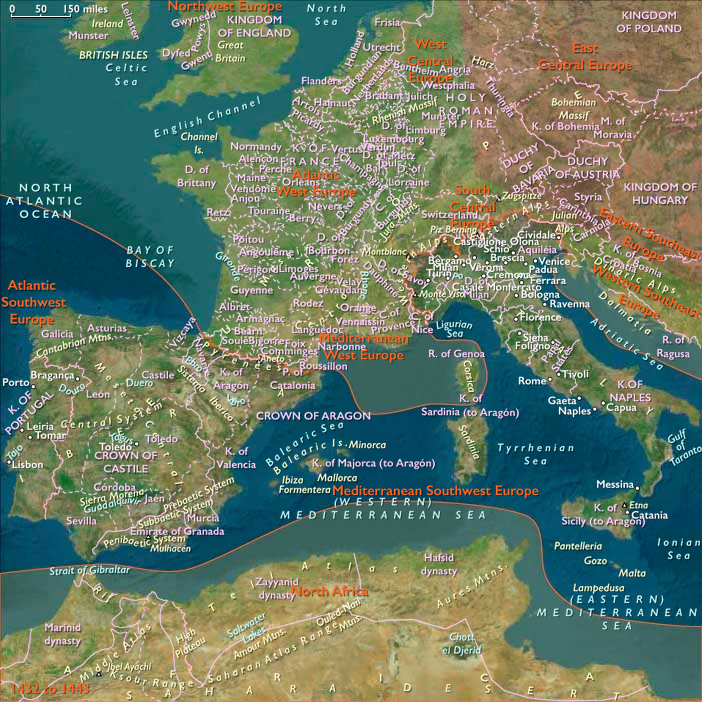
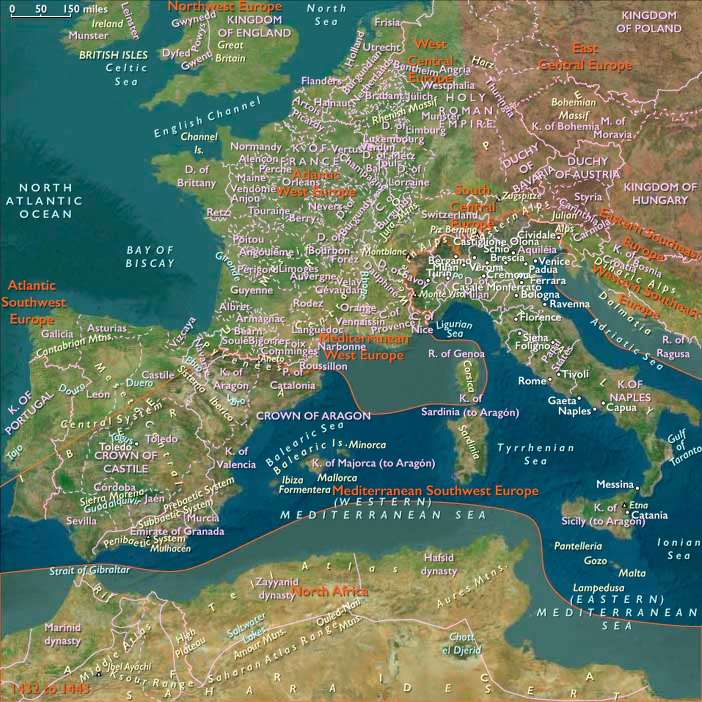
Choice of the location fell on Turin for a number of reasons: first it was at the crossroads between the Alps, Liguria and Lombardy; it was also an episcopal seat and in addition the Savoy Prince was willing to establish a university on his own land, like those in other parts of Italy.
In autumn 1404, a bull issued by Benedict XIII, the Avignon Pope, marked the actual birth of a center of higher learning, formally ratified in 1412 by the Emperor Sigmund's certification and subsequently, in 1413, by a bull issued by antipope John XXIII, the Pisan Pope, and probably by another issued in 1419 by Martin V, Pope of Rome, and by a series of papal privileges.
The new institution, which initially only held courses in civil and canon law, was authorized to confer both the academic "licentia" and "doctoratus" titles that later became a single "laurea" (degree) title.
The Bishop, as Rector of Studies, proclaimed and conferred the title on the new doctors.
The early decades are marked by discontinuity, due to epidemics and crises that plagued the region between the 1420s and the 1430s following the annexation of the Piedmont territories to the Duchy of Savoy and by difficult relations between the University and the local Public Administration.
After a series of interruptions in its activities, the university had been moved to Chieri (between 1427 and 1434) and later, in 1434, to Savigliano.
When the institution returns to Turin in 1436, Louis of Savoy, who had succeeded Amedeus VIII, introduces a new order of studies whereby the Government gains greater control over the University.
The ducal licenses of October 6, 1436 set up the three faculties of Theology, Arts and Medicine, and Law, and twenty-five lectureships or chairs.
The growth and development of the role of Turin as the subalpine capital will lead to the consolidation of the University and a stability that lasted for almost a hundred years.
(It will start to gain its modern shape after the model of University of Bologna.
During the eighteenth century, the University of Turin will become one of the most prestigious universities in Italy and a point of reference of the Italian Positivism; in the twentieth century, will be one of the centers of the Italian anti-fascism movement.
By the end of the 1990s, the local campi of Alessandria, Novara and Vercelli will become autonomous units under the new University of Eastern Piedmont.)
Locations
People
Groups
Topics
Commodoties
Subjects
Regions
Subregions
Years: 1436 - 1436
Locations
People
Groups
Topics
Commodoties
Subjects
Regions
Subregions