
Ink wash painting, also known as literati …
Years: 1345 - 1345
Ink wash painting, also known as literati painting, is an East Asian type of brush painting that uses black ink—the same as used in East Asian calligraphy, in various concentrations.
For centuries, this most prestigious form of Chinese art has been practiced by highly educated scholar gentlemen or literati.
Names used in the cultures concerned include: in Chinese shuǐ mò huà, in Japanese sumi-e or suibokuga, in Korean sumukhwa, and in Vietnamese tranh thủy mặc.
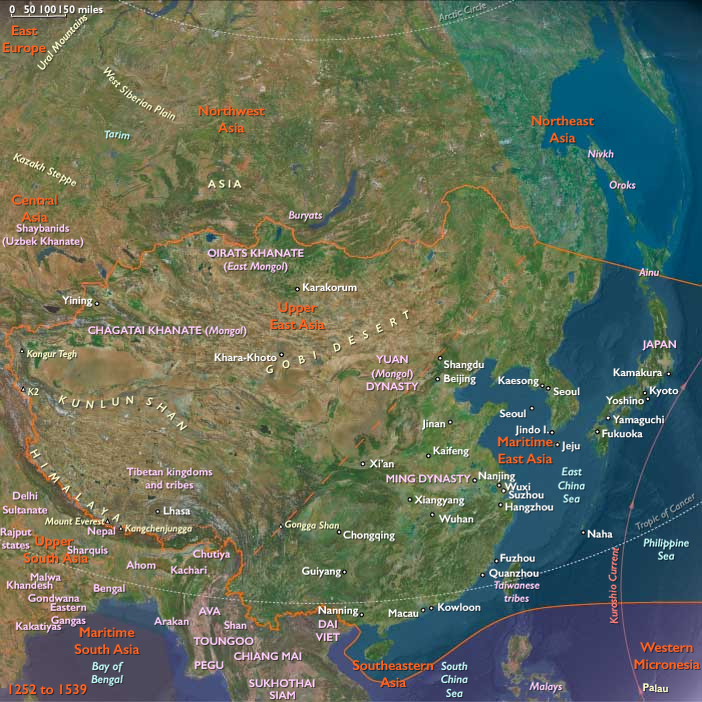
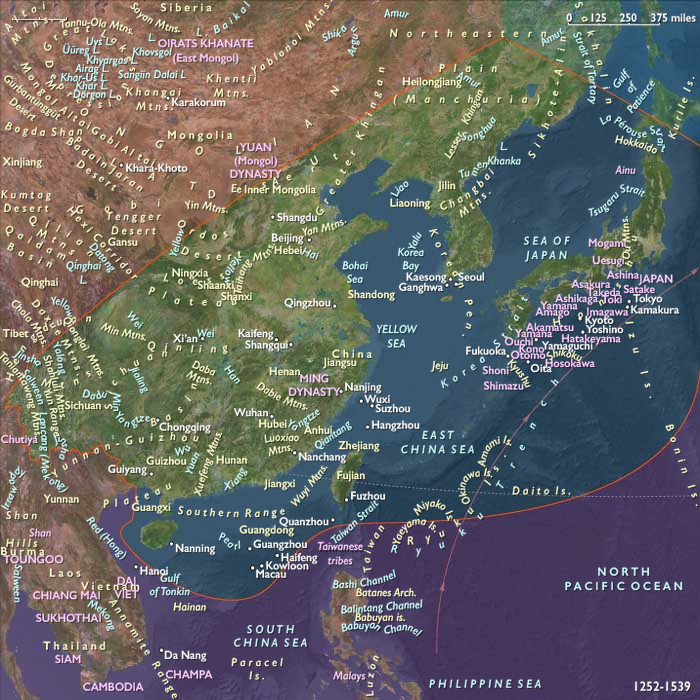
Mokuan, one among many Japanese monk-painters who go to China for extended periods and thus become the direct inheritors of Chan painting traditions, prominently features portrayals of the free and uncommitted Chan saints: eccentrics such as Putai (Pu-tai), Hanshan (Han-shan), and Shide (Shih-te).
He is one of the first artists in Japan to use the newly introduced suiboku style.
Mokuan dies in 1345.
Locations
People
Groups
Subjects
Regions
Subregions
Related Events
Showing 1 events out of 1 total
Years: 1345 - 1345
Locations
People
Groups
Subjects
Regions
Subregions