
The legitimate trade in commodities attracts a …
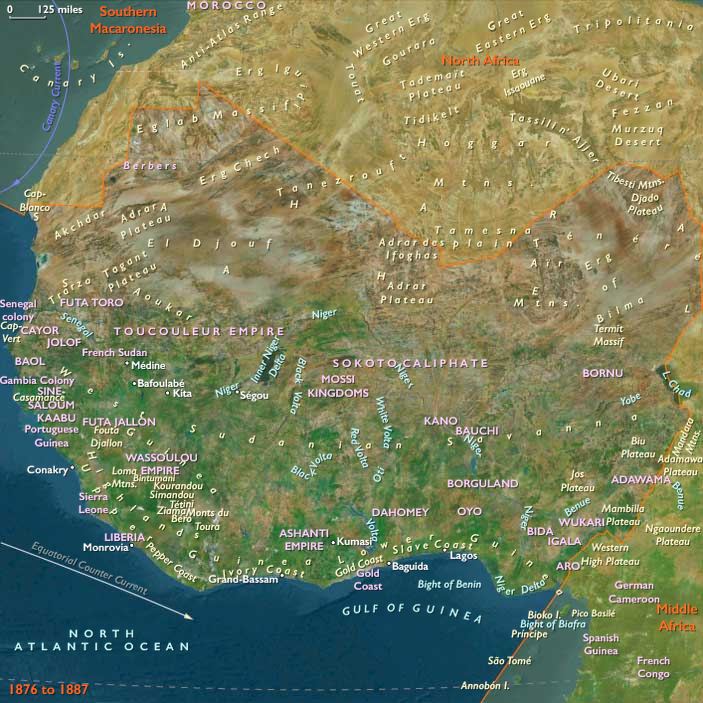
Years: 1876 - 1887
The legitimate trade in commodities attracts a number of rough-hewn British merchants to the Niger River, as well as some men who formerly had been engaged in the slave trade but who had changed their line of wares.
The large companies that subsequently open depots in the delta cities and in Lagos are as ruthlessly competitive as the delta towns themselves and frequently use force to compel potential suppliers to agree to contracts and to meet their demands.
The most important of these trading companies, whose activities will have far-reaching consequences for Nigeria, is the United Africa Company, founded by George Goldie in 1879.
In 1886 Goldie's consortium is chartered by the British government as the Royal Niger Company and granted broad concessionary powers in "all the territory of the basin of the Niger."
Needless to say, these concessions emanate from Britain, not from any authority in Nigeria.
Locations
Groups
- Igbo people
- Hausa Kingdoms, the
- Hausa people
- Yoruba people
- Ijaw people
- Kano (Hausa city state)
- Zaria (Zazzau), Hausa City-State of
- Katsina (Hausa city state)
- Gobir (Hausa city state)
- Benin Empire
- Ibibio people
- Bonny, Ijo city-state of
- Oyo Empire
- Calabar, Efik state of
- Dahomey, Kingdom of
- Khasso, Fulani Jihad State
- Aro Confederacy
- Fouta Djallon (Futa Jallon) Fulani Jihad State
- Elem, Ijo city-state of
- Fouta-Toro, or Futa Toro, Fulani Jihad State of
- Equatorial Guinea, Spanish colony of
- United States of America (US, USA) (Washington DC)
- Britain (United Kingdom of Great Britain and Ireland)
- Fulani Empire
- Nupe, Emirate of the
- Freetown (Sierra Leone), British Crown Colony of
- Sokoto, Kingdom of
- Macina (Masina), Fulani Jihad State of
- Zaria, Emirate of
- Oyo, Yoruba Kingdom of
Topics
Commodoties
Subjects
Regions
Subregions
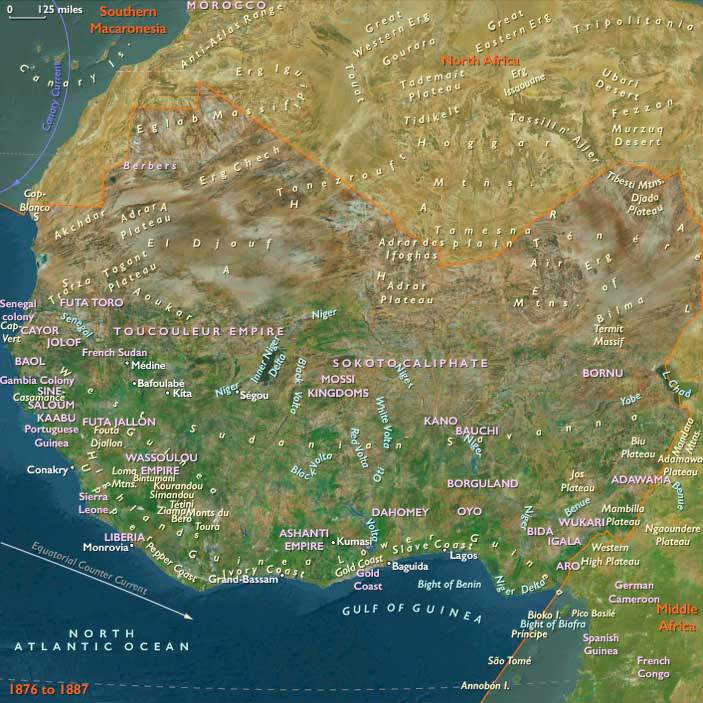
Years: 1876 - 1887
Locations
Groups
- Igbo people
- Hausa Kingdoms, the
- Hausa people
- Yoruba people
- Ijaw people
- Kano (Hausa city state)
- Zaria (Zazzau), Hausa City-State of
- Katsina (Hausa city state)
- Gobir (Hausa city state)
- Benin Empire
- Ibibio people
- Bonny, Ijo city-state of
- Oyo Empire
- Calabar, Efik state of
- Dahomey, Kingdom of
- Khasso, Fulani Jihad State
- Aro Confederacy
- Fouta Djallon (Futa Jallon) Fulani Jihad State
- Elem, Ijo city-state of
- Fouta-Toro, or Futa Toro, Fulani Jihad State of
- Equatorial Guinea, Spanish colony of
- United States of America (US, USA) (Washington DC)
- Britain (United Kingdom of Great Britain and Ireland)
- Fulani Empire
- Nupe, Emirate of the
- Freetown (Sierra Leone), British Crown Colony of
- Sokoto, Kingdom of
- Macina (Masina), Fulani Jihad State of
- Zaria, Emirate of
- Oyo, Yoruba Kingdom of
Topics
Commodoties
Subjects
Regions
Subregions