
Inge’s infirmity, according to the sagas Morkinskinna …
Years: 1142 - 1142
Inge’s infirmity, according to the sagas Morkinskinna and Heimskringla, stemmed from having been carried into battle by one of his guardians during a battle in 1137: “...his back was knotted into a hump, and the one foot was shorter than the other; and he was besides so infirm that he could scarcely walk as long as he lived.” (Heimskringla/Saga of Sigurd, Inge, and Eystein, the Sons of Harald/Of Sigurd Slembidjakn.)
The Danish chronicler Saxo Grammaticus offers the alternative explanation that he became a hunchback after having been dropped on the floor by a maid during infancy.
During the minority of Inge, Sigurd and Magnus, the country is ruled in peace by their guardians, prominent among whom is Inge’s mother, queen Ingiriðr.
Magnus, of whom little more is known, dies at some point in the 1140s.
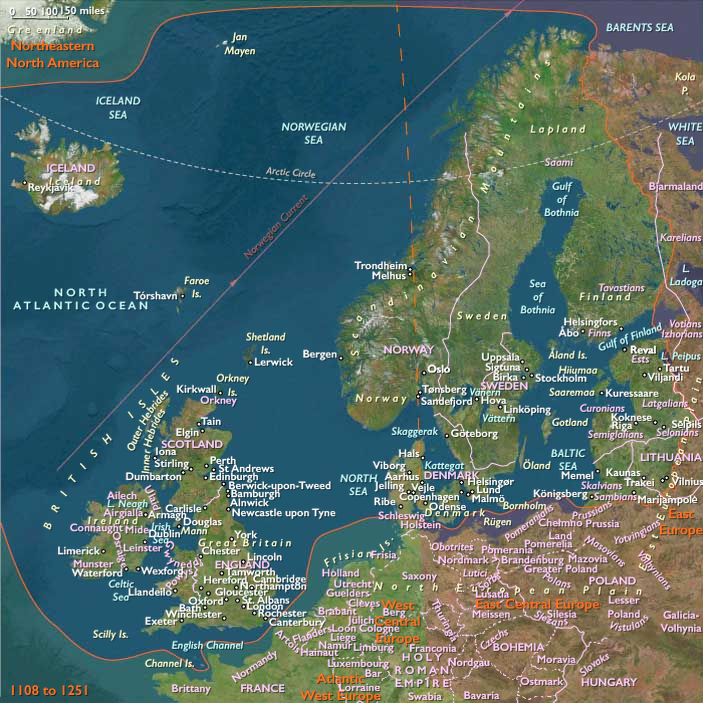
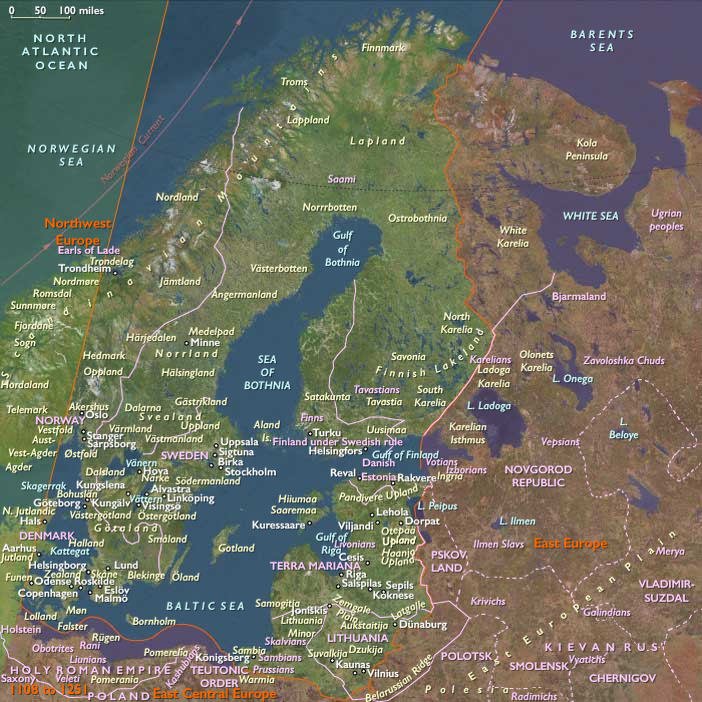
A fourth, older brother, Eystein, comes to Norway in 1142 from Scotland, where he had grown up.
Harald Gille had acknowledged Eystein as a son before his death, and Eystein is therefore given a share of the kingdom.
Locations
People
Groups
- Denmark, Kingdom of
- Danes (Scandinavians)
- Alba (Scotland), Scots Kingdom of
- Sweden, Kingdom of
- Norway, independent Kingdom of
Topics
Commodoties
Subjects
Regions
Subregions
Related Events
Showing 10 events out of 48931 total
Years: 1142 - 1142
Locations
People
Groups
- Denmark, Kingdom of
- Danes (Scandinavians)
- Alba (Scotland), Scots Kingdom of
- Sweden, Kingdom of
- Norway, independent Kingdom of
Topics
Commodoties
Subjects
Regions
Subregions