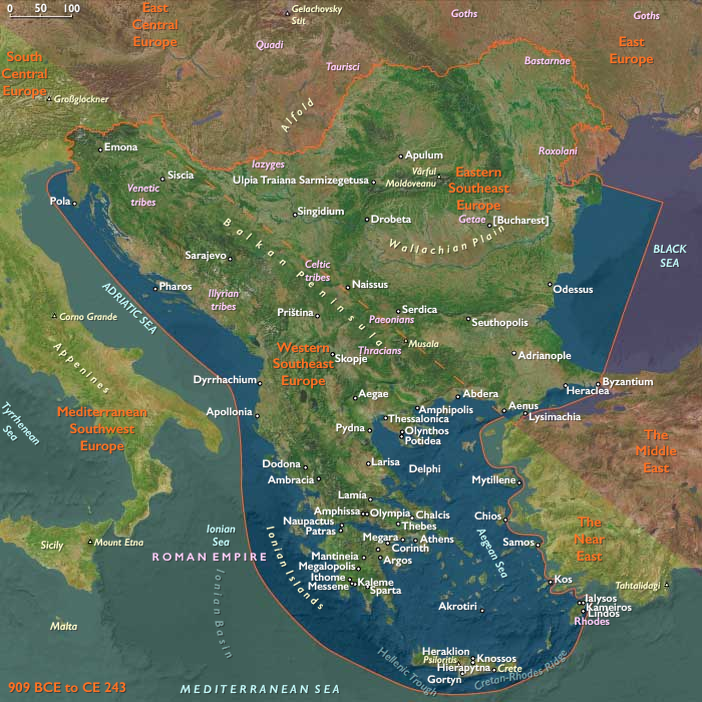
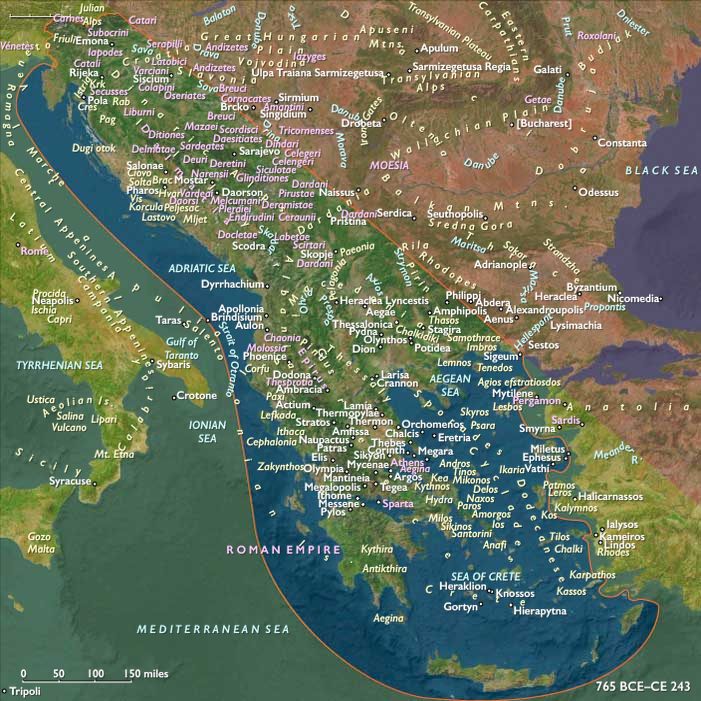
Perdiccas tries to reconquer upper Macedonia from the Illyrian Bardylis in 360 BCE, but the expedition ends in disaster, with the king killed in a catastrophic battle.
Philip, originally appointed regent for his infant nephew Amyntas IV, the son of Perdiccas, soon manages to take the kingdom for himself, ascending the throne in 359 as Philip II.
The Illyrians continue to raid from the northwest, the Paeonians from the north, and foreign powers continues to support two claimants to the throne other than Philip, a man of exceptional energy, diplomatic skill, and ruthlessness.
Philip's military skills and expansionist vision of Macedonian greatness bring him early success.
He first has to reestablish a situation which had been greatly worsened by the defeat against the Illyrians, Macedon's permanent enemies.
The Illyrians prepare to close in; the Paeonians, forced northward by the growth of Macedon, are raiding from the north, the Thracians have sacked and invaded the eastern regions of the country, while the Athenians have landed at Methoni on the coast, a contingent under a Macedonian pretender called Argeus.
Using diplomacy, Philip pushes back the Paeonians and Thracians promising tributes, and crushes the three thousand Athenian hoplites.
Bardyllis is killed in battle after Philip rejects his offer of peace based on retaining conquered lands.
Momentarily free from his opponents, Philip concentrates on strengthening his internal position and, above all, his army, introducing more rigorous training and employing mercenaries.
His most important innovation is doubtless the introduction of the phalanx infantry corps, armed with the famous sarissa, an exceedingly long spear, at this time the most important army corps in Macedonia.
This enables him to inflict defeats on the Illyrians and other northern enemies such as Paeonia, which he invades in 358.